

Why Your Delta-9 THC Cartridges Keep Failing (The Seal Solution Nobody Talks About)
Seal failure in Delta-9 THC cartridges creates immediate product loss, liability exposure, and brand damage. Cannabis oil formulations—where you can buy THCa disposableproducts with aggressive terpene content similar to delta 9 carts—attack conventional elastomers through chemical degradation, causing swelling, hardening, and catastrophic leakage. Standard nitrile and silicone seals deteriorate within weeks when exposed to high-concentration terpenes like d-limonene and β-caryophyllene, which act as powerful solvents that compromise polymer cross-linking.
Terpene-resistant elastomers solve this critical engineering challenge through specifically engineered chemical resistance. Fluoroelastomers (FKM), perfluoroelastomers (FFKM), and advanced hydrogenated nitrile compounds (HNBR) maintain dimensional stability and sealing integrity throughout product shelf life, even in formulations exceeding 15% terpene concentration. These materials demonstrate less than 5% volume swell in accelerated testing protocols, compared to 40-60% degradation in standard compounds.
Implementation requires matching elastomer chemistry to specific terpene profiles, validating compatibility through ASTM D471 immersion testing, and optimizing seal geometry for compression set resistance. Material selection extends beyond chemical compatibility to address thermal cycling, extractables/leachables validation, and manufacturing scalability. This technical overview provides manufacturers with material science fundamentals, testing methodologies, and design integration strategies to eliminate seal failure, protect product quality, and establish competitive differentiation in an increasingly quality-conscious market.
The Terpene Challenge: Understanding Chemical Compatibility in Cannabis Products
Terpene Composition and Solvency Properties
Terpenes are volatile organic compounds consisting of isoprene units (C₅H₈) arranged in various configurations, creating molecules such as limonene, myrcene, and pinene. These naturally occurring hydrocarbons possess significant solvency power due to their molecular structure—featuring both polar and non-polar regions that facilitate interaction with elastomeric materials at the molecular level.
The solvent action of terpenes on conventional rubber seals occurs through several mechanisms. Their low molecular weight and high vapor pressure enable rapid penetration into polymer matrices, causing swelling and plasticization. Terpenes disrupt the cross-linked polymer chains in standard elastomers like nitrile (NBR) and EPDM by dissolving stabilizers, plasticizers, and other compounding ingredients. Limonene, comprising up to 20% of many cannabis oil formulations, demonstrates particularly aggressive solvent characteristics with a polarity index similar to industrial degreasers.
When Delta-9 THC cartridges contain high terpene concentrations—often 5-15% by volume—these compounds attack seal materials continuously throughout the product lifecycle. The result manifests as dimensional changes (swelling exceeding 15%), hardness reduction, tensile strength degradation, and eventual seal failure leading to leakage. Standard automotive-grade elastomers, while suitable for petroleum products, lack the specific chemical resistance required for prolonged terpene exposure. This incompatibility necessitates engineered elastomer formulations with modified polymer backbones and specialized compounding additives that resist terpene-induced degradation while maintaining essential sealing performance characteristics.
Common Seal Failure Modes in THC Cartridges
Standard elastomeric seals commonly fail when exposed to terpene-rich Delta-9 THC formulations due to fundamental chemical incompatibility. The most prevalent failure mode is volumetric swelling, where terpenes penetrate the polymer matrix, causing dimensional changes that compromise seal integrity and cartridge performance. This swelling disrupts the interference fit critical for leak prevention in vape cartridge assemblies.
Material softening represents another critical degradation pattern, occurring as terpenes act as plasticizers within the elastomer structure. This reduces durometer hardness and mechanical strength, leading to extrusion under pressure and eventual seal failure. Conversely, some elastomers experience embrittlement and cracking when volatile terpene components extract plasticizers from the polymer, creating stress concentration points that propagate under thermal cycling.
Leaching poses significant contamination risks in cannabis oil production and cartridge applications. Incompatible seals release additives, curatives, and degradation byproducts into THC formulations, affecting product purity, taste profile, and consumer safety. Surface degradation manifests as tackiness, discoloration, or visible deterioration, indicating advanced chemical attack.
Understanding these failure mechanisms enables engineers to specify terpene-resistant elastomers engineered specifically for cannabis applications, ensuring long-term product integrity and regulatory compliance.
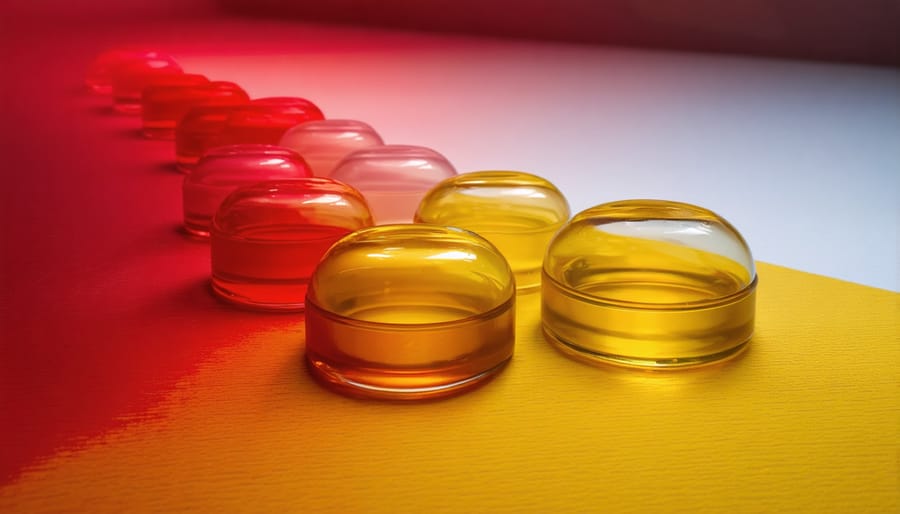
Material Science Behind Terpene-Resistant Elastomers
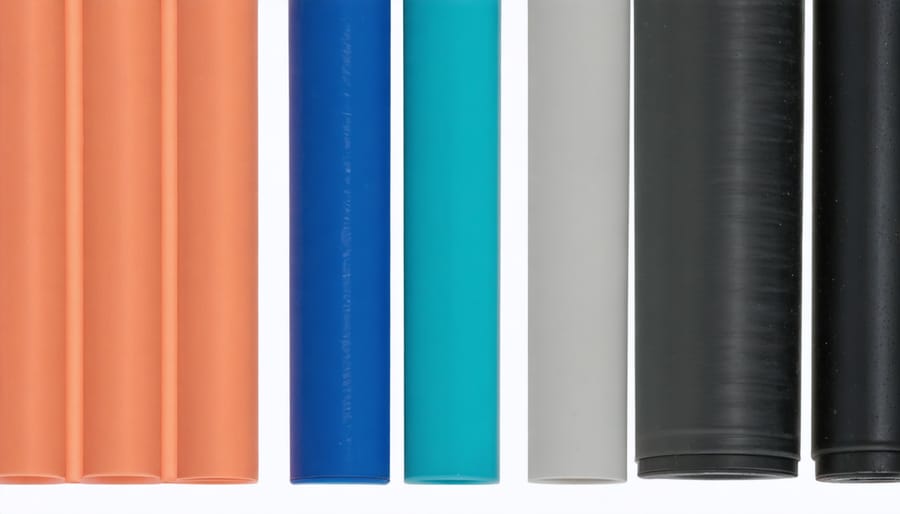
Fluoroelastomers (FKM) and Perfluoroelastomers (FFKM)
Fluoroelastomers represent the premium tier of sealing solutions for Delta-9 THC cartridges, offering exceptional chemical resistance through highly fluorinated polymer backbones. FKM materials contain 66-70% fluorine content, while FFKM perfluoroelastomers achieve near-complete fluorination at 72-76%, approaching the chemical inertness of PTFE while maintaining elastomeric flexibility.
The molecular structure of fluoroelastomers creates inherent terpene resistance through carbon-fluorine bonds, which exhibit the highest bond energy in organic chemistry at 485 kJ/mol. This molecular stability prevents terpene solvation and swelling mechanisms that compromise hydrocarbon-based elastomers. FKM polymers typically incorporate vinylidene fluoride and hexafluoropropylene monomers, creating a semi-crystalline structure with glass transition temperatures ranging from -20°C to +10°C depending on fluorine content and terpolymer composition.
FFKM materials demonstrate superior performance in high-terpene formulations, exhibiting volume swell rates below 5% even in d-limonene immersion testing at elevated temperatures. The perfluorinated backbone eliminates vulnerable hydrogen sites, providing resistance to both terpene hydrocarbons and oxidative degradation from cannabinoid compounds. Testing protocols should verify compression set resistance at 23°C and 70°C over 168-hour exposures, with acceptable values below 25% indicating adequate sealing force retention.
Application considerations include higher material costs—FFKM compounds typically command 10-15x premiums over standard NBR—and processing requirements demanding specialized mixing and molding capabilities. The cost-performance balance favors fluoroelastomers for premium cartridge products, extended shelf-life requirements, or formulations exceeding 15% total terpene content. Custom compound development optimizes durometer, compression set characteristics, and cure systems for specific cartridge geometries and fill compositions, ensuring reliable sealing performance throughout product lifecycle expectations.
Hydrogenated Nitrile Rubber (HNBR) Solutions
Hydrogenated Nitrile Rubber presents a compelling balance between performance and cost-effectiveness for Delta-9 THC cartridge applications. Through selective hydrogenation of standard nitrile rubber, HNBR achieves superior chemical resistance to terpenes and cannabinoids while maintaining excellent mechanical properties across extended temperature ranges (-40°F to 300°F).
HNBR’s saturated polymer backbone provides enhanced resistance to oxidative degradation and terpene extraction compared to conventional NBR formulations. In comparative testing, HNBR seals demonstrate minimal volume swell (typically 5-10%) when exposed to high-terpene concentration oils, significantly outperforming general-purpose elastomers. The material maintains consistent hardness and compression set resistance throughout typical cartridge shelf life cycles.
However, HNBR does exhibit limitations that engineering teams must consider. Certain monoterpenes, particularly d-limonene at concentrations exceeding 15%, can still cause measurable degradation over extended periods. The material also requires careful compound selection, as HNBR grades vary significantly in acrylonitrile content (affecting polarity) and residual unsaturation levels.
For manufacturers prioritizing cost optimization without sacrificing critical performance metrics, properly formulated HNBR compounds offer reliable sealing performance in mid-tier Delta-9 THC cartridge applications. Custom compound development ensures optimal terpene resistance while maintaining processing efficiency and dimensional stability throughout production cycles.
Ethylene Propylene Diene Monomer (EPDM) Variants
While standard EPDM offers baseline terpene resistance, specially formulated variants deliver superior performance for Delta-9 THC cartridge applications. Advanced EPDM compounds incorporate modified polymer chains and cross-linking systems that create enhanced barrier properties against aggressive terpene profiles, including limonene, pinene, and myrcene.
Premium EPDM formulations utilize proprietary filler systems and processing aids that minimize swelling while maintaining compression set resistance across temperature ranges from -40°F to 300°F. These compounds typically feature ethylene-to-propylene ratios optimized for solvent resistance rather than general-purpose applications, with diene content adjusted to balance cure speed against chemical stability.
High-performance EPDM variants are particularly suited for cartridge seal applications requiring extended shelf life, often exceeding 24 months without significant dimensional change or hardness drift. Custom compounding allows adjustment of durometer from 50 to 90 Shore A, enabling optimization for specific cartridge designs and fill pressures. These materials provide excellent compatibility with botanical terpenes while resisting extraction of plasticizers or processing oils that could contaminate cannabis oil formulations.
Performance Requirements and Testing Standards
Chemical Compatibility Testing Protocols
Chemical compatibility testing protocols for terpene-resistant elastomers require rigorous evaluation methods that simulate actual operating conditions in Delta-9 THC cartridges. These standardized procedures ensure seal materials maintain critical performance characteristics throughout their service life.
Immersion testing forms the foundation of compatibility assessment. Test specimens are fully submerged in representative terpene blends—typically including limonene, myrcene, pinene, and linalool—at elevated temperatures (70-80°C) for periods ranging from 168 to 1,000 hours. This accelerated aging simulates months of field exposure, revealing potential degradation mechanisms early in the development process.
Volume swell measurement quantifies dimensional changes resulting from terpene absorption. Acceptable elastomers demonstrate swell values below 15% after extended immersion, ensuring seals maintain proper compression and sealing force. Measurements are recorded using precision calipers or displacement methods, with data collected at multiple time intervals to establish swell kinetics.
Hardness retention testing evaluates mechanical property stability using durometer measurements before and after exposure. Quality terpene-resistant materials retain at least 85% of their original hardness, preventing seal extrusion and maintaining functional spring-back characteristics. Rubber technologists interpret these results alongside compression set data to predict long-term sealing performance.
Extractables analysis identifies potential chemical migration from elastomer compounds into cannabis oil. Gas chromatography-mass spectrometry (GC-MS) techniques detect leachables at parts-per-million levels, ensuring product purity and regulatory compliance. This testing confirms that seal materials contribute no detectable contamination affecting flavor profiles or consumer safety.
Regulatory Compliance and Material Safety
Delta-9 THC cartridge seals must meet stringent regulatory requirements across multiple jurisdictions. For materials intended for cannabis oil contact, FDA food-contact substance regulations under 21 CFR 177 provide the baseline framework, even though cannabis products remain federally controlled. Manufacturers should specify elastomers that comply with these provisions to demonstrate material safety and quality assurance.
USP Class VI biocompatibility testing represents the gold standard for materials contacting ingestible substances. This comprehensive protocol evaluates systemic toxicity, intracutaneous reactivity, and implantation effects through in vivo testing. Terpene-resistant elastomers meeting USP Class VI certification demonstrate minimal biological reactivity, critical for applications where consumers directly inhale vaporized contents. Engineers should request certification documentation from seal suppliers and verify test reports from accredited laboratories.
State-level cannabis regulations increasingly mandate specific material requirements. California’s Proposition 65, for instance, restricts lead content and other substances of concern. Colorado and other markets require child-resistant packaging and contaminant testing that extends to seal materials. Custom elastomer formulations must address these evolving requirements while maintaining terpene resistance.
Heavy metal content presents particular scrutiny in cannabis applications. Specify elastomers formulated without restricted elements like lead, cadmium, or mercury. Modern HNBR and fluoroelastomer compounds can achieve necessary chemical resistance without problematic additives. Migration testing according to European Pharmacopoeia or ISO 10993 standards provides additional validation that seal materials won’t contaminate cannabis oils during storage. Documentation supporting regulatory compliance strengthens product differentiation and reduces liability exposure across evolving cannabis markets.
Design Considerations for Cartridge Seal Integration
O-Ring Groove Design and Compression Parameters
Proper O-ring groove design is critical for achieving reliable, leak-proof seals in Delta-9 THC cartridges exposed to aggressive terpene environments. The groove dimensions must accommodate the elastomer’s compression characteristics while maintaining adequate sealing force throughout the product lifecycle.
For typical cartridge applications, recommend compression percentages between 15-25% of the O-ring cross-section diameter. Lower compression (15-18%) suits softer materials like FKM compounds with Shore A hardness of 70-75, while firmer materials (Shore A 80-85) perform optimally at 20-25% compression. This range ensures sufficient contact pressure without excessive stress that accelerates degradation when exposed to terpene-rich formulations.
Groove width should equal 1.1 to 1.2 times the O-ring cross-section, allowing controlled lateral expansion during compression. Groove depth calculations must account for the target compression percentage plus tolerances. For a 2.0mm cross-section O-ring at 20% compression, specify groove depth of 1.6mm ±0.05mm.
Critical dimensional tolerances include:
– Groove width: ±0.08mm maximum
– Groove depth: ±0.05mm maximum
– Surface finish: Ra 0.8μm or better
These specifications prevent over-compression that causes accelerated swelling in terpene contact, while avoiding under-compression that permits product leakage. Custom groove geometries may be required for non-standard cartridge configurations or extreme operating conditions.
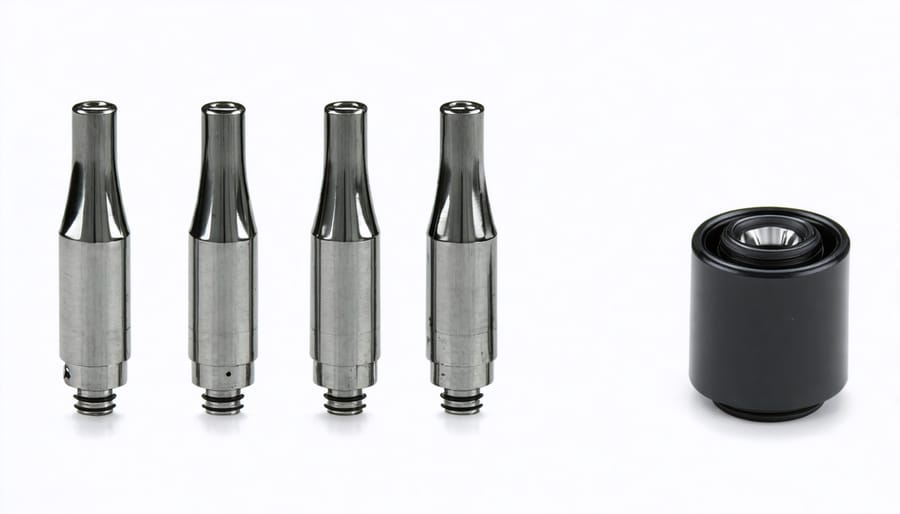
Material Selection Based on Formulation Chemistry
Selecting the appropriate elastomer requires systematic analysis of your Delta-9 THC formulation’s chemical profile. Begin by quantifying total terpene concentration, as formulations exceeding 15% terpene content demand premium materials like fluoroelastomers (FKM) or perfluoroelastomers (FFKM) that resist aggressive solvents. Formulations below 10% terpenes may function adequately with enhanced EPDM or specialized silicone compounds, reducing material costs while maintaining performance.
Carrier oil selection significantly impacts material compatibility. Medium-chain triglyceride (MCT) oil-based formulations exhibit moderate solvency, allowing broader material options including hydrogenated nitrile (HNBR) and advanced silicone formulations. Conversely, hemp seed oil and terpene-rich distillates create harsher chemical environments requiring fluoropolymer solutions.
Terpene profile composition matters beyond total concentration. Limonene and pinene demonstrate particularly aggressive swelling behavior, while linalool and myrcene present moderate challenges. Obtain detailed terpene analysis through gas chromatography-mass spectrometry (GC-MS) to identify dominant compounds and cross-reference against elastomer swell data.
Custom formulation development addresses unique chemistry combinations. When standard materials prove inadequate, engineered compounds incorporating specialized cross-linking agents, reinforcing fillers, and protective additives deliver optimized resistance. Material selection should account for operating temperature ranges, required seal compression, and expected service life—typically 18-24 months for consumer cartridges. Validation through accelerated aging tests at elevated temperatures confirms compatibility before production implementation.
Cost-Benefit Analysis: Premium Seals vs. Product Loss
The financial implications of seal selection in Delta-9 THC cartridges extend far beyond initial material costs. While terpene-resistant elastomers typically command a 15-30% price premium over standard seals, the total cost of ownership analysis reveals substantial long-term savings that justify this investment.
Product loss represents the most immediate financial impact of seal failure. Standard elastomer seals degrading in high-terpene formulations can result in leakage rates of 3-8% across typical inventory cycles. For a mid-size manufacturer producing 100,000 cartridges monthly at $15 wholesale value, this translates to $45,000-$120,000 in monthly product loss. Terpene-resistant seals reduce this failure rate to below 0.5%, recovering up to $115,000 monthly.
Return and warranty costs compound these losses. Each failed cartridge incurs processing costs averaging $8-$12 when accounting for customer service, logistics, and replacement product. High failure rates—often 5-10% with incompatible seals—generate substantial operational burdens. Manufacturers report reducing warranty claims by 85-95% after transitioning to chemically compatible elastomers, eliminating $40,000-$100,000 in monthly return processing costs for medium-volume operations.
Brand damage presents the most significant yet difficult-to-quantify cost. Consumer reviews highlighting leakage or performance issues directly impact market position and pricing power. Retailers increasingly demand quality guarantees, with some imposing penalty clauses for return rates exceeding 2%. Lost shelf space and distributor relationships can cost millions in foregone revenue.
The payback period for premium seal investment typically ranges from 2-4 months when accounting for direct costs alone. Including brand protection and market access considerations, the return on investment becomes immediately positive. Custom seal solutions engineered for specific terpene profiles further optimize this equation by eliminating overengineering costs while ensuring comprehensive chemical resistance.
Procurement professionals should evaluate seal selection as a critical quality assurance investment rather than a commodity purchase decision, recognizing that material specifications directly determine product viability and market competitiveness.
Custom Elastomer Solutions for Specialized Applications
High-concentration Delta-9 THC formulations present distinct material compatibility challenges that standard elastomer seals cannot adequately address. Cannabis oil concentrations exceeding 80% THC, combined with terpene profiles at 10-20%, create an aggressive chemical environment that demands engineered solutions. Custom-formulated compounds enable precise molecular optimization to resist swelling, degradation, and permeation under these extreme conditions.
Extended shelf life requirements in the cannabis vape industry necessitate seals that maintain integrity for 18-24 months under variable storage conditions. Custom elastomer formulations incorporate specific stabilizers and cross-linking agents that preserve dimensional stability and chemical resistance throughout the product lifecycle. This prevents common failure modes including oil seepage, oxidation-induced brittleness, and loss of sealing force that compromise product quality and consumer safety.
Environmental exposure further complicates seal performance requirements. Delta-9 THC cartridges encounter temperature fluctuations ranging from -20°C during transport to 60°C in vehicle storage, alongside humidity variations and UV exposure. Standard materials exhibit hardness changes of 15-20 Shore A points across this temperature range, leading to seal compression set and eventual failure. Custom formulations utilize specialty polymers and fillers engineered to maintain consistent performance across operational extremes.
The development process for these specialized compounds involves iterative testing protocols including immersion studies in representative THC-terpene matrices, accelerated aging simulations, and mechanical property validation at temperature extremes. This methodical approach ensures the final elastomer specification delivers measurable improvements in swell resistance (typically under 5% volume change), maintains seal integrity through 1000+ thermal cycles, and provides documented chemical compatibility with specific cannabinoid and terpene profiles, effectively eliminating the costly recalls and reputation damage associated with seal failure.
Material selection for Delta-9 THC cartridge seals directly impacts product reliability, customer satisfaction, and brand reputation in an increasingly competitive market. The chemical aggressiveness of terpenes demands engineered elastomer solutions that maintain seal integrity throughout the product lifecycle, preventing costly failures such as leakage, viscosity changes, and component degradation.
Manufacturers who prioritize terpene-resistant seal technology gain measurable competitive advantages: reduced warranty claims, extended shelf life, and enhanced consumer confidence. The integration of fluoroelastomers, HNBR, or specially formulated EPDM compounds—validated through rigorous compatibility testing—transforms seal performance from a potential liability into a quality differentiator.
Rubber innovation continues advancing material science capabilities, offering custom-formulated solutions tailored to specific terpene profiles and operational requirements. Manufacturers seeking to optimize cartridge performance should engage technical consultations early in the design phase, allowing material engineers to assess compatibility requirements, recommend appropriate elastomer compounds, and develop testing protocols that validate long-term performance under actual use conditions. Strategic investment in proper seal engineering delivers quantifiable returns through reduced failure rates and strengthened market position.
