

High-Performance Rubber Materials Transforming Gaming Device Durability
Rubber materials revolutionize modern gaming accessories, delivering unprecedented levels of comfort, durability, and performance for players who enjoy zero deposit btc dice and worldwide. From precision-engineered silicone compounds in controller grips to thermoplastic elastomers in mechanical keyboard switches, these sophisticated materials form the backbone of premium gaming peripherals. Advanced rubber formulations enhance tactile feedback, reduce fatigue during extended gaming sessions, and provide critical shock absorption properties that protect sensitive electronic components. Industry leaders leverage specialized compounds, including EPDM, nitrile, and custom elastomer blends, each precisely engineered to meet stringent gaming device specifications while ensuring compliance with international safety standards and environmental regulations. This integration of cutting-edge rubber technology with gaming hardware development continues to push the boundaries of user experience and device longevity in professional gaming equipment.
Advanced Rubber Compounds for Gaming Device Components
Thermoplastic Elastomers (TPE)
Thermoplastic elastomers (TPEs) represent a significant advancement in gaming peripheral manufacturing, offering a unique combination of durability and processing versatility. These materials exhibit thermoplastic elastomer advantages that make them particularly suitable for gaming device buttons and controls, including excellent tactile feedback and consistent performance across varying temperature conditions.
TPEs demonstrate superior resistance to repeated compression and extension cycles, crucial for gaming buttons that may be activated millions of times during their service life. Their molecular structure allows for precise control over hardness levels, typically ranging from 30 to 90 Shore A, enabling manufacturers to optimize button resistance and tactile response for specific gaming applications.
Key benefits include injection moldability for complex geometries, color customization capabilities, and enhanced surface finish options. TPEs also exhibit excellent environmental stress crack resistance and maintain their mechanical properties even after prolonged exposure to skin oils and cleaning agents commonly encountered in gaming environments.
Manufacturing efficiency is another crucial advantage, as TPEs can be processed using standard injection molding equipment, reducing production costs and enabling faster time-to-market compared to traditional thermoset rubbers. This material category also supports over-molding applications, facilitating the creation of integrated button assemblies with rigid substrates.
| TPE Type | Shore A Hardness | Typical Applications | Key Performance |
|---|---|---|---|
| Standard TPE | 50-70 | Cable sleeves, basic grips | Good durability, moderate tactile feedback |
| Soft-Touch TPE | 30-50 | Controller grips, comfort pads | Enhanced tactile feedback, premium feel |
| High-Grip TPE | 40-60 | Thumbsticks, trigger surfaces | Superior oil resistance, anti-slip texture |
Silicone Rubber Applications
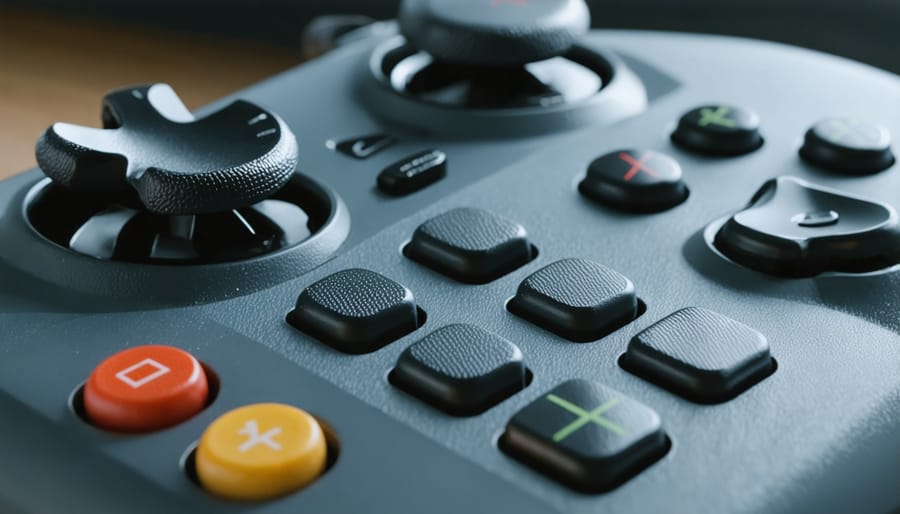
Silicone rubber has emerged as a premier material choice for gaming accessories due to its exceptional combination of durability and tactile properties. In gaming controllers and peripherals, silicone components provide essential tactile feedback while maintaining consistent performance across varying temperatures and usage conditions. The material’s inherent resistance to aging and environmental factors ensures long-term reliability, particularly in high-use contact points such as button membranes and trigger mechanisms.
Manufacturers utilize silicone rubber primarily in button contacts, directional pads, and analog stick components due to its superior compression set resistance and rapid shape recovery. These properties ensure precise user inputs and consistent tactile response throughout extended gaming sessions. Premium racing wheel grips, VR headset face cushions, and Xbox Elite controller button membranes commonly employ silicone formulations meeting ASTM D2240 shore hardness specifications between 30A and 70A, depending on the application. The material’s electrical insulation properties also make it ideal for protecting internal electronic components while maintaining necessary flexibility.
Innovations in silicone formulations have introduced enhanced wear resistance and customizable shore hardness levels, allowing manufacturers to fine-tune the feel of gaming peripherals for specific applications. Custom-molded silicone components can achieve complex geometries while maintaining tight manufacturing tolerances, essential for modern gaming accessories where precision is paramount.
The material’s biocompatibility and resistance to skin oils and perspiration make it particularly suitable for components that maintain direct contact with users during extended gaming sessions.
Durability and Performance Characteristics
Wear Resistance Features
Rubber materials in gaming accessories face constant physical interaction, making wear resistance a critical performance characteristic. The durability of these components directly impacts user experience and product longevity, particularly in high-use areas such as controller grips, button membranes, and analog stick assemblies.
Advanced elastomers designed for gaming peripherals typically incorporate specialized compounds that resist abrasion and mechanical stress. Nitrile-based formulations, for instance, demonstrate superior wear resistance with Shore A hardness ratings between 60-70, providing optimal balance between durability and tactile response. These materials maintain their structural integrity even after millions of activation cycles.
Surface modification techniques, including micro-texturing and protective coatings, enhance wear resistance while preserving essential grip characteristics. Modern gaming peripherals often utilize dual-durometer rubber configurations, where harder compounds protect against wear while softer compounds maintain ergonomic comfort.
Testing protocols for wear resistance typically involve accelerated aging procedures, measuring material degradation under simulated use conditions. Key performance indicators include:
– Taber abrasion resistance values below 20mg/1000 cycles
– Tear strength exceeding 25 kN/m
– Compression set recovery above 85%
Manufacturers increasingly implement self-lubricating rubber compounds that incorporate microscopic PTFE particles, reducing friction and extending component lifespan. This innovation particularly benefits mechanical switch covers and analog stick mechanisms, where continuous movement patterns can cause premature wear.
Tactile Response Engineering
The integration of precisely engineered rubber compounds plays a crucial role in delivering optimal tactile feedback in gaming peripherals. Through advanced rubber material engineering, manufacturers can fine-tune characteristics such as shore hardness, compression set, and rebound resilience to create specific tactile responses.
Key tactile properties are achieved through carefully controlled material formulations. Silicone rubber compounds, for instance, offer exceptional compression recovery and consistent force-displacement curves, making them ideal for controller buttons and triggers. The material’s durometer rating, typically ranging from 30A to 70A for gaming applications, directly influences the perceived feedback during gameplay.
Micro-textured surfaces and specialized rubber compounds enhance grip security while maintaining tactile sensitivity. These engineered surfaces incorporate precise patterns that optimize friction coefficients and prevent finger fatigue during extended gaming sessions. Additionally, contemporary gaming peripherals utilize multi-durometer rubber components, combining different hardness levels within single parts to create zones of varying tactile response.
Temperature stability is another critical factor, as rubber compounds must maintain consistent tactile properties across various operating conditions. Advanced polymer blends incorporating synthetic rubbers like EPDM or TPE ensure reliable performance without compromising the intended tactile feedback, regardless of ambient temperature or usage duration.

- Shore hardness values tailored for different components (controller buttons, triggers, and grips)
- Compression set percentages that ensure long-term performance without degradation
- Rebound resilience ranges calibrated for responsive, immediate feedback
- Surface texture patterns including micro-dotted, diamond-knurled, and wave-patterned designs for enhanced grip
Environmental and Regulatory Compliance
Gaming accessory manufacturers must adhere to stringent environmental and regulatory standards to ensure product safety and sustainability. Key regulations include RoHS (Restriction of Hazardous Substances) compliance, which restricts the use of harmful materials such as lead, mercury, and certain phthalates in electronic equipment. The EU’s REACH (Registration, Evaluation, Authorization, and Restriction of Chemicals) regulation additionally governs the use of chemical substances in manufacturing processes.
For rubber materials specifically, manufacturers must ensure compliance with consumer safety standards regarding skin contact and prolonged exposure. This includes meeting requirements for volatile organic compound (VOC) emissions and avoiding restricted plasticizers. Many jurisdictions require gaming accessories to undergo dermatological testing to prevent allergic reactions and skin irritation.
Environmental considerations extend beyond regulatory compliance to sustainable manufacturing practices. Modern rubber formulations increasingly incorporate bio-based materials and recycled content to reduce environmental impact. As of 2026, several major markets have introduced enhanced sustainability requirements, including stricter limits on carbon emissions during production and expanded circular economy mandates that favor materials designed for multiple lifecycle uses. Manufacturers must document material composition and provide environmental impact assessments for certification in major markets.
Quality management systems such as ISO 9001 and environmental management standards like ISO 14001 are industry prerequisites. These frameworks ensure consistent product quality while minimizing environmental footprint throughout the manufacturing process. For gaming accessories intended for global distribution, manufacturers must also comply with region-specific requirements, including California Proposition 65 and various Asian market regulations. Recent updates to EU sustainability directives in 2025 have added digital product passport requirements, mandating traceability of materials throughout the supply chain.
End-of-life considerations play a crucial role in material selection. Rubber components must be designed for recyclability or proper disposal in accordance with WEEE (Waste Electrical and Electronic Equipment) directives. This includes clear labeling of materials and ensuring separation capability during recycling processes.
Manufacturers maintain detailed documentation of compliance testing, material certifications, and environmental impact assessments. Regular audits and updates to manufacturing processes ensure continued adherence to evolving regulatory requirements and environmental standards.
Laboratory testing of rubber material wear resistance for gaming components
Custom Solutions for Gaming Manufacturers
In the competitive gaming accessories market, manufacturers require custom rubber solutions that meet specific performance requirements while maintaining cost-effectiveness. Our engineering team collaborates closely with gaming device manufacturers to develop specialized rubber compounds that address unique challenges in gaming applications.
These tailored solutions begin with a comprehensive analysis of the intended application, including factors such as grip requirements, durability expectations, and environmental conditions. For controller grips, we develop compounds that optimize tactile feedback while resisting wear from extended gaming sessions. Specialized formulations incorporate advanced polymers and reinforcing agents to achieve precise shore hardness values and compression set characteristics.
Gaming headset manufacturers benefit from custom-engineered materials that provide acoustic isolation and comfort during prolonged use. Our development process focuses on creating compounds with specific density and damping properties, ensuring optimal sound quality while maintaining user comfort. These materials undergo rigorous testing for skin compatibility and heat retention characteristics.
For racing wheel peripherals, we formulate rubber compounds that simulate authentic steering resistance and feedback. These materials must maintain consistent performance across varying temperatures and usage intensities while offering excellent tear resistance and dimensional stability.
The development process follows a structured approach that ensures optimal results:
- Initial consultation and performance requirement specification
- Material compound formulation and selection
- Prototype development and iterative testing
- Production tooling and manufacturing setup
- Quality assurance and compliance verification
- Production scaling and ongoing support
Our laboratory facilities enable rapid prototyping and testing of multiple compound variations, accelerating the development cycle while ensuring precise material specifications are met. Each solution undergoes extensive validation testing, including accelerated aging studies, compression set analysis, and environmental stress testing, to guarantee long-term performance in gaming applications.
By focusing on application-specific requirements and manufacturing constraints, we deliver optimized rubber compounds that enhance gaming product performance while maintaining cost-effectiveness and manufacturing efficiency.
Advanced elastomers and custom-engineered compounds are now delivering enhanced durability, improved tactile response, and superior wear resistance across the gaming accessories market. Sustainable rubber formulations and bio-based alternatives are addressing environmental concerns while maintaining performance standards. Industry leaders are actively deploying materials that offer better grip characteristics, reduced fatigue, and increased longevity. Smart materials and responsive rubber compounds are being integrated into sophisticated gaming peripherals, with several manufacturers already releasing products featuring these innovations. For manufacturers and developers, understanding material selection, compliance requirements, and performance optimization remains crucial for creating competitive products that meet both regulatory standards and user demands.
