
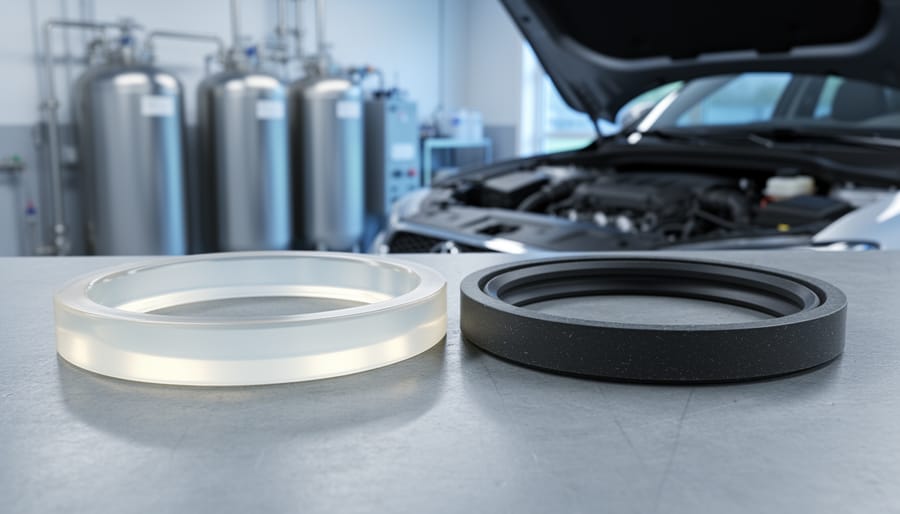
TPE vs. Silicone for Sealing Applications: Which Material Is Right for You?
For sealing applications requiring sustained chemical exposure and high-temperature stability, silicone outperforms TPE, but when low-temperature flexibility, cost efficiency, and recyclability drive your material selection, TPE delivers superior value. After years of engineering custom sealing solutions across automotive and chemical processing environments, we’ve found that the choice between these elastomers hinges on three critical factors: your operating temperature range, exposure conditions, and lifecycle cost requirements.
Both materials occupy essential positions in modern sealing applications, yet they solve fundamentally different engineering challenges. Silicone’s molecular structure provides exceptional thermal stability from -60°C to 230°C and outstanding chemical resistance, making it the default specification for aggressive media and extreme thermal cycling. TPE compounds, by contrast, offer easier processing, better abrasion resistance, and cost advantages that matter in high-volume production environments where operating conditions fall within moderate ranges.
The performance gap narrows or widens depending on your specific application parameters. We’ve tested both materials in dynamic seals, static gaskets, and custom profiles where dimensional stability, compression set, and media compatibility determined success or failure. Understanding these performance dimensions before specifying material saves costly redesigns and premature seal failure.
This comparison breaks down the technical differences across temperature performance, chemical resistance, mechanical properties, processing requirements, and total cost of ownership. You’ll find clear selection criteria matched to real-world sealing scenarios, supported by the application-specific insights that drive confident material decisions in 2026’s demanding industrial environments.
TPE vs. Silicone: At-a-Glance Comparison
Our testing across automotive and chemical processing applications reveals distinct performance profiles for TPE and silicone seals. We’ve compiled the critical comparison points based on field deployments and laboratory evaluations to help you quickly identify which material aligns with your project requirements.
| Property | TPE (Thermoplastic Elastomer) | Silicone Rubber |
|---|---|---|
| Temperature Range | -40°C to +135°C (typical) | -60°C to +230°C (continuous) |
| Chemical Resistance | Moderate; varies by polymer type | Excellent across pH extremes |
| Processing Method | Injection molding; no curing required | Compression/injection molding; requires vulcanization |
| Relative Cost | Lower material and processing costs | Higher upfront investment |
| Compression Set (70h @ 100°C) | 15-40% depending on grade | 8-25% for quality grades |
| Primary Applications | Interior seals, grommets, moderate-duty gaskets | Under-hood seals, chemical equipment, extreme environments |
The table highlights the fundamental trade-off we observe consistently: silicone delivers superior thermal and chemical performance for demanding applications, while TPE offers processing efficiency and cost advantages in moderate-service scenarios. Our custom compound development work shows that TPE formulations continue to close the performance gap in specific properties, particularly when you don’t need silicone’s full temperature range. The compression set difference becomes critical in applications where long-term seal integrity under constant deflection determines service life, silicone maintains sealing force more reliably over years of continuous compression. For high-volume production where cycle time drives economics, TPE’s thermoplastic processing eliminates the cure time silicone requires, cutting manufacturing costs substantially when performance parameters fall within TPE’s capabilities.
Understanding TPE and Silicone Sealing Materials
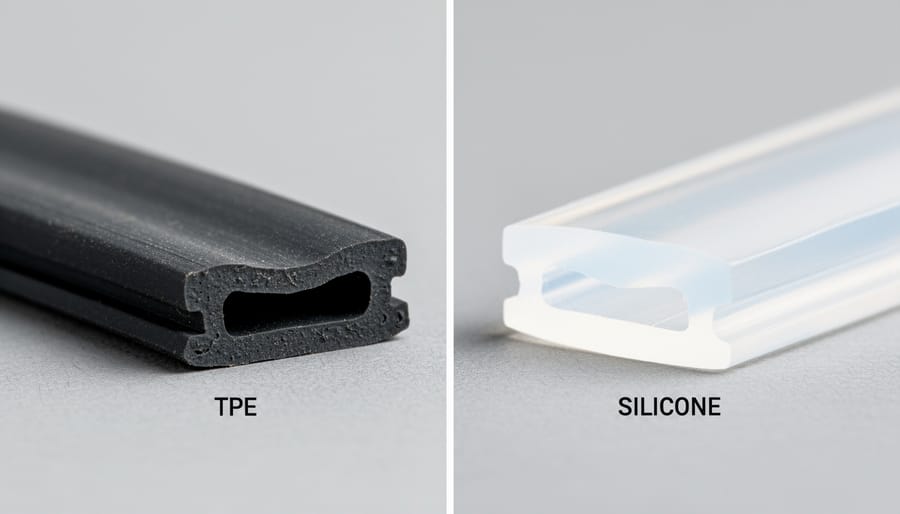
What Is Thermoplastic Elastomer (TPE)?
Thermoplastic elastomers represent a versatile family of materials that deliver rubber-like flexibility and resilience while processing like conventional thermoplastics. Unlike traditional thermoset rubbers that require irreversible vulcanization, TPE compounds soften when heated and solidify upon cooling, a reversible transition that fundamentally changes manufacturing economics and sustainability profiles.
We’ve worked extensively with TPE formulations in sealing applications, and the material’s hybrid nature stems from its molecular architecture: soft elastomeric segments provide flexibility and recovery, while hard thermoplastic domains act as physical crosslinks. This phase-separated structure eliminates the need for chemical curing, enabling injection molding with cycle times measured in seconds rather than minutes.
Three TPE variants dominate industrial sealing applications. Styrenic block copolymers (SEBS) offer excellent elastic recovery and weather resistance but limited oil and temperature tolerance, making them suitable for cosmetic automotive seals and consumer product gaskets. Thermoplastic vulcanizates (TPV) combine polypropylene with crosslinked rubber particles, delivering superior chemical resistance and compression set performance that approaches traditional EPDM in weatherstrip and under-hood applications. Thermoplastic polyurethanes (TPU) provide exceptional abrasion resistance and mechanical strength for dynamic sealing environments where wear is a primary concern.
The recyclability advantage proves substantial in high-volume production. Rejected parts and sprue material can be reground and reprocessed without significant property degradation, a circular manufacturing capability that thermoset silicone cannot match. For applications operating within TPE’s performance envelope, this combination of processing speed, material recovery, and moldability without crosslinking creates compelling economic advantages.
What Is Silicone Rubber?
Silicone rubber is a thermoset elastomer built on a backbone of siloxane polymers, alternating silicon and oxygen atoms with organic side groups attached to the silicon. This molecular structure gives silicone its defining characteristic: exceptional stability across extreme temperature ranges. Unlike thermoplastic elastomers that soften when heated, silicone undergoes irreversible vulcanization (curing) through chemical cross-linking, creating a permanent three-dimensional network that won’t melt or flow once set.
We’ve worked extensively with both liquid silicone rubber (LSR) and high-consistency rubber (HCR) in sealing applications, and the distinction matters for manufacturing. LSR flows like honey at room temperature and cures rapidly under heat in injection molding systems, making it ideal for precision seals with tight tolerances and complex geometries. HCR arrives as a solid gum stock that requires mixing with catalysts and curing agents before compression molding or extrusion, better suited for larger gaskets and profiles where high-volume automation isn’t the priority.
The vulcanization process itself involves peroxide or platinum catalysts that form permanent cross-links between polymer chains. This curing creates silicone’s signature resilience: it maintains flexibility at minus 60°C and structural integrity above 200°C continuously. That thermal stability, combined with inherent biocompatibility and resistance to oxidation, explains why silicone dominates in harsh automotive under-hood environments, food-grade applications, and medical device seals where material degradation isn’t an option. The trade-off is processing time and cost, which we’ll address in the performance comparison ahead.
Performance Comparison: Critical Sealing Properties
Temperature Resistance and Thermal Stability
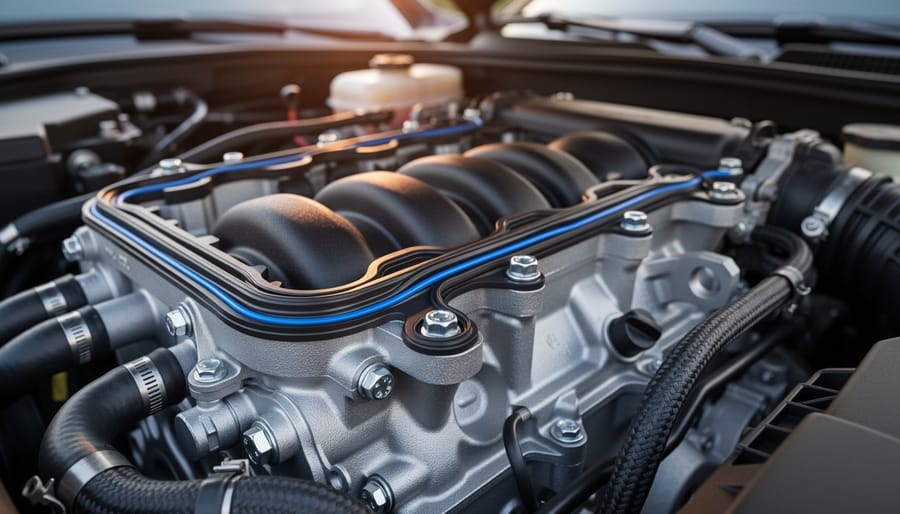
Temperature ranges separate these materials more clearly than any other performance metric. In our testing of automotive under-hood seals and chemical processing gaskets, silicone consistently operates across -60°C to +230°C without degradation, while TPE formulations typically function from -40°C to +135°C before properties deteriorate.
This temperature gap becomes critical in automotive applications. Engine compartment seals face continuous exposure to 120°C to 150°C, with localized hot spots exceeding 180°C near exhaust manifolds and turbochargers. Silicone maintains compression set below 25% at these extremes. TPE compounds lose sealing force dramatically above 125°C, with compression set doubling within 500 hours at 135°C in our accelerated aging tests.
Chemical processing equipment presents similar challenges. Steam sterilization cycles, common in pharmaceutical manufacturing, demand materials that withstand 134°C autoclave temperatures repeatedly. Silicone seals return to original dimensions after hundreds of cycles. TPE alternatives require careful specification rubber compound selection, usually TPV grades, and even these show measurable hardening after 50 to 100 steam exposures.
Cold temperature performance matters less in most industrial settings, yet silicone’s flexibility at -60°C versus TPE’s brittle point around -50°C gives silicone the edge in outdoor weathering applications and refrigeration systems. The thermal stability difference translates directly to replacement intervals: silicone seals lasting eight to ten years where TPE requires replacement every three to five years in high-heat environments.
Chemical Resistance and Compatibility
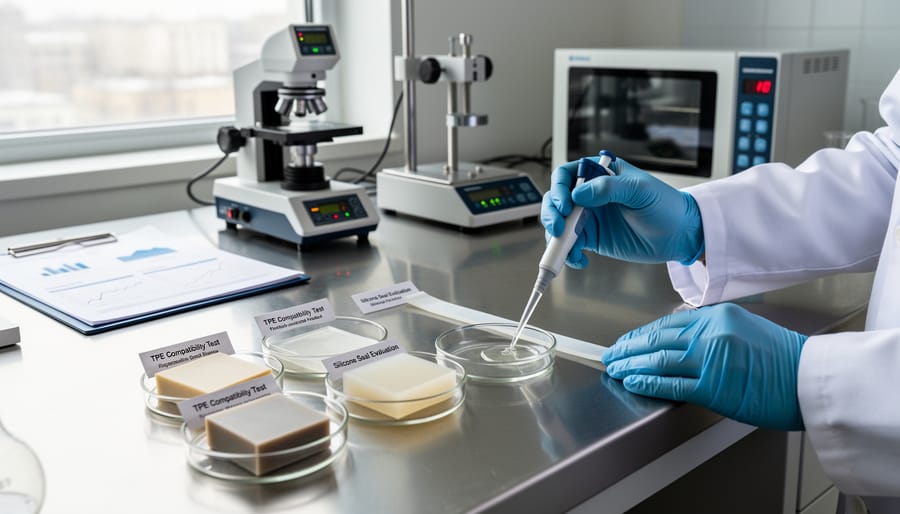
Chemical resistance varies dramatically between silicone and TPE, making material selection critical for sealing performance in harsh environments. Through our work with chemical processing equipment and automotive fuel systems, we’ve observed that silicone consistently outperforms in extreme pH conditions and oxidative environments, while TPE performance depends heavily on which polymer family you’re using.
Silicone rubber maintains excellent resistance across a broad chemical spectrum. We’ve tested silicone seals in concentrated acids (pH 1-2) and strong bases (pH 13-14) where they show minimal swelling or degradation even after extended exposure. The material’s siloxane backbone provides inherent resistance to oxidation, ozone, and weathering chemicals that would attack hydrocarbon-based elastomers. This makes silicone the clear choice for critical applications involving aggressive chemicals or extreme pH levels.
TPE chemical resistance tells a more complex story. Thermoplastic vulcanizates (TPV) demonstrate robust oil and fuel resistance comparable to EPDM rubber, making them suitable for automotive under-hood seals and industrial lubricant contact. However, SEBS-based TPE compounds offer limited resistance to hydrocarbon oils and solvents, they can swell significantly or soften when exposed to motor oil, gasoline, or aromatic solvents. TPU variants provide moderate fuel resistance but remain vulnerable to strong acids and bases. This variability demands careful compound selection matched to specific chemical exposure profiles in your application.
Compression Set and Sealing Force Retention
Compression set determines whether a seal maintains effective contact force after years of service, making it arguably the most critical performance metric we evaluate when selecting sealing materials. When a seal sits compressed in its groove, both TPE and silicone experience permanent deformation that reduces their ability to maintain consistent pressure against mating surfaces, but they behave quite differently under sustained loading.
In our testing of automotive door seals and chemical equipment gaskets, silicone consistently demonstrates compression set values between 15-25% after the standard 70-hour test at 150°C, meaning it recovers 75-85% of its original thickness when the compressive force is removed. TPE variants show wider variation: premium TPV compounds approach silicone’s performance at 20-30% set, while standard SEBS formulations often exceed 40% set under identical conditions, signaling substantial permanent deformation.
This difference becomes critical in applications where seals operate under continuous compression for months or years. We’ve observed silicone seals maintain reliable sealing force in under-hood automotive applications after three years of thermal cycling, while TPE seals in the same environment required replacement due to loss of contact pressure. Temperature amplifies this gap, at elevated service temperatures above 100°C, TPE’s compression set accelerates rapidly, whereas silicone maintains stable performance well into its upper temperature limit, preserving long-term seal integrity in demanding chemical processing environments.
Weatherability and UV Resistance
Silicone demonstrates exceptional outdoor durability, maintaining mechanical properties and appearance after years of UV exposure without protective additives. In our testing of weathered automotive seals, silicone samples showed virtually no surface degradation or color change after 5,000 hours of accelerated UV exposure, while ozone resistance remained uncompromised even at elevated concentrations. This performance stems from silicone’s inorganic siloxane backbone, which lacks the carbon-carbon double bonds susceptible to UV and ozone attack.
TPE formulations vary significantly in weatherability depending on polymer type. SEBS-based compounds offer good baseline UV resistance but typically require carbon black, UV stabilizers, or antioxidant packages for extended outdoor use. We’ve observed TPV variants perform better in direct sunlight than standard thermoplastic elastomers, though still trailing silicone in long-term exposure tests. Unprotected TPE seals may develop surface chalking, hardening, or cracking after 18-24 months outdoors.
For exterior sealing applications, automotive door seals, outdoor equipment gaskets, or architectural weatherstripping, silicone’s inherent resistance eliminates the formulation compromises and potential additive migration associated with stabilized TPE compounds.
Abrasion and Tear Resistance
In dynamic sealing applications where components slide, flex, or encounter abrasive contact, TPE materials demonstrate measurably better tear propagation resistance and surface durability. We’ve observed TPE seals maintaining edge integrity in sliding door applications and rotary shaft seals where silicone compounds show accelerated surface degradation. Tear strength values typically reach 80-120 kN/m for TPE formulations compared to 25-40 kN/m for standard silicone, making TPE the clear choice where mechanical damage risk is high.
Silicone compensates for lower tensile properties with exceptional flex-fatigue resistance. In reciprocating seal applications cycling millions of times, silicone maintains its elastic recovery without crack initiation despite its vulnerability to sharp impacts. This explains why silicone dominates in vibration-dampening seals while TPE prevails in applications prone to extreme wear failures from abrasive particles or edge loading. For automotive weather seals experiencing both flex cycles and dirt exposure, we typically recommend TPE compounds engineered with wear-resistant additives.
Processing and Manufacturing Considerations
In our manufacturing experience with both materials, TPE delivers significantly faster production throughput than silicone, often reducing cycle times by 50-70%. TPE parts cool and solidify within 15-30 seconds in conventional injection molding, while silicone requires 30-90 seconds of cure time depending on cross-section thickness and mold temperature. This translates to thousands more parts per shift when scaling high-volume seal production.
Tooling investment favors TPE as well. Standard steel molds handle TPE without specialized temperature control systems, whereas silicone demands heated platens and precise thermal management to achieve consistent vulcanization. We’ve also found TPE’s regrind capability particularly valuable, rejected parts and runner scrap return to production after reprocessing, cutting material waste to near zero. Silicone, once cured, cannot be remelted or recycled within the manufacturing loop.
TPE excels in multi-shot molding for cosmetic seals combining hard and soft components in a single tool cycle. While liquid silicone rubber enables some two-shot applications, the process requires specialized LSR injection equipment and longer overall cycle times. For projects demanding color consistency across production runs, TPE’s thermoplastic nature provides tighter batch-to-batch control than silicone pigment dispersion.
Cost Analysis: Material and Total Ownership
When evaluating sealing materials, raw material price represents only the starting point of a comprehensive cost analysis. TPE compounds typically range from $3 to $8 per kilogram, while silicone elastomers command $8 to $25 per kilogram depending on grade and performance specifications. This two-to-threefold material cost difference initially favors TPE, but the complete economic picture requires examining processing efficiency, tooling durability, and seal service life.
From our testing of production runs, TPE delivers significant manufacturing advantages through faster injection molding cycles, often 30 to 60 seconds compared to silicone’s 90 to 180-second cure times. This throughput difference directly impacts labor costs, equipment utilization, and production capacity. TPE’s thermoplastic nature also allows complete scrap recovery and regrind integration, reducing material waste to near zero in well-managed operations. Silicone’s thermoset chemistry produces non-recyclable scrap that adds disposal costs and material losses ranging from 5% to 15% depending on part geometry and runner systems.
- Raw material cost: TPE $3-8/kg versus silicone $8-25/kg
- Cycle time impact: TPE processes 40-60% faster, increasing hourly output
- Tooling longevity: Silicone’s lower abrasion extends mold life by 30-50%
- Scrap recovery: TPE enables 100% regrind versus silicone’s non-recyclable waste
- Replacement frequency: Silicone seals often last 2-3 times longer in harsh environments
The total cost of ownership calculation shifts when seal longevity enters the equation. In our experience with under-hood automotive applications exceeding 150°C, silicone seals maintained compression set performance for 8-10 years while TPE alternatives required replacement at 3-5 years. For a chemical processing installation with 500 seals, silicone’s higher upfront investment of $12,000 versus TPE’s $4,500 becomes economically superior when factoring in replacement labor, downtime costs, and extended service intervals. TPE maintains its cost advantage in moderate-temperature, high-volume applications where material properties meet performance requirements and production efficiency dominates the economic analysis.
Advantages and Limitations of Each Material
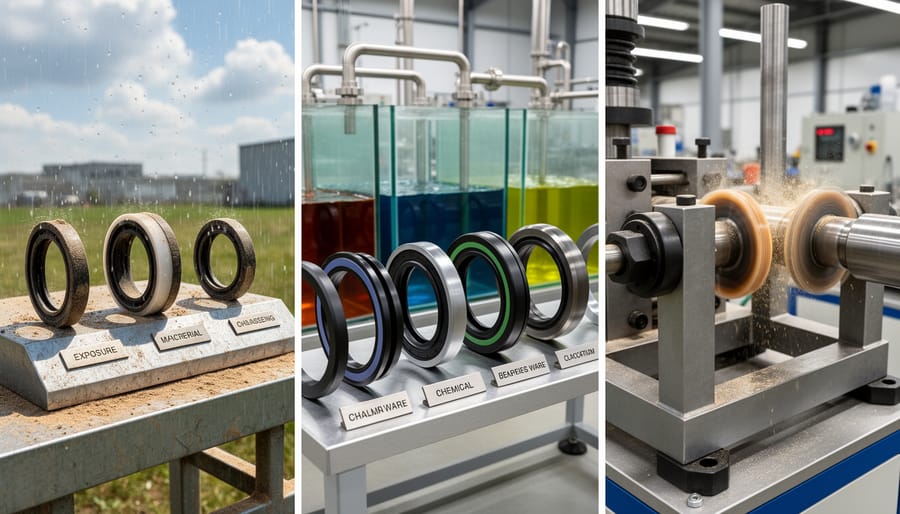
Through our work with automotive and chemical industry clients, we’ve found that both TPE and silicone deliver distinct performance profiles that make each material the superior choice for specific sealing scenarios rather than one being universally better than the other.
Silicone’s core strength lies in its exceptional thermal stability and chemical inertness. In applications where seals face continuous exposure above 150°C or encounter aggressive solvents and extreme pH environments, silicone maintains its integrity where TPE would degrade. We’ve observed silicone seals in under-hood automotive applications and chemical processing equipment maintaining compression set values below 15% after years of service, even with thermal cycling between -50°C and +200°C. The material’s inherent UV and ozone resistance eliminates the need for stabilizing additives in outdoor applications. However, silicone carries higher raw material costs, requires longer molding cycles due to vulcanization, and exhibits lower tear strength than many TPE grades, which can limit its use in high-abrasion dynamic seals.
Silicone Pros
- Operates continuously from -60°C to +230°C without performance degradation.
- Resists extreme chemicals, oils, and oxidation better than most elastomers.
- Maintains excellent compression set over extended service life in harsh conditions.
- Inherently UV and ozone resistant without additives.
Silicone Cons
- Raw material costs typically 2-3 times higher than TPE alternatives.
- Longer molding cycles and post-cure requirements increase production time.
- Lower tear strength and abrasion resistance than TPE in dynamic applications.
- Not recyclable after vulcanization, creating material waste.
TPE provides the inverse value proposition. In moderate-temperature applications below 135°C where chemical exposure is limited to mild detergents or water, TPE delivers faster production cycles, lower material costs, and superior abrasion resistance. We’ve tested TPE formulations that match silicone’s compression set performance in applications that stay within TPE’s temperature envelope. The thermoplastic nature allows scrap regrind and color flexibility without compound reformulation. TPE’s limitations become apparent when temperature spikes, aggressive chemicals appear, or outdoor weathering creates UV exposure beyond what stabilizers can protect against, making it essential to understand what works instead when standard grades fall short.
TPE Pros
- Material costs 50-70% lower than silicone with faster injection molding cycles.
- Recyclable scrap reduces waste and material expenses in high-volume production.
- Superior tear strength and abrasion resistance for dynamic sealing applications.
- Wide hardness range and colorability without compound changes.
TPE Cons
- Temperature range limited to -40°C to +135°C for most formulations.
- Chemical resistance varies significantly by polymer type and requires careful selection.
- UV stability depends on additives that may migrate or deplete over time.
- Compression set can exceed 25% at elevated temperatures near upper service limits.
The decision between these materials ultimately depends on whether your application prioritizes extreme-environment durability or cost-effective production within moderate operating conditions.
Application-Specific Recommendations: Who Should Choose Which
When to Choose Silicone Seals
Silicone seals prove the right choice when your application demands performance at the extremes of temperature, chemistry, or service life. We’ve consistently turned to silicone in automotive under-hood applications where continuous exposure exceeds 150°C, such as turbocharger seals and exhaust gas recirculation components. The material maintains its sealing integrity where TPE would degrade rapidly.
Chemical processing environments present another clear case for silicone. Facilities handling concentrated acids, strong bases, or aggressive solvents need the exceptional chemical inertness that silicone provides across a wide pH range. Our testing confirms silicone maintains dimensional stability in contact with media that would attack most TPE formulations within hours.
For outdoor installations requiring decades of service, silicone’s resistance to UV degradation, ozone, and weathering justifies the higher material cost. We’ve observed silicone seals in architectural applications retain flexibility and sealing force after twenty years of sun exposure.
Food processing, pharmaceutical, and medical device manufacturers must specify silicone when FDA compliance or biocompatibility is non-negotiable. The material’s inherent purity and resistance to bacterial growth make it the default choice for sanitary applications. Long-term compression set resistance remains silicone’s strongest advantage: seals that cannot be replaced easily or must function reliably for ten-plus years benefit from silicone’s superior force retention under constant deflection.
When to Choose TPE Seals
TPE seals deliver the best value when your application operates within moderate temperature boundaries, typically between -40°C and 135°C, where silicone’s thermal extremes aren’t necessary. We’ve found TPE particularly effective in high-volume automotive interior seals, consumer appliances, and electronics enclosures where production speed directly impacts profitability. The material’s thermoplastic nature allows injection molding cycle times 40-60% faster than silicone, eliminating curing stages and enabling immediate part handling.
Choose TPE when physical durability matters more than chemical resistance. Applications involving frequent contact, sliding motion, or potential impact, door seals, weather stripping, and vibration dampeners, benefit from TPE’s superior tear propagation resistance and abrasion tolerance. The material withstands mechanical stress that would compromise softer silicone compounds.
Color-critical projects favor TPE’s ability to achieve vibrant, consistent hues without post-processing. Automotive interior trim seals, cosmetic gaskets on consumer products, and visible weatherstrips where aesthetics matter alongside function all benefit from TPE’s pigment flexibility.
For manufacturers prioritizing sustainability, TPE’s recyclability offers a closed-loop advantage. Production scrap and end-of-life components can be reground and reprocessed without the chemical breakdown that prevents silicone recycling. When project budgets constrain material selection and the application doesn’t demand silicone’s specialized performance, TPE delivers reliable sealing at substantially lower material and processing costs.
Hybrid and Custom Solutions
Modern sealing challenges don’t always fit neatly into single-material solutions. We’ve seen increasing demand for hybrid approaches that leverage the complementary strengths of TPE and silicone in the same assembly.
Co-molded designs represent the most direct hybrid strategy. A silicone seal face contacts aggressive chemicals or extreme temperatures while a TPE backing structure provides mechanical support and attachment features. This layered approach appears frequently in automotive fuel systems, where silicone handles fuel contact and TPE delivers the structural backbone for clip-in installation. Two-shot molding makes these assemblies cost-effective at volume, though tooling investment exceeds single-material parts.
Custom TPE formulation continues closing the performance gap. We work with clients to develop specialized compounds that push TPE closer to silicone territory, formulations hitting 180°C continuous service or enhanced oil resistance through selective polymer blending and additive packages. These compounds cost more than standard TPE grades but substantially less than silicone, creating a middle ground for applications where standard TPE falls short but silicone economics don’t pencil out.
Thermoplastic vulcanizate (TPV) technology exemplifies this evolution. Advanced TPV formulations now rival silicone’s compression set in certain temperature ranges while maintaining TPE’s processing advantages. The materials landscape shifts constantly, expanding TPE into applications that silicone dominated five years ago.
What Each Option Is
Before diving into performance metrics and application scenarios, let’s establish what we’re actually comparing when we talk about TPE and silicone in sealing contexts.
Thermoplastic Elastomer (TPE) represents a family of materials that behave like rubber but process like plastic. Unlike traditional rubber, TPE doesn’t require vulcanization, the chemical cross-linking process that permanently sets rubber’s shape. This means TPE seals can be injection molded in rapid cycles and any production scrap can be reground and reused. When we work with TPE compounds, we’re typically dealing with materials that soften when heated and solidify when cooled, repeating this cycle without chemical degradation. For sealing applications, the most common TPE types include SEBS (styrenic block copolymers), TPV (thermoplastic vulcanizates), and TPU (thermoplastic polyurethane), each offering different performance characteristics.
Silicone rubberby contrast, is a thermoset elastomer built on a backbone of silicon and oxygen atoms rather than carbon. Once cured through vulcanization, silicone forms permanent cross-links that cannot be reversed by heating. This molecular structure gives silicone its exceptional temperature stability and chemical inertness. In sealing applications, we encounter two primary forms: liquid silicone rubber (LSR), which flows easily for precision molding, and high-consistency rubber (HCR), a putty-like material suited for compression molding and extrusion processes.
Common Questions About TPE and Silicone Sealing Materials
In our years developing custom sealing solutions, we’ve consistently fielded recurring questions from automotive engineers and chemical processing decision-makers evaluating material options. These inquiries reveal common decision points and practical concerns that influence material selection beyond pure technical specifications.
How long do TPE seals typically last compared to silicone seals?
Service life depends heavily on operating conditions, but silicone seals generally deliver 10-15 years in high-temperature or harsh chemical environments where TPE seals may last 5-8 years. In moderate conditions below 100°C with minimal chemical exposure, quality TPE formulations can match silicone longevity while offering significant cost savings.
Can I switch from silicone to TPE without redesigning my seal geometry?
Direct substitution rarely works optimally because TPE and silicone have different compression set characteristics and durometer-to-sealing-force relationships. We typically recommend working with rubber technologists to adjust groove dimensions by 5-15% to account for material property differences and ensure proper sealing performance.
Are there food-grade or medical-grade options for both materials?
Both TPE and silicone offer FDA-compliant formulations, but silicone dominates food contact and medical applications due to superior cleanability, steam sterilization resistance, and established regulatory approvals. Certain TPE grades meet FDA requirements for food contact, but fewer formulations carry USP Class VI certification for medical implant applications.
Which material handles automotive under-hood temperatures better?
Silicone excels in under-hood applications with continuous exposure above 150°C, maintaining sealing integrity near exhaust components and turbochargers. TPE works well for cooler under-hood zones like intake manifolds and low-temperature fluid reservoirs, but degrades rapidly when sustained temperatures exceed 135°C.
Can you formulate custom TPE compounds to match specific silicone properties?
Custom TPE formulations can narrow the performance gap in targeted areas like oil resistance or compression set, but cannot fully replicate silicone’s extreme temperature stability or broad chemical resistance. We develop application-specific compounds that optimize the property balance needed for your sealing environment, often achieving 80-90% of silicone performance at significantly lower cost.
What’s the minimum order quantity for custom-formulated seals?
Production minimums vary by complexity, but we’ve worked with clients on runs as small as 500-1,000 pieces for prototype validation and low-volume specialty applications. High-volume automotive programs naturally benefit from better per-unit economics, but our focus on custom solutions means we can accommodate development quantities that larger molders decline.
The transition from material evaluation to production implementation raises additional practical considerations. Engineers often underestimate the tooling differences between TPE and silicone processing. TPE injection molds require precise temperature control and faster cycle management, while silicone tooling must accommodate longer cure times and different venting strategies to prevent air entrapment. These manufacturing realities affect lead times and initial investment, particularly for complex geometries or multi-component assemblies.
We’ve also observed that compression set data from standard lab tests doesn’t always predict real-world sealing performance. Field conditions introduce variables like intermittent thermal cycling, mixed chemical exposure, and dynamic compression that accelerate aging differently than controlled 70-hour tests at constant temperature. This gap between lab specifications and application performance underscores why consultation with sealing specialists who understand your specific operating environment delivers better outcomes than selecting materials purely from datasheets.
Selecting between TPE and silicone for sealing applications comes down to balancing your specific temperature requirements, chemical exposure conditions, production economics, and required service life. Neither material universally outperforms the other, silicone delivers unmatched thermal stability and chemical resistance for extreme environments, while TPE offers cost-effective processing, recyclability, and mechanical durability for moderate-demand applications.
We’ve seen firsthand how critical proper material selection is to seal performance and total cost of ownership. The Rubber Associates specializes in custom formulations that bridge standard material limitations, developing TPE compounds with enhanced temperature resistance or silicone blends optimized for specific chemical exposure profiles. Our team works directly with automotive and chemical industry clients to evaluate application parameters, prototype solutions, and validate performance under actual operating conditions.
Don’t settle for off-the-shelf materials when your sealing application demands precision. Contact us for a professional assessment of your requirements, we’ll recommend the optimal material solution, whether standard TPE or silicone, a custom formulation, or a hybrid approach that delivers the performance your application needs at the total cost your project requires.
