
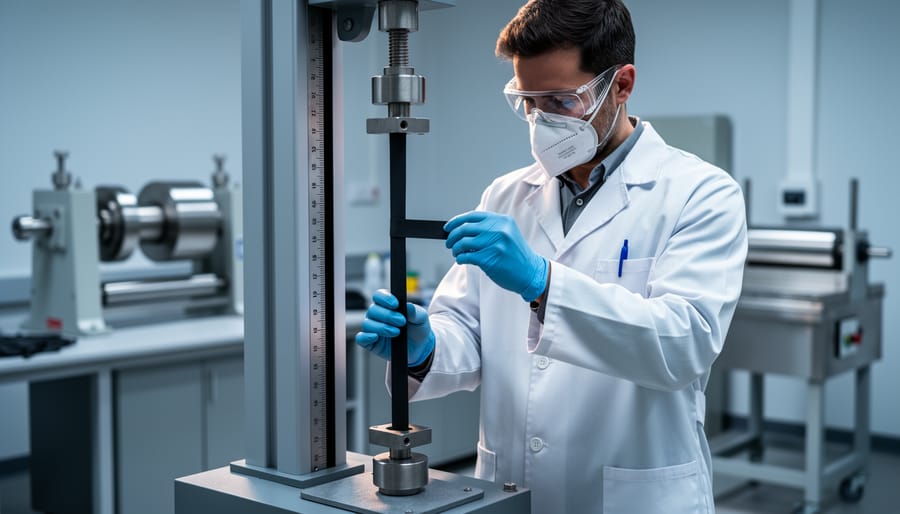
Why Rubber Technologists Are Critical to Modern Manufacturing Success
Rubber technologists engineer elastomeric materials that withstand extreme temperatures, aggressive chemicals, and mechanical stress in mission-critical applications. This specialized role combines polymer chemistry expertise with practical manufacturing knowledge to develop compounds that meet precise performance specifications for automotive sealing systems, industrial hoses, and high-wear components.
The position demands rigorous compound formulation capabilities, where technologists select and balance base polymers, fillers, curatives, and processing aids to achieve targeted physical properties. They conduct systematic testing protocols including tensile strength analysis, compression set evaluation, and accelerated aging studies to validate material performance under simulated operating conditions.
Modern rubber technologists function as technical liaisons between research and development teams, production facilities, and quality assurance departments. They troubleshoot vulcanization defects, optimize mixing parameters, and implement process improvements that reduce cycle times while maintaining specification compliance. Their work directly impacts product reliability, manufacturing efficiency, and cost competitiveness in industries where material failure carries significant safety and financial consequences.
The role requires proficiency in analytical instrumentation, statistical process control, and industry standards such as ASTM and ISO testing methods. Successful technologists translate complex customer requirements into manufacturable formulations, leveraging their understanding of polymer rheology, crosslinking kinetics, and additive interactions. This technical foundation positions them as indispensable problem-solvers who drive innovation in rubber product development and ensure consistent material performance across production batches.
What Does a Rubber Technologist Do?
A rubber technologist serves as the technical expert responsible for developing, testing, and optimizing rubber compounds to meet specific performance requirements across diverse industrial applications. These professionals bridge the gap between raw material science and practical manufacturing, ensuring that rubber products deliver the precise characteristics demanded by high-performance environments.
At the core of their responsibilities lies material formulation. Rubber technologists design compound recipes by selecting appropriate base polymers—such as natural rubber, EPDM, nitrile, or silicone—and combining them with fillers, curatives, processing aids, and specialized additives. Each formulation decision directly impacts properties including tensile strength, abrasion resistance, temperature tolerance, and chemical compatibility. This process requires deep understanding of polymer chemistry and how ingredients interact during mixing and vulcanization.
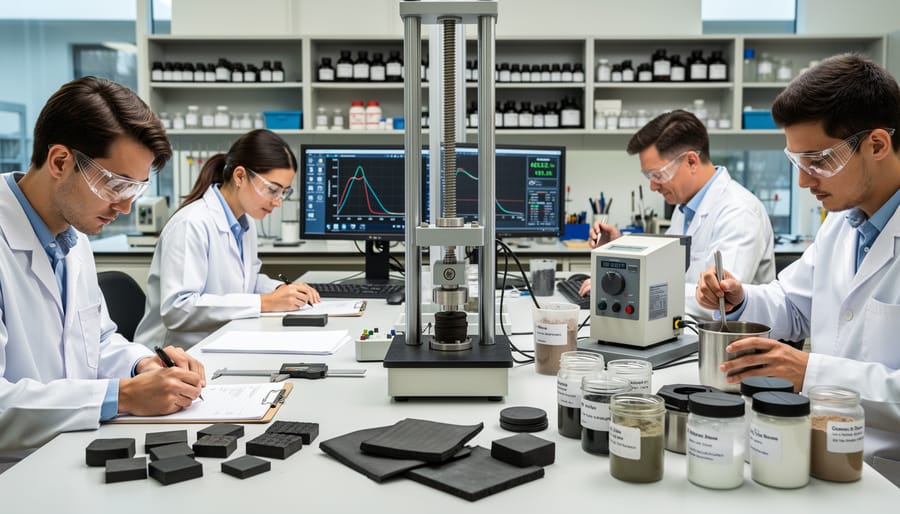
Testing protocols constitute another critical function. Technologists develop and execute comprehensive evaluation programs using rheometers, tensile testers, hardness gauges, and environmental chambers. They analyze data from accelerated aging tests, compression set measurements, and dynamic mechanical analysis to verify that compounds meet specification thresholds. This empirical approach ensures formulations perform reliably under real-world stress conditions before production scaling.
Quality assurance responsibilities extend throughout the manufacturing lifecycle. Rubber technologists monitor batch consistency, troubleshoot processing anomalies, and implement corrective actions when compounds deviate from target parameters. They collaborate with production teams to optimize cure cycles, adjust mixing procedures, and resolve defects such as blooming, porosity, or inadequate adhesion.
Problem-solving defines much of the daily work. When automotive seals fail prematurely or conveyor belts exhibit excessive wear, technologists investigate root causes through failure analysis. They reformulate compounds, adjust processing conditions, or recommend alternative materials to eliminate performance gaps. This diagnostic capability transforms industry requirements into practical rubber solutions that reduce downtime, extend component life, and lower total ownership costs.
The role demands continuous innovation as emerging applications—electric vehicle battery seals, high-temperature industrial gaskets—require novel material approaches that push traditional rubber technology boundaries.
Essential Technical Competencies
Material Science and Polymer Chemistry
A rubber technologist must possess comprehensive knowledge of material science fundamentals, particularly regarding elastomer classifications and their distinct molecular structures. This expertise encompasses natural rubber (NR), styrene-butadiene rubber (SBR), nitrile rubber (NBR), ethylene propylene diene monomer (EPDM), and specialized polymers like fluoroelastomers and silicones. Each elastomer type exhibits unique performance characteristics—tensile strength, elongation, compression set, chemical resistance, and temperature tolerance—that determine suitability for specific applications.
Vulcanization chemistry represents a critical competency area. Technologists must understand sulfur-based crosslinking mechanisms, peroxide cure systems, and alternative vulcanization methods. This knowledge enables optimization of cure kinetics, crosslink density, and network structure to achieve targeted physical properties. Control over vulcanization parameters directly influences product durability, elastic recovery, and resistance to environmental degradation.
Compounding principles form the foundation of rubber formulation development. Technologists strategically select and proportion ingredients including base polymers, curing agents, accelerators, activators, antioxidants, processing aids, and reinforcing fillers such as carbon black and silica. Each component serves specific functions: fillers enhance mechanical properties and abrasion resistance, while protective agents extend service life under oxidative stress and ultraviolet exposure.
Material property evaluation requires proficiency in analytical techniques and performance testing. Technologists interpret rheological data, stress-strain relationships, hardness measurements, and dynamic mechanical analysis results to validate formulations against engineering specifications. This scientific rigor ensures consistent quality and enables predictive modeling for custom solutions addressing complex automotive and industrial requirements.
Testing and Quality Control Methodologies
Rubber technologists maintain rigorous quality control through systematic testing methodologies that ensure materials meet precise performance specifications. Analytical testing encompasses chemical composition analysis, rheological measurements, and thermal property evaluation using differential scanning calorimetry (DSC) and thermogravimetric analysis (TGA). These professionals conduct mechanical property assessments including tensile strength, elongation at break, compression set, and tear resistance testing to validate material performance under operational stresses.
Durability assessment forms a critical component, involving accelerated aging protocols, ozone resistance testing, and fatigue analysis that predict long-term performance in demanding environments. Rubber technologists must demonstrate comprehensive knowledge of ASTM International and ISO standards, ensuring all testing procedures and material specifications align with industry requirements. This includes familiarity with ASTM D412 for tensile properties, ASTM D2240 for hardness measurement, and ISO 37 for determination of tensile stress-strain properties.
Quality control extends beyond laboratory testing to include statistical process control implementation, failure analysis, and corrective action protocols. Technologists interpret test data to optimize formulations, troubleshoot production issues, and provide technical documentation supporting compliance certifications. This systematic approach ensures consistent product quality while meeting stringent automotive and industrial application requirements.
Processing and Manufacturing Knowledge
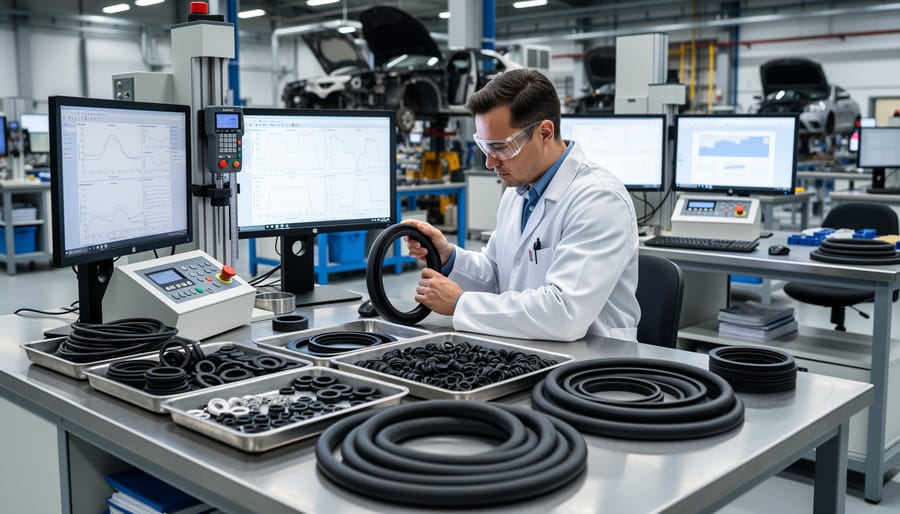
Rubber technologists possess comprehensive expertise in multiple processing methods that directly influence material properties and product performance. Compression molding, transfer molding, and injection molding techniques require precise parameter control including temperature profiles, cure times, and pressure settings to achieve optimal cross-linking and dimensional accuracy. Extrusion processes demand knowledge of die design, screw geometry, and throughput optimization to produce consistent profiles, tubing, and seals for automotive applications. Calendering operations involve controlling roll temperatures, speeds, and gap settings to manufacture uniform sheet stock and fabric-coated materials with specified thickness tolerances. Advanced processing techniques such as liquid injection molding (LIM) and rubber-to-metal bonding require specialized understanding of material flow characteristics, mold design principles, and adhesion promotion methods. Technologists must evaluate how processing variables affect vulcanization kinetics, compound viscosity, and final mechanical properties. Custom solution development necessitates selecting appropriate manufacturing methods based on production volume, complexity, and performance requirements. This processing knowledge enables rubber technologists to troubleshoot production issues, implement quality control measures, and recommend process improvements that enhance efficiency while maintaining product specifications critical for high-wear applications.
Impact on Product Development and Innovation
Rubber technologists serve as catalysts for product innovation by developing advanced elastomeric solutions that address complex engineering challenges across multiple industries. Their expertise in polymer chemistry and material science enables the creation of custom formulations tailored to specific performance requirements, directly influencing product quality, durability, and competitive positioning.
In automotive applications, rubber technologists engineer specialized compounds for critical sealing systems that must withstand extreme temperature fluctuations, chemical exposure, and prolonged mechanical stress. These custom formulations prevent fluid leakage in engine compartments, transmission systems, and braking assemblies while maintaining elasticity across temperature ranges from -40°C to 150°C. The development of such precision-engineered seals requires sophisticated material optimization, balancing factors including compression set resistance, thermal stability, and compatibility with automotive fluids.
Vibration dampening represents another critical innovation area where rubber technologists apply their formulation expertise. By modifying polymer networks and incorporating specific fillers, they create compounds with precisely tuned dynamic properties that absorb mechanical vibrations and reduce noise transmission. These solutions prove essential in engine mounts, suspension bushings, and cabin isolation systems, directly impacting vehicle comfort and component longevity. The optimization process involves extensive testing protocols to validate performance under cyclic loading conditions and environmental stress.
For high-wear applications in industrial manufacturing, mining equipment, and material handling systems, rubber technologists develop abrasion-resistant compounds that significantly extend component service life. Through strategic selection of reinforcing agents, polymer blends, and protective additives, they create formulations capable of withstanding continuous friction, impact, and environmental degradation. This material innovation reduces maintenance costs and operational downtime while improving safety margins.
The innovation process extends beyond initial formulation to include continuous improvement initiatives. Rubber technologists analyze field performance data, investigate failure modes, and refine compounds to address emerging challenges such as stricter environmental regulations, lightweighting requirements, and sustainability demands. Their ability to translate industry needs into viable material solutions positions them as essential contributors to product development cycles, enabling manufacturers to maintain technological leadership and respond effectively to evolving market requirements.
Critical Functions in the Automotive Industry
Rubber technologists serve essential functions throughout automotive manufacturing, with their contributions directly influencing vehicle performance, safety standards, and operational longevity. These specialists develop and optimize elastomeric materials that must withstand extreme temperature fluctuations, chemical exposure, and mechanical stress inherent to automotive environments.
A primary focus involves engineering thermoplastic elastomers (TPEs) that combine the processing advantages of thermoplastics with the elastic properties of conventional rubbers. Rubber technologists formulate TPE compounds for interior trim components, weatherstripping, and flexible connectors, balancing aesthetic requirements with functional durability. These materials must maintain flexibility across temperature ranges from -40°C to 150°C while resisting UV degradation and maintaining dimensional stability.
Development of fuel-resistant seals represents another critical contribution. Modern fuel systems require elastomeric seals that resist degradation from ethanol-blended fuels, biodiesel, and various fuel additives. Rubber technologists select appropriate base polymers such as fluoroelastomers or hydrogenated nitrile rubber, then optimize vulcanization systems and additive packages to achieve required swell resistance, compression set properties, and long-term sealing performance. These specifications directly impact fuel system integrity and vehicle emissions compliance.
Under-hood applications demand specialized expertise in high-temperature elastomers. Technologists engineer compounds for timing belts, serpentine belts, hoses, and gaskets that maintain mechanical properties at sustained temperatures exceeding 150°C. They conduct accelerated aging studies, ozone resistance testing, and compression stress relaxation analysis to validate performance predictions against real-world operating conditions.
Performance-critical components such as suspension bushings, engine mounts, and vibration dampers require precise control of dynamic properties. Rubber technologists manipulate polymer networks, filler systems, and crosslink density to achieve specified stiffness, damping characteristics, and fatigue resistance. This work directly affects vehicle handling, passenger comfort, and noise-vibration-harshness (NVH) performance.
Through systematic material selection, formulation optimization, and rigorous testing protocols, rubber technologists ensure automotive components meet increasingly stringent safety regulations, efficiency targets, and durability expectations demanded by modern vehicle platforms.
Problem-Solving in High-Wear Applications
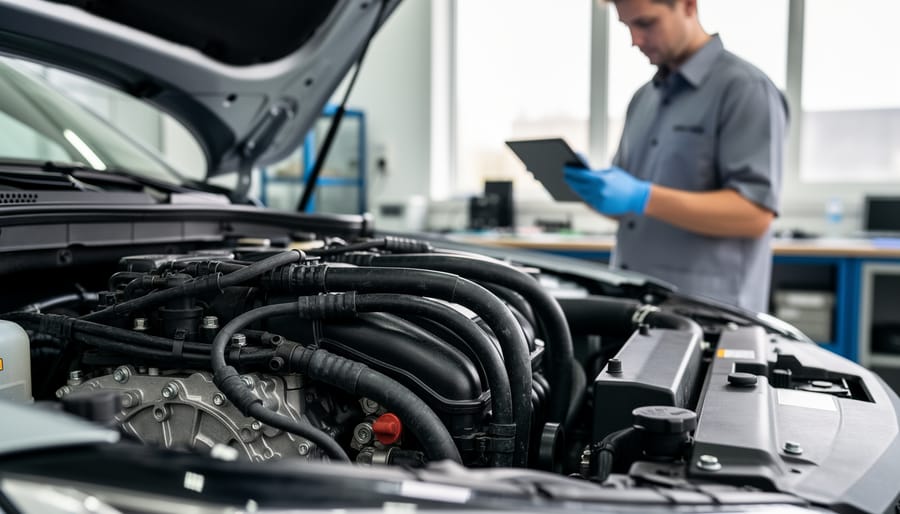
Rubber technologists play a critical role in diagnosing and resolving complex performance failures across high-wear applications, from automotive sealing systems to industrial conveyor belts operating in extreme environments. When premature component failure occurs, these professionals conduct systematic failure analysis using techniques such as dynamic mechanical analysis (DMA), scanning electron microscopy (SEM), and thermal gravimetric analysis (TGA) to identify root causes ranging from compound degradation to improper cure profiles.
In automotive applications, rubber technologists address challenges such as door seal compression set failure in extreme temperature cycling or transmission mount degradation under prolonged dynamic loading. By correlating laboratory stress-strain data with field performance metrics, they identify whether failures stem from formulation deficiencies, processing inconsistencies, or service conditions exceeding design parameters. This analytical approach enables targeted solutions rather than costly trial-and-error reformulation.
Performance optimization requires balancing competing properties through strategic compound modification. For mining applications demanding abrasion resistance in conveyor belt covers, technologists might increase carbon black loading while incorporating antiozonants to maintain flex fatigue resistance. In sealing applications experiencing extrusion under high pressure, they may adjust polymer molecular weight distribution or incorporate structural reinforcement without compromising compression set resistance.
The financial impact of this expertise is substantial. Early identification of batch-to-batch processing variations can prevent recall-level quality issues, while optimized formulations extend component service life by 30-50 percent in demanding applications. For manufacturers, this translates to reduced warranty claims, lower material costs through extended replacement intervals, and enhanced product reputation. Rubber technologists leverage their comprehensive understanding of polymer chemistry, mechanical properties, and processing science to deliver custom solutions that address specific application requirements while maintaining production efficiency and cost-effectiveness.
Collaboration Across Departments and Industries
Rubber technologists function as critical liaisons across multiple organizational functions, translating complex material science into actionable specifications for diverse stakeholders. Their cross-functional responsibilities require daily collaboration with design engineers during product development phases, where they provide technical guidance on material selection, processing parameters, and performance limitations. This partnership ensures that design concepts align with manufacturing feasibility and material capabilities before prototyping begins.
Within production environments, rubber technologists work closely with manufacturing teams to optimize processing conditions, troubleshoot quality issues, and implement formulation adjustments that enhance efficiency without compromising product integrity. They conduct regular floor assessments to identify process deviations and recommend corrective measures that maintain specification compliance.
Quality assurance partnerships represent another essential collaboration area, where technologists establish testing protocols, interpret analytical data, and define acceptance criteria for incoming materials and finished products. This coordination ensures consistent product quality and facilitates rapid resolution of non-conformance issues.
Customer-facing interactions position rubber technologists as technical consultants who address application-specific challenges, propose custom solutions, and provide material performance data that supports purchasing decisions. They must effectively communicate complex technical concepts to stakeholders with varying expertise levels, from procurement specialists requiring basic material properties to engineering teams needing detailed compound formulations.
Supplier relationships also demand regular engagement, as technologists evaluate raw material specifications, assess alternative ingredients for cost optimization, and collaborate on innovation initiatives. This multidisciplinary approach ensures that material solutions address technical requirements while supporting broader business objectives across automotive, industrial, and specialty application sectors.
Career Pathways and Professional Development
Entry into rubber technology typically requires a bachelor’s degree in polymer science, chemical engineering, materials science, or related disciplines. Many professionals enter the field with chemistry or mechanical engineering backgrounds, gaining specialized knowledge through on-the-job training and targeted coursework in elastomer chemistry, compound formulation, and processing technologies.
Professional certifications enhance career prospects and demonstrate technical competency. The American Chemical Society offers the Rubber Division Certification Program, while specialized training in quality systems, process optimization, and compound development provides competitive advantages. Advanced degrees in polymer engineering or materials science open pathways to research-oriented positions and senior technical roles.
Career progression in rubber technology follows multiple trajectories. Entry-level technologists typically begin with formulation support, quality control testing, or process assistance, developing expertise in compound design and material characterization. Mid-career professionals advance to lead technologist positions, managing project portfolios, developing custom solutions for specific applications, and interfacing directly with clients to address technical challenges.
Industry demand remains robust, particularly in automotive, aerospace, and industrial sectors requiring high-performance elastomers. Specialization opportunities include sealing systems, vibration control, tire technology, medical-grade compounds, and environmentally sustainable formulations. Professionals focusing on innovation-driven areas such as electric vehicle components or advanced manufacturing processes position themselves for accelerated advancement.
Senior career paths diverge into technical leadership or management roles. Technical specialists advance to principal scientist or chief technologist positions, directing research initiatives and establishing technical standards across product lines. Alternatively, professionals transition into technical management, overseeing laboratories, production facilities, or business development functions. Cross-functional experience in application engineering, customer technical service, and product development creates pathways to executive leadership positions within materials divisions or specialized rubber manufacturing operations.
Rubber technologists represent a strategic asset for organizations competing in industries where material performance directly impacts product differentiation and market position. Their specialized technical expertise in polymer science, compounding formulation, and processing optimization enables companies to develop proprietary rubber solutions that meet increasingly demanding performance specifications. This capability translates into tangible competitive advantages, particularly in automotive and high-wear applications where material failure can result in significant financial and reputational consequences.
The innovation capabilities rubber technologists bring to organizations extend beyond routine material selection. Through systematic experimentation and data-driven analysis, they identify opportunities to reduce production costs while maintaining or enhancing performance characteristics. Their problem-solving skills prove essential when addressing complex challenges such as regulatory compliance, sustainability requirements, and the development of custom materials for specialized applications. Companies that leverage these competencies effectively can accelerate product development cycles and respond more rapidly to emerging market demands.
For organizations seeking to establish technical leadership in rubber-based products, investing in qualified rubber technologists is not optional but fundamental. These professionals serve as the bridge between material science innovation and commercial application, ensuring that theoretical advances translate into manufacturable, cost-effective solutions. Their ability to balance multiple performance criteria while optimizing processing parameters makes them indispensable in environments where precision, reliability, and continuous improvement define competitive success. Organizations that recognize and cultivate this expertise position themselves to capture premium market segments through demonstrable technical superiority.
