
Why Specification Rubber Outperforms Standard Materials in Critical Applications
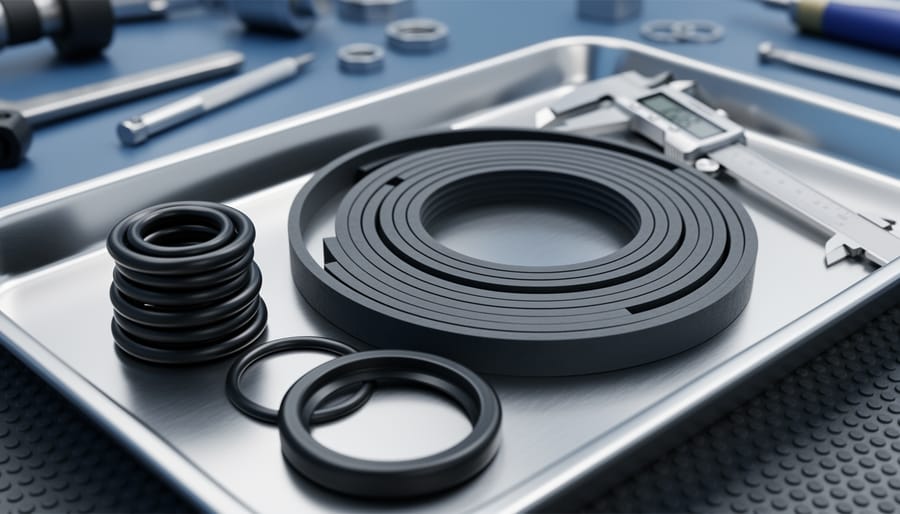
Specification rubber refers to elastomeric materials engineered and manufactured to meet defined industry standards, performance benchmarks, or customer-specific requirements for critical applications where standard rubber compounds fall short. Unlike commodity rubber products, specification-grade materials undergo rigorous testing and certification to verify compliance with standards such as ASTM, SAE, MIL-SPEC, or proprietary performance criteria. These materials are essential in automotive sealing systems, aerospace components, industrial machinery, and any application where failure carries significant safety, financial, or operational consequences.
The distinction matters because performance variability in standard rubber can lead to premature failure in demanding environments. Specification rubber eliminates guesswork through documented physical properties, chemical resistance profiles, temperature ranges, and durability metrics. Engineers rely on this data to select materials that will perform predictably across their intended service life, whether that involves exposure to aggressive fluids, extreme temperatures, dynamic loading, or regulatory compliance requirements.
Material selection begins with identifying the specific performance parameters your application demands. Temperature extremes, chemical exposure, mechanical stress, and environmental factors all influence which rubber compound will deliver optimal results. Custom formulations often provide the most effective solution when off-the-shelf materials cannot meet multiple simultaneous requirements. This article examines the standards that define specification rubber, compares common material types and their performance characteristics, and provides a framework for selecting the right compound for your critical applications.
What Defines Specification Rubber
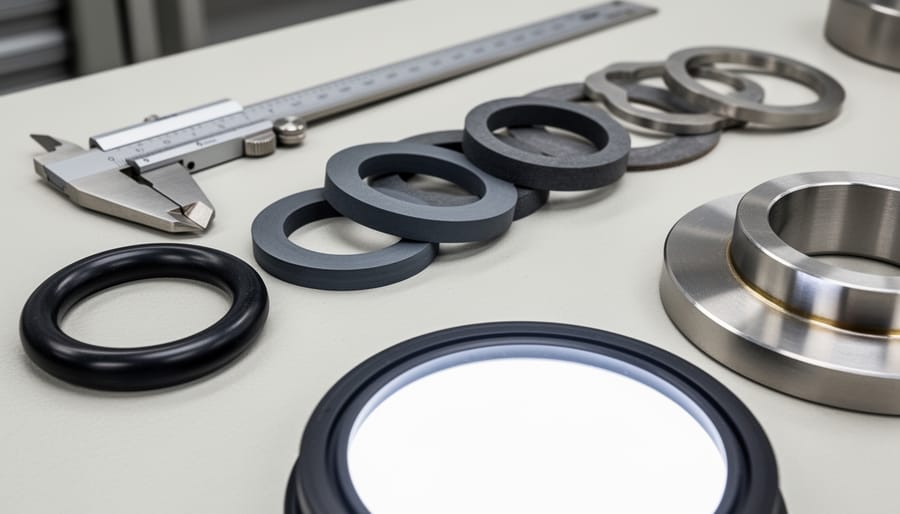
Specification rubber refers to engineered elastomer compounds formulated to satisfy explicit technical requirements documented in industry standards, regulatory frameworks, or customer-defined performance criteria. Unlike commercial-grade rubber produced for general-purpose applications with broad tolerance ranges, specification rubber undergoes controlled manufacturing processes that ensure consistent properties batch after batch, meeting narrowly defined parameters for chemical composition, physical characteristics, and performance behavior.
The defining characteristic is traceability to a recognized standard or detailed specification sheet. Each batch of specification rubber must demonstrate compliance through documented testing, typically verified by third-party laboratories or certified internal quality systems. This documentation provides assurance that the material will perform predictably under specified conditions, a critical requirement when component failure could compromise safety, cause environmental contamination, or halt production lines.
Manufacturing specification rubber demands precision in ingredient selection, mixing protocols, and curing parameters. Formulators select base polymers, fillers, curatives, and additives to achieve target properties such as tensile strength within ±5%, hardness tolerances of ±2 Shore A points, or resistance to specific chemicals at defined temperatures. Process controls during mixing and molding maintain consistency that commercial compounds, optimized primarily for cost, cannot reliably achieve.
The distinction extends beyond material properties to encompass validation requirements. Specification rubber typically undergoes qualification testing that simulates real-world conditions: accelerated aging at elevated temperatures, exposure to specific fluids or gases, compression set measurements after prolonged loading, or thermal cycling across operating ranges. Test results must fall within acceptance criteria before the material receives approval for use.
This rigor costs more than standard rubber compounds, but the investment delivers predictable performance in applications where material failure carries significant consequences. Specification rubber provides engineers with confidence that a seal will maintain integrity in a corrosive chemical process, a gasket will withstand thermal cycling in an engine compartment, or a component will retain flexibility after years of outdoor exposure, backed by verifiable data rather than general claims.
Critical Performance Standards and Compliance Requirements
Automotive Industry Specifications
The automotive industry relies on SAE J200 as the primary classification system for rubber materials used in seals, gaskets, hoses, and other critical components. This standard categorizes elastomers by their resistance to heat aging and fluid exposure, using a letter-number designation system that specifies base polymer type and performance grade. For example, a 3CE designation indicates an EPDM compound suitable for engine coolant applications up to 125°C.
Beyond SAE J200, automotive specifications include ASTM D2000 for general rubber requirements and manufacturer-specific standards from OEMs like Ford, GM, and Volkswagen. These specifications define compression set limits, tensile strength requirements, and fluid resistance thresholds that components must meet throughout their service life. Original equipment manufacturers often layer additional performance criteria on top of base standards, requiring custom formulations to satisfy multiple specifications simultaneously.
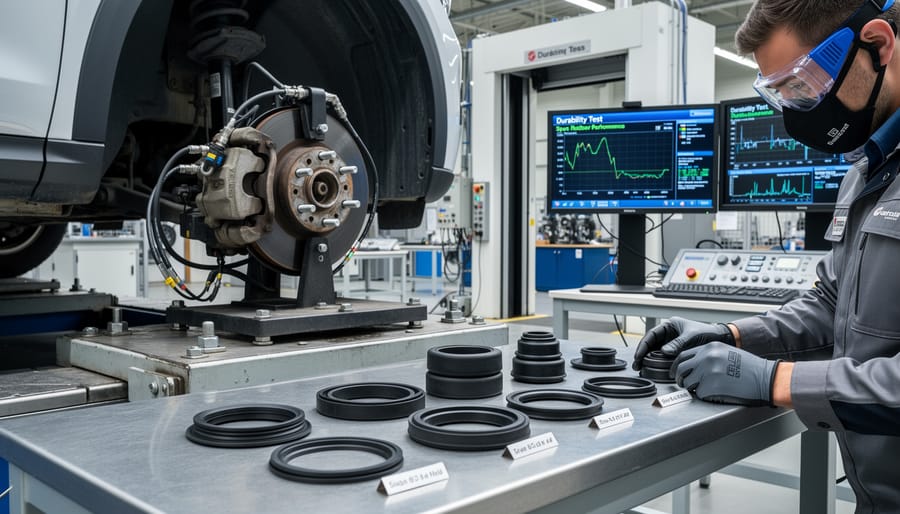
Material qualification under these standards involves extensive testing protocols including thermal aging, fluid immersion, and mechanical property verification. Parts must demonstrate consistent performance across production batches, making traceability and quality documentation essential elements of automotive specification rubber supply chains.
Industrial and Chemical Resistance Standards
Industrial environments demand rubber materials capable of withstanding aggressive chemicals, extreme temperatures, and sustained mechanical stress. ASTM D1418 establishes a classification system for rubber types based on chemical composition, serving as the foundation for specifying materials in industrial applications. ASTM D2000 provides standardized line call-out designations that define basic material requirements and test procedures for automotive and general rubber applications.
For chemical resistance verification, ASTM D471 measures volume swell and hardness change after immersion in specific fluids, quantifying a material’s compatibility with oils, solvents, and corrosive substances. Temperature performance is evaluated through ASTM D573, which subjects specimens to accelerated heat aging to predict long-term durability at elevated temperatures.
ISO 1817 parallels ASTM D471 for international specifications, while ISO 37 defines tensile strength and elongation testing protocols that establish baseline mechanical properties. These standards create a common language between manufacturers and end-users, ensuring specification rubber meets documented performance thresholds before deployment in chemical processing equipment, industrial seals, and fluid handling systems where material failure carries significant operational and safety consequences.
Material Properties That Differentiate Specification Rubber
Specification rubber’s superiority in critical applications stems from precisely engineered material properties that far exceed what commercial-grade compounds can deliver. These properties result from controlled formulation processes where each ingredient is selected and balanced to meet defined performance thresholds rather than general-purpose targets.
Temperature performance separates specification rubber from standard materials most dramatically. While commercial compounds typically operate within a 40°F to 180°F range, specification grades maintain their mechanical properties and sealing integrity across extremes from -65°F to 400°F depending on the polymer base. This capability matters in automotive underhood components exposed to engine heat cycles and Arctic cold starts, or in industrial processes involving cryogenic fluids or high-temperature steam. The material retains elasticity at temperature extremes where standard rubber would harden, crack, or soften beyond functionality.
Chemical resistance in specification rubber is not a general claim but a documented resistance to specific media at defined concentrations and temperatures. Specification sheets detail compatibility with automotive fluids, industrial solvents, acids, bases, and hydraulic oils through standardized immersion testing. A fluorocarbon specification rubber, for instance, demonstrates measurable volume swell limits when exposed to gasoline, transmission fluid, or synthetic lubricants at elevated temperatures for extended periods. This predictability allows engineers to select materials with confidence rather than guesswork.
Mechanical properties in specification compounds are tightly controlled and consistently reproducible. Tensile strength, elongation at break, compression set resistance, and tear strength fall within narrow specification windows batch after batch. A nitrile rubber specified for hydraulic seals maintains compression set below 25% after 70 hours at 212°F, preventing leak paths that develop when standard materials take permanent deformation. Hardness tolerance typically holds within ±5 Shore A points rather than the ±10 variation common in commercial grades.
Durability under cyclic loading, fluid exposure, and thermal aging is verified through accelerated life testing protocols. Specification rubber compounds retain a defined percentage of original properties after simulated service life equivalent to years of field use. An EPDM specification material for weather seals, for example, maintains 75% of its original tensile strength after 1,000 hours of heat aging at 250°F, while a non-specification grade might retain only 40%.
These engineered properties work together, not in isolation. A specification rubber meeting automotive fuel system requirements simultaneously achieves chemical resistance, temperature performance, and mechanical durability targets, ensuring the material performs reliably throughout the component’s service life without premature failure.
Common Specification Rubber Compounds and Their Applications
Engineers selecting specification rubber for critical applications typically choose from four primary compound families, each engineered to excel in specific operating environments and service conditions.
Fluorocarbon rubber (FKM) stands as the premium choice for applications demanding exceptional chemical resistance and high-temperature performance. With continuous service temperatures reaching 204°C and excellent resistance to petroleum products, acids, and aggressive solvents, FKM compounds dominate fuel system components, transmission seals, and chemical processing equipment. The material maintains its mechanical properties in environments where standard elastomers rapidly degrade, though its higher cost requires justification through extended service life and reduced downtime in critical applications.
Nitrile rubber (NBR) delivers the most cost-effective solution for petroleum-based fluid resistance across moderate temperature ranges. Its variable acrylonitrile content allows customization of oil resistance versus low-temperature flexibility, making NBR the workhorse material for automotive O-rings, hydraulic seals, and fuel hoses. Standard NBR grades operate reliably from -40°C to 108°C, with specialized formulations extending these limits. The material’s widespread use in specification applications stems from its balance of performance, availability, and economic value in petroleum-exposed environments.
| Rubber Type | Temperature Range | Primary Resistance | Key Applications |
|---|---|---|---|
| FKM (Fluorocarbon) | -20°C to 204°C | Fuels, oils, acids, solvents | Fuel systems, transmission seals, chemical processing |
| NBR (Nitrile) | -40°C to 108°C | Petroleum oils, hydraulic fluids | O-rings, hydraulic seals, fuel hoses |
| EPDM | -50°C to 150°C | Water, steam, ketones, alcohols | Coolant hoses, weather sealing, brake systems |
| Silicone (VMQ) | -60°C to 232°C | Extreme temperatures, oxidation | Turbocharger gaskets, exhaust sensors, electrical insulation |
EPDM (ethylene propylene diene monomer) rubber provides superior resistance to water-based fluids, steam, and weathering, making it essential for cooling systems and exterior sealing applications. Its excellent low-temperature flexibility to -50°C and resistance to oxidation ensure long-term performance in automotive coolant hoses, radiator seals, and window weatherstripping. EPDM performs poorly with petroleum products, however, requiring careful application analysis to prevent material selection errors.
Silicone rubber (VMQ) operates across the widest temperature spectrum, from -60°C to 232°C, while maintaining flexibility and sealing performance throughout. This extreme temperature capability positions silicone as the specification material for turbocharger components, exhaust system gaskets, and electrical connector seals where heat resistance outweighs its moderate chemical resistance and lower mechanical strength compared to other elastomers.
Specialized variants within these families address niche requirements. Hydrogenated nitrile (HNBR) extends NBR’s temperature range and ozone resistance for demanding powertrain applications. Fluorosilicone combines silicone’s temperature performance with improved fuel resistance for aerospace and military specifications. These advanced compounds demonstrate how specification rubber continues evolving to meet increasingly stringent application demands.
Custom Specification Rubber Solutions for Unique Challenges
When standard specification grades cannot satisfy a unique combination of performance requirements, custom-formulated specification rubber becomes the solution. These tailored materials address scenarios where no off-the-shelf compound offers the necessary balance of properties, such as simultaneous resistance to extreme temperature cycling and aggressive chemical exposure, or the need for specific hardness alongside exceptional tear resistance.
The custom development process begins with a detailed analysis of the application environment and failure modes. Engineers collaborate with rubber technologists to identify critical performance parameters: operating temperature ranges, chemical exposure profiles, mechanical stress patterns, and durability expectations. This baseline informs the formulation strategy, where polymer selection, filler systems, and additive packages are precisely balanced to optimize the targeted properties without compromising others.
Material innovation in custom specification rubber often focuses on solving previously intractable problems. For instance, automotive turbocharger applications may require compounds that maintain seal integrity across temperature differentials exceeding 150°C while resisting oil degradation and maintaining compression set resistance. Achieving this demands proprietary cure systems and specialized stabilizers that standard grades lack.
The development timeline for custom specification rubber typically spans several months, involving iterative formulation adjustments and comprehensive testing against defined acceptance criteria. Prototype batches undergo accelerated aging, chemical immersion testing, and mechanical property verification before validation in actual operating conditions. This rigorous process ensures the final compound meets not only immediate performance needs but also long-term reliability standards.
Cost considerations play a role in custom solutions, as specialized ingredients and lower production volumes increase per-unit pricing. However, the investment often proves justified when preventing premature failures, extending component service life, or enabling entirely new design possibilities. The key is early collaboration between material suppliers and design teams to balance performance requirements with practical manufacturing and economic constraints, ensuring the custom specification rubber delivers measurable value in critical applications.
Quality Assurance and Testing Protocols
Testing protocols for specification rubber validate that materials meet stringent performance requirements before deployment in critical applications. Manufacturers employ comprehensive testing regimens that go beyond basic quality checks to verify compliance with industry standards and predict long-term performance under actual operating conditions.
Physical property testing forms the foundation of quality assurance. Tensile strength measurements determine how much force the material can withstand before failure, while elongation tests assess flexibility and deformation limits. Hardness testing using durometer scales confirms the compound falls within specified ranges, essential for maintaining proper seal compression or gasket performance. Compression set testing reveals how well the material recovers its original shape after sustained pressure, a critical factor in sealing applications where permanent deformation leads to leakage.
Aging simulation accelerates time-dependent degradation to predict service life. Heat aging exposes samples to elevated temperatures for extended periods, measuring property retention after thermal stress. Ozone resistance testing subjects materials to concentrated ozone environments that mimic years of atmospheric exposure in hours, particularly important for outdoor automotive applications where cracking can compromise seals.
Chemical resistance verification involves immersing test specimens in specific fluids, solvents, or chemicals expected in the application environment. Weight change, volume swell, and property retention after immersion quantify the material’s compatibility with oils, fuels, acids, or industrial chemicals. Temperature cycling tests combine thermal and mechanical stress, simulating real-world conditions where components experience repeated heating and cooling.
Third-party certification laboratories often conduct verification testing to ensure unbiased results, particularly when compliance documentation is required for regulatory approval or quality management systems.

Selecting the Right Specification Rubber for Your Application
Selecting specification rubber requires a systematic approach that balances technical requirements with practical constraints. Engineers must consider multiple factors simultaneously: operating environment, regulatory compliance, performance expectations, and cost parameters.
Start by documenting your application’s complete operating envelope. Temperature extremes matter more than average conditions, a component experiencing occasional thermal spikes needs different specifications than one operating at steady moderate temperatures. Chemical exposure patterns require similar scrutiny. Intermittent contact with aggressive solvents demands different material properties than continuous immersion.
The selection process follows a logical sequence:
- Conduct a comprehensive environmental assessment documenting temperature ranges, chemical exposures, mechanical stresses, and regulatory requirements specific to your application.
- Identify critical performance requirements including minimum hardness values, tensile strength, compression set resistance, and service life expectations based on your operational needs.
- Verify which industry standards apply to your application, automotive components typically reference SAE specifications while industrial applications may require ASTM or ISO compliance.
- Consult with specialized rubber suppliers who can recommend appropriate compounds, suggest custom formulations for unique challenges, and provide technical datasheets for comparison.
- Request validation testing on candidate materials under conditions simulating your actual operating environment before committing to production quantities.
When working with suppliers, provide complete application details rather than requesting a specific compound by name. Experienced suppliers often identify better alternatives based on the full requirement picture. Ask about formulation flexibility, custom compounds can optimize properties that matter most to your application while accepting trade-offs in less critical areas.
Cost considerations extend beyond material price. A premium specification rubber that doubles service life often delivers lower total cost of ownership than cheaper alternatives requiring frequent replacement. Factor in downtime costs, labor for component changes, and potential failure consequences when comparing options.
Request samples for in-house evaluation whenever feasible. Laboratory data provides valuable guidance, but real-world testing under actual operating conditions reveals performance characteristics that specifications alone cannot predict.
Specification rubber delivers measurable performance advantages in applications where standard materials fall short. The engineered formulations, rigorous testing protocols, and compliance with established industry standards ensure reliability in demanding automotive and industrial environments where failure carries significant costs.
Proper material selection requires understanding both the application requirements and the capabilities of different specification grades. Temperature extremes, chemical exposures, mechanical stresses, and regulatory mandates all factor into choosing the right compound. Engineers who match these variables to appropriate specifications avoid premature failures, reduce maintenance intervals, and extend component service life.
While standard specification grades address many common challenges, custom formulations unlock solutions for unique operating conditions. Working with experienced rubber technology specialists provides access to material innovations tailored to specific performance criteria. These partnerships translate technical requirements into practical solutions that balance cost, performance, and manufacturability.
The investment in specification rubber materials pays dividends through improved system reliability, reduced downtime, and enhanced safety margins in critical applications. Consultation with materials experts ensures optimal selection and application-specific refinement for your most demanding rubber component needs.
