
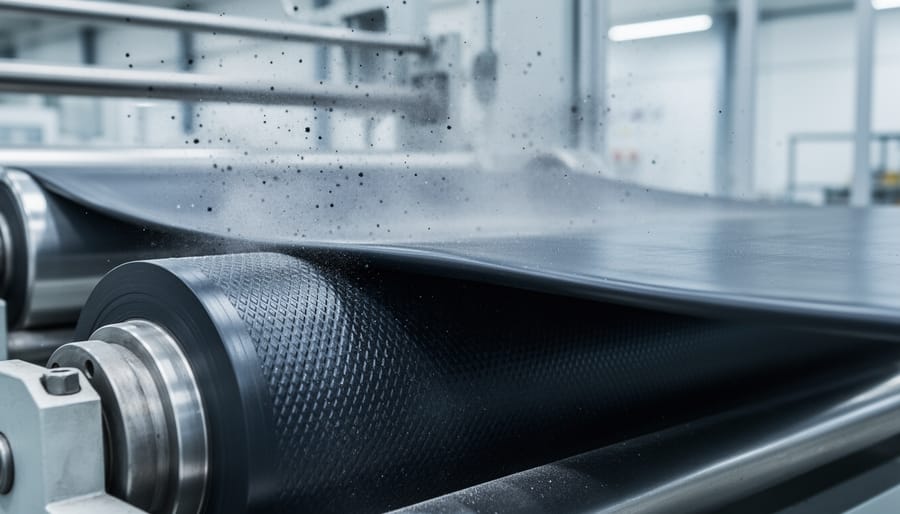
How to Formulate Rubber Compounds for Maximum Abrasion Resistance
Achieving superior rubber abrasion resistance requires a systematic approach to compound formulation that balances polymer selection, reinforcing filler optimization, and protective additive integration. For high-wear applications in automotive seals, conveyor belts, and industrial components, the formulation strategy centers on maximizing polymer chain entanglement, enhancing filler-matrix adhesion, and incorporating antioxidant and antiozonant systems that preserve mechanical properties under cyclic stress. The performance difference between standard and optimized compounds can exceed 300% in laboratory abrasion testing, translating directly to extended service life and reduced maintenance costs in field applications.
The technical challenge facing rubber technologists lies not simply in selecting wear-resistant base polymers, but in designing complete compound architectures where each ingredient contributes synergistically to surface toughness and tear propagation resistance. Natural rubber and polybutadiene offer exceptional resilience for dynamic applications, while styrene-butadiene copolymers provide versatility across temperature ranges. Carbon black remains the primary reinforcing agent, though precipitated silica systems now deliver competitive performance with reduced hysteresis in specific geometries.
This guide presents a structured methodology for formulating abrasion-resistant rubber compounds, from initial material selection through mixing protocols, verification testing, and performance troubleshooting. The framework addresses both fundamental mechanisms governing wear behavior and practical execution details required to translate laboratory results into production-scale solutions. Whether developing custom compounds for emerging applications or optimizing existing formulations for cost-performance targets, the step-by-step approach ensures repeatable outcomes backed by quantifiable performance metrics.
Understanding Abrasion Resistance: Mechanisms and Performance Indicators
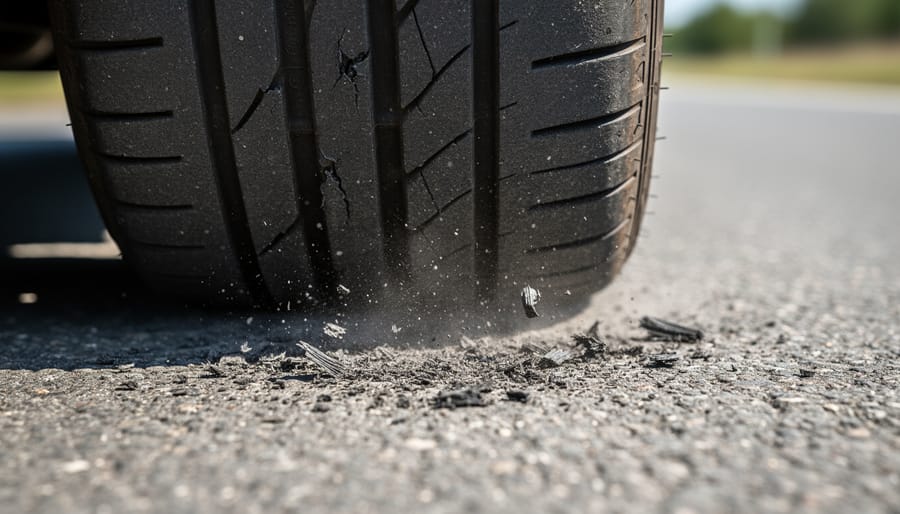
Abrasion resistance describes a rubber compound’s ability to withstand mechanical wear when subjected to frictional contact with abrasive surfaces. At the molecular level, this property depends on the polymer network’s capacity to absorb and dissipate energy without permanent material loss, combined with the reinforcing structure created by fillers that prevent crack propagation during surface contact. High-performance compounds achieve resistance through a balance of polymer elasticity, filler reinforcement, and crosslink density that collectively resist the cutting, tearing, and fatigue mechanisms that remove material during use.
Three distinct wear mechanisms drive rubber degradation in service. Abrasive wear occurs when hard particles or rough surfaces cut and gouge the rubber surface, removing material through mechanical action, this dominates in applications like conveyor belts and tire treads on rough terrain. Fatigue wear results from repeated deformation cycles that initiate and propagate subsurface cracks until material fragments detach, common in dynamic sealing applications and tire sidewalls. Adhesive wear happens when rubber adheres to the contact surface and material tears away during separation, particularly problematic in soft compounds against smooth, high-friction surfaces.
Performance measurement uses standardized methods that quantify material loss under controlled conditions. The DIN abrasion test (ISO 4649) measures volume loss as a cylindrical specimen rotates against an abrasive drum, reporting results as an abrasion resistance index where higher values indicate better performance, a compound with an index of 150 outperforms the reference standard by 50 percent. The NBS abrader employs a different geometry, measuring mass loss as a specimen is abraded against a rotating abrasive surface, while the Pico abrader evaluates resistance to cutting and tearing through small-scale specimen testing. Volume loss measurements provide the most direct assessment of real-world durability, though correlating laboratory results to field performance requires understanding the specific wear mechanisms active in each application.
Different applications demand distinct formulation strategies because wear conditions vary dramatically. Mining equipment requires specification rubber optimized for abrasive wear resistance with maximum filler loading, while automotive suspension bushings prioritize fatigue resistance through controlled crosslink density and polymer selection. Surface finish, contact pressure, temperature exposure, and chemical environment all influence which wear mechanism dominates, making application-specific formulation essential for optimal performance and service life.
Essential Materials and Components for Abrasion-Resistant Compounds
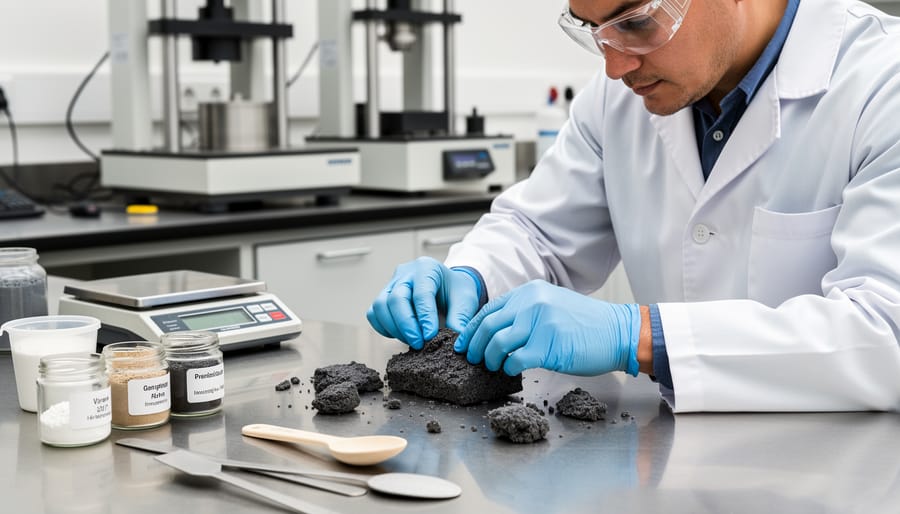
Polymer Selection
Natural rubber (NR) delivers the highest inherent abrasion resistance among all elastomers due to its exceptional tensile strength and tear resistance, making it the primary choice for tire treads and conveyor belts. Pure NR compounds typically achieve DIN abrasion index values of 120-150, setting the benchmark for wear applications.
Styrene-butadiene rubber (SBR) offers a cost-effective alternative with good abrasion resistance (index 100-120) and superior aging properties compared to NR. It’s often blended with natural rubber at ratios of 30:70 to 50:50 to balance performance and economics in industrial applications.
Polybutadiene rubber (BR) excels in low-temperature flexibility and contributes outstanding abrasion resistance when blended with NR or SBR. A typical high-performance blend might contain 60% NR, 25% BR, and 15% SBR, combining NR’s strength with BR’s resilience and SBR’s aging stability.
For extreme abrasion environments requiring oil or heat resistance, nitrile rubber (NBR) provides adequate wear resistance while maintaining sealing properties. However, NBR’s abrasion index (80-100) falls below NR-based compounds, requiring careful filler optimization to compensate.
The polymer choice establishes the performance ceiling, subsequent formulation steps optimize within that framework.
Reinforcing Fillers and Grade Selection
Carbon black remains the primary reinforcing filler for maximum abrasion resistance, with grade selection directly impacting wear performance. N110 (SAF grade) provides the highest abrasion resistance due to its smallest particle size (11-19 nm) and largest surface area (approximately 145 m²/g), creating maximum polymer-filler interaction. However, N110 significantly increases compound hardness and reduces tear strength, limiting its use to applications where ultimate abrasion resistance justifies these trade-offs.
N330 (HAF grade) offers the best balance for most industrial applications. With moderate particle size (26-30 nm) and surface area (around 82 m²/g), it delivers excellent abrasion resistance while maintaining processability and acceptable tear strength. Typical loadings of 50-60 phr in natural rubber compounds achieve DIN abrasion indices below 100 mm³, suitable for conveyor belts, seals, and automotive applications.
N660 (GPF grade) provides lower reinforcement but improves flexibility and reduces compound cost. Its larger particle size (49-60 nm) makes it appropriate for applications requiring moderate abrasion resistance with softer durometer targets.
Silica grades, particularly highly dispersible silicas with surface areas of 160-180 m²/g, enhance wet grip and rolling resistance but generally provide lower dry abrasion resistance than carbon black. Dual-filler systems combining carbon black with 10-20 phr silica can optimize multi-property performance in complex applications.
Protective and Processing Additives
Antidegradants are crucial for preserving rubber abrasion resistance over time, they neutralize oxidative and ozone degradation that can embrittle the surface and heighten wear under stress. A robust antidegradant package typically includes both amine-based and para-phenylenediamine types, tailored to balance long-term protection without sacrificing dynamic performance. Plasticizers and processing oils reduce compound viscosity, ensuring thorough filler dispersion and optimal mixing, but must be selected so they don’t soften the rubber excessively or compromise abrasion durability. Each additive should be selected with regard to compatibility and long-term effects on tear strength and overall performance, not just short-term processability.
Critical Safety and Handling Protocols
Rubber compounding involves handling materials that present genuine respiratory, skin contact, and thermal hazards requiring strict safety protocols before any formulation work begins.
Carbon black dust exposure represents the primary respiratory hazard in rubber formulation. The fine particulates become airborne during weighing and mixing, creating inhalation risks that demand fitted N95 or P100 respirators depending on dust concentration. Work in well-ventilated areas with local exhaust ventilation positioned directly above mixing equipment. Never blow compressed air to clean carbon black residue, as this disperses particles throughout the workspace.
Chemical additives require different protective measures. Accelerators such as thiazoles and thiurams cause contact dermatitis and allergic sensitization through skin absorption. Wear nitrile gloves rated for chemical resistance, not standard latex gloves that offer inadequate protection. Antidegradants and processing oils can irritate eyes and mucous membranes, so safety glasses with side shields are mandatory during all handling operations.
High-temperature mixing creates thermal and mechanical hazards. Internal mixers reach 160-180°C during masterbatch mixing, and discharge doors open to release hot compound that can cause severe burns. Use insulated heat-resistant gloves during discharge operations and allow equipment surfaces to cool before maintenance work.
Store rubber chemicals in sealed containers within designated areas away from heat sources and incompatible materials. Keep sulfur and organic peroxides separated, as accidental contact can trigger exothermic reactions. Maintain material safety data sheets at the workstation and ensure all personnel know emergency eyewash and shower locations. In case of skin contact with accelerators or curatives, flush immediately with water for 15 minutes and seek medical attention.
Step-by-Step Formulation Process
Step 1: Define Application Requirements and Performance Targets
Before mixing a single ingredient, establish quantifiable targets for your compound’s performance. Start by defining your minimum abrasion index, automotive tire treads typically require DIN abrasion resistance below 90 mm³ loss, while industrial conveyor belt covers may accept 120-150 mm³. Document your hardness window: most abrasion-critical applications demand 60-75 Shore A to balance wear resistance with flexibility.
Set tensile strength minimums (usually 15-25 MPa for high-wear compounds) and elongation at break requirements that prevent catastrophic tear. Map the environmental exposure: will the part face UV radiation, ozone, oils, or temperature extremes? Each factor influences your polymer and additive selection. Record these specifications as your formulation blueprint, they dictate every subsequent decision and provide objective criteria for testing success.
Step 2: Select Base Polymer System
Natural rubber typically delivers the highest abrasion resistance among elastomers, making it the first-choice polymer for extreme wear applications. For tire treads and conveyor belts operating under severe conditions, formulations often contain 70-100% natural rubber to maximize volume loss resistance.
However, pure natural rubber compounds sacrifice environmental durability and heat resistance. Blending with polybutadiene rubber (BR) at 20-40% improves rebound resilience and maintains good abrasion performance while reducing cost. Adding styrene-butadiene rubber (SBR) at 10-30% enhances wet traction in tire applications but slightly reduces abrasion resistance compared to natural rubber alone.
Select your polymer ratio by ranking your performance priorities: if abrasion resistance dominates all other requirements, maximize natural rubber content. Where heat aging, ozone resistance, or oil resistance matter equally, introduce appropriate synthetic rubbers and accept modest abrasion performance trade-offs.
Step 3: Determine Filler Loading and Type
Filler selection and loading level constitute the most influential formulation variables for abrasion resistance. Carbon black remains the primary reinforcing filler, with loading levels between 45-65 phr delivering optimal wear protection in high-stress applications. Lower loadings sacrifice abrasion performance, while excessive filler (above 70 phr) increases compound hardness and processing difficulty without proportional wear benefits.
Reinforcing grade selection depends on application severity. N110 and N220 grades provide maximum abrasion resistance through superior structure and surface area, ideal for tire treads and conveyor belt covers. N330 offers balanced performance with better processing, suitable for general industrial applications. For cost-sensitive formulations, N660 provides adequate reinforcement at reduced expense.
Dual-filler systems combining carbon black with precipitated silica (10-15 phr silica alongside 40-50 phr carbon black) can enhance specific properties, improved tear resistance, lower heat buildup, while maintaining strong abrasion performance. However, silica requires silane coupling agents and modified mixing protocols. Calculate total filler loading to maintain compound hardness within your target range (typically 60-75 Shore A for abrasion-critical applications) while ensuring processability on your mixing equipment.
Step 4: Add Protective Additive Package
The protective additive package safeguards your compound from oxidative and environmental degradation that accelerates abrasion wear. Start with an antioxidant system combining 1.5-2.5 phr of an aromatic amine (such as 6PPD) for long-term heat aging protection and 1.0 phr of a phenolic antioxidant for processing stability. Add 2.0-3.0 phr of an antiozonant like 6PPD or TMQ to prevent surface cracking that initiates wear. Select plasticizers carefully: aromatic oils (5-10 phr) enhance filler dispersion and maintain flexibility without compromising abrasion resistance, while paraffinic oils may reduce performance. Include 1-2 phr of stearic acid as a processing aid and cure activator. This additive balance maintains compound integrity under cyclic stress while preserving the reinforcing filler network essential for abrasion protection.
Step 5: Design Vulcanization System
Crosslink density directly influences abrasion resistance by controlling the rubber network’s ability to resist deformation and recover from stress. For maximum abrasion resistance, target a moderately high crosslink density using 1.5-2.5 phr sulfur in conventional systems or 0.5-1.0 phr in efficient vulcanization (EV) systems.
Select a balanced accelerator combination rather than relying on a single type. A typical high-abrasion package pairs a sulfenamide primary accelerator (1.2-1.8 phr CBS or TBBS for processing safety) with a guanidine secondary accelerator (0.3-0.5 phr DPG) to create a broad crosslink distribution that resists both tear initiation and propagation during wear. Add zinc oxide (3-5 phr) and stearic acid (1-2 phr) as cure activators to ensure complete sulfur utilization.
Avoid over-curing, which creates brittle surface layers prone to chunking failure. Under-curing leaves excess free sulfur that migrates and weakens the abraded surface. Run rheometer curves to identify t90 and ensure your cure cycle provides optimal network formation without reversion.
Step 6: Mix Compound Using Proper Sequence
The mixing sequence directly determines filler dispersion quality, which controls abrasion resistance performance. Poor mixing leaves carbon black agglomerates that create weak points where wear accelerates.
Use a two-stage internal mixer protocol. In the masterbatch stage, add polymer first and allow it to band on the rotors for 30-45 seconds at 40-60 RPM. Introduce carbon black and silica in two portions to prevent temperature spikes, mixing each addition until incorporated. Add processing oils and protective additives once fillers reach good dispersion. Target a dump temperature of 145-160°C for natural rubber compounds. Higher temperatures risk scorch; lower temperatures yield inadequate dispersion.
Allow the masterbatch to cool for at least 4 hours, preferably 24 hours, before the final mixing stage.
In the final batch, add the masterbatch and curatives at lower rotor speed (30-40 RPM) to minimize heat buildup. Mix only until curatives are uniformly distributed, typically 2-3 minutes. Dump below 110°C to preserve cure safety. Excessive final batch mixing wastes curatives and creates processing problems without improving abrasion resistance.
Step 7: Cure and Post-Cure Conditioning
Vulcanize the compound at its optimum cure time (t90) determined from rheometer testing, typically at 150-170°C depending on your accelerator system. Under-curing produces insufficient crosslink density that compromises abrasion resistance, while over-curing can cause reversion or excessive hardness that increases wear susceptibility.
After vulcanization, allow a minimum 16-24 hour post-cure conditioning period at room temperature before conducting any performance testing. This conditioning permits completion of residual crosslinking reactions and stress relaxation within the vulcanized network. Testing immediately after cure yields inconsistent results that don’t reflect the compound’s true abrasion performance. For compounds containing high amounts of natural rubber or slow-curing systems, extend conditioning to 48-72 hours to ensure stable properties and reproducible abrasion test data.
Step 8: Test and Iterate Formulation
Once your compound is cured and conditioned, test it against your abrasion resistance targets using DIN abrasion (ISO 4649) or your specified method. Record the abrasion index and volume loss, then compare results to your performance specification. If you fall short, adjust systematically: increase carbon black loading by 5 phr increments if below target, or raise crosslink density by adding 0.2-0.3 phr sulfur if the compound is too soft. Change one variable at a time and retest to isolate effects. Document each iteration, polymer ratio changes, filler adjustments, cure modifications, so you understand what drives improvement. Achieving 150+ abrasion index typically requires multiple test cycles, balancing wear resistance against processability and cost constraints until the formulation meets all specifications.
Formulation Variables and Their Impact on Abrasion Performance
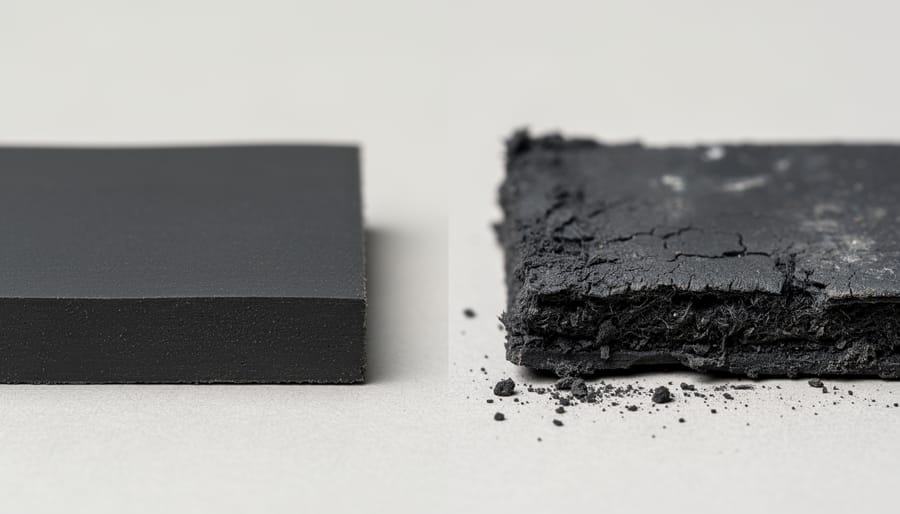
Understanding how formulation variables influence abrasion performance enables precise compound optimization for specific applications. Each component choice creates measurable effects on wear resistance through distinct mechanisms.
Polymer Type and Blend Ratio Effects
Natural rubber delivers superior abrasion resistance compared to most synthetic elastomers due to its strain-induced crystallization under stress. Compounds with 100% natural rubber typically achieve DIN abrasion index values of 120-150, while styrene-butadiene rubber alone reaches only 90-110. Blending 70% natural rubber with 30% polybutadiene creates balanced performance, maintaining abrasion resistance above 130 while improving low-temperature flexibility. For extreme wear conditions, high-cis polybutadiene additions up to 40% enhance cut resistance without significantly compromising abrasion performance.
Filler Loading Curves and Reinforcement
Carbon black loading exhibits a non-linear relationship with abrasion resistance. Volume loss decreases sharply as loading increases from 30 to 50 phr, then plateaus between 55-65 phr before rising again above 70 phr due to excessive compound stiffness and processing difficulties. N110 grade carbon black at 55 phr typically provides 35% better abrasion resistance than N330 at the same loading, though it increases compound hardness by 5-7 Shore A points. Dual-filler systems combining 40 phr N110 with 15 phr precipitated silica can match the abrasion performance of 60 phr N110 alone while reducing hardness and improving tear strength.
Crosslink Density Optimization
Optimal crosslink density balances network strength against elasticity. Compounds cured to 85-95% of maximum torque rise demonstrate peak abrasion resistance, sufficient crosslinking to resist deformation without becoming brittle. Over-cured compounds (100% torque rise) show 15-25% higher volume loss due to reduced tear energy. Sulfur levels of 1.5-2.0 phr with efficient accelerators create networks that distribute stress effectively during abrasion.
Protective Additive Contributions
Antioxidants preserve abrasion resistance during service by preventing oxidative chain scission. Compounds without adequate antioxidant protection lose 30-40% of initial abrasion resistance after 500 hours at 70°C. Processing oils above 10 phr reduce abrasion resistance by diluting the polymer-filler network, though small amounts (3-5 phr) improve dispersion quality without significant performance penalties.
Testing and Verification Methods
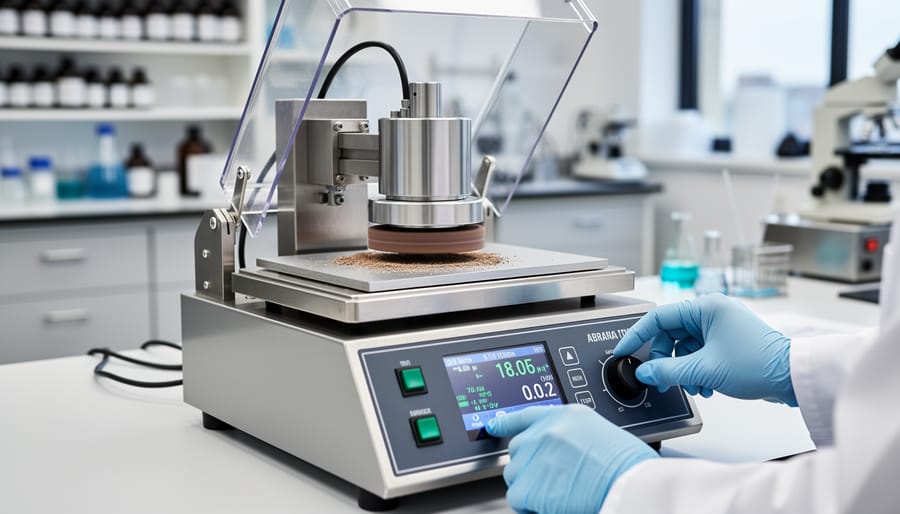
Once you’ve formulated a candidate compound, rigorous testing determines whether it meets your abrasion resistance targets. Three standardized methods dominate industrial verification: DIN abrasion testing (ISO 4649), Pico abrader analysis, and NBS abrader evaluation. Each method subjects rubber samples to controlled abrasive contact under defined loads and conditions, measuring volume loss or relative abrasion index.
DIN abrasion testing per ISO 4649 remains the most widely referenced method. The test rotates a cylindrical rubber specimen against a rotating abrasive drum under 10 N load for a specified distance. Volume loss is calculated by weighing the specimen before and after testing, then comparing results to a calibrated reference compound to generate an abrasion resistance index. Higher index values indicate superior performance, compounds targeting severe automotive applications typically achieve indices above 120, while general industrial uses may accept 100-110.
The Pico abrader uses a tungsten carbide knife edge under oscillating motion to simulate sharp particle abrasion. This method better replicates cutting and gouging wear mechanisms common in mining and construction equipment rubber components. Results correlate well with field performance when what works instead of a standard formulation approach is needed for extreme conditions.
NBS abrader testing (ASTM D1630) employs an H-18 abrasive wheel rotating against the rubber sample, measuring mass loss. Though less common than DIN testing in automotive applications, it provides valuable data for compounds exposed to high-speed sliding contact.
Key verification benchmarks for high-abrasion formulations include:
- DIN abrasion index ≥120 for tire tread and automotive sealing applications
- Volume loss ≤150 mm³ in Pico abrader testing for mining equipment components
- NBS abrasion loss ≤200 mg for industrial belting and high-speed wear surfaces
- Consistency within ±5% across three replicate samples to confirm batch uniformity
Interpret results against your application-specific targets established in Step 1 of the formulation process. If the compound falls short, systematic adjustment of filler loading, polymer ratio, or crosslink density typically yields improvements. Document all test results with cure conditions, batch identifiers, and environmental factors to build a reliable formulation database for future optimization work.
Troubleshooting Common Formulation Challenges
Even well-planned formulations encounter challenges during development. When abrasion testing reveals excessive hardness, often 5-10 Shore A points above target, reduce carbon black loading by 5 phr increments or substitute a lower structure grade like N660 for part of the N330 content. If the compound processes poorly with mixing difficulties or die swell during extrusion, increase plasticizer content by 2-5 phr or add 3-5 phr of low-viscosity process oil to improve flow without significantly sacrificing abrasion resistance.
Inadequate tear strength frequently appears alongside good abrasion results when crosslink density is too high. Lower sulfur content from 2.0 to 1.5 phr and reduce accelerator levels proportionally, or introduce 10-20 phr of natural rubber into synthetic blends to enhance tear propagation resistance. For compounds showing reversion during extended curing cycles, switch from conventional sulfur systems to semi-EV or EV cure systems with higher accelerator-to-sulfur ratios, which maintain crosslink stability at elevated temperatures.
Cost constraints often force reformulation after initial success, particularly when carbon black prices fluctuate. Replace 10-15 phr of reinforcing black with silica while adding appropriate silane coupling agents, or shift from natural rubber to high-cis polybutadiene for 15-20% material cost reduction with minimal abrasion performance loss. When testing budget limitations prevent full verification, prioritize DIN abrasion and hardness measurements as primary indicators, conducting comprehensive property evaluations only on final candidate formulations. Document each modification systematically with parallel control batches to isolate variable effects and avoid compounding multiple changes that make root cause analysis impossible.
Custom Solutions and Next Steps for Implementation
Moving from laboratory formulation to full-scale production requires systematic validation and process adaptation. Initial compound testing at 2-5 kg batch sizes must progress through pilot-scale mixing (20-50 kg batches) before committing to production quantities. During scale-up, monitor mixing energy input, batch temperatures, and dispersion quality, variations in equipment geometry and mixing intensity can alter compound properties even with identical formulations. Establish clear acceptance criteria for each scaling stage, including abrasion test results, processing characteristics, and visual dispersion assessment.
Custom rubber solution providers offer specialized capabilities that exceed most in-house facilities. Their expertise proves valuable when applications demand unusual property combinations, such as extreme abrasion resistance paired with low-temperature flexibility or chemical resistance, or when production volumes don’t justify dedicated mixing equipment. Experienced formulators bring extensive material databases, established supplier relationships, and proven optimization methodologies that accelerate development timelines significantly.
Consider expert consultation when facing persistent formulation challenges, tight development schedules, or applications in safety-critical environments. Professional guidance becomes essential for automotive components requiring durability validation, industrial parts operating in harsh conditions, or products needing regulatory compliance documentation.
Innovation in 2026 focuses on hybrid filler systems combining carbon black with nanostructured reinforcements, sustainable bio-based polymers with competitive abrasion performance, and intelligent formulation software that predicts compound behavior. These advances enable compounds meeting stricter automotive durability standards while reducing environmental impact. Success requires balancing technical performance against processing efficiency and material costs, a challenge where experienced formulation partners provide measurable value through optimized solutions tailored to specific application demands.
Frequently Asked Questions
What polymer provides the best abrasion resistance in rubber compounds?
Natural rubber consistently delivers superior abrasion resistance due to its high molecular weight and strain crystallization properties. For applications requiring additional properties like oil resistance or heat stability, blending natural rubber with 20-30% synthetic rubber (SBR or BR) maintains excellent abrasion performance while adding needed characteristics.
How much carbon black should I use for high abrasion resistance?
Optimal carbon black loading typically ranges from 45 to 65 phr for maximum abrasion resistance. N330 grade at 50-55 phr offers an excellent balance of wear resistance, processing, and cost, while N110 at higher loadings provides the absolute best abrasion performance for critical applications.
What DIN abrasion index should I target for automotive tire applications?
Passenger tire tread compounds generally achieve DIN abrasion indices of 120-150, while high-performance tire treads can reach 180-220. Heavy-duty truck tire compounds typically target 100-130, balancing abrasion resistance with tear strength and heat resistance requirements.
Can I reduce filler loading to lower compound cost without sacrificing too much abrasion resistance?
Reducing carbon black from 55 phr to 45 phr typically increases abrasion volume loss by 15-25%, which may be acceptable for less demanding applications. Consider switching to a more reinforcing grade like N220 at lower loading rather than simply reducing high-structure grades, as this maintains better performance while controlling cost.
How do I balance abrasion resistance with flexibility in my compound?
Lower crosslink density (sulfur 1.5-2.0 phr versus 2.5-3.0 phr) improves flexibility but reduces abrasion resistance by roughly 10-20%. Incorporating 5-10 phr of processing oil and using semi-EV cure systems allows you to maintain reasonable flexibility while preserving most of the abrasion performance.
Should I use silica instead of carbon black for better abrasion resistance?
Carbon black generally outperforms silica for dry abrasion resistance. However, silica-based compounds excel in wet traction and lower rolling resistance applications, making them preferable for passenger tire treads where wet grip is critical, even if dry abrasion performance is slightly lower.
These questions reflect the practical decision points chemists and engineers face when developing abrasion-resistant compounds. The polymer selection question addresses the fundamental material choice that drives all subsequent formulation decisions. Carbon black loading and grade selection represent the most significant variables under your control for optimizing abrasion performance, which is why practitioners frequently revisit these parameters when balancing performance against processing and cost constraints.
The DIN abrasion index targets provide concrete benchmarks that help you evaluate whether your formulation meets industry standards for specific applications. Understanding these reference points prevents over-engineering compounds for low-wear applications or under-specifying for demanding service conditions. Cost optimization questions arise constantly in industrial settings where performance requirements must be met within budget constraints, making the filler loading and grade substitution strategies particularly relevant.
The flexibility trade-off question acknowledges that abrasion resistance rarely exists in isolation. Most applications require compounds that resist wear while maintaining adequate elongation, tear strength, or fatigue resistance. Similarly, the carbon black versus silica question reflects the reality that different performance priorities drive different filler choices, and understanding when to prioritize abrasion over other properties is critical for successful formulation work.
Formulating rubber compounds for maximum abrasion resistance requires systematic thinking and precise execution. You’ve seen how polymer selection, filler loading, protective additives, and vulcanization parameters interact to create compounds that withstand severe wear conditions. Each formulation variable affects not just abrasion resistance but also hardness, tear strength, resilience, and processing behavior. Success comes from understanding these trade-offs and optimizing the entire system rather than maximizing a single property.
The step-by-step methodology outlined here, from defining application requirements through iterative testing, provides the framework, but real-world applications often present unique challenges that demand specialized expertise. High-wear automotive components, industrial conveyor systems, and mining equipment each impose different performance requirements that off-the-shelf compounds can’t always meet.
When your application pushes beyond standard formulations, working with experienced rubber technologists who understand both material science and manufacturing realities makes the difference between adequate performance and exceptional durability. Custom formulation combines laboratory precision with production scalability to deliver compounds engineered for your specific wear environment.
If you’re developing rubber products for demanding abrasion conditions and need formulation support, consultation with specialists can accelerate development timelines and reduce costly trial-and-error iterations.
