
Why High-Tech Industrial Materials Fail in Extreme Wear Environments (And What Works Instead)
High-tech industrial materials often fail in high-wear environments not because they lack sophistication, but because their design priorities target the wrong performance criteria. While advanced polymers and composite materials excel in controlled laboratory conditions, they frequently underperform when exposed to abrasive slurries, chemical attack, dynamic loading, and temperature extremes that define critical industrial applications. Specification rubber compounds, engineered for specific service conditions rather than broad-market appeal, consistently deliver superior performance in automotive manufacturing, chemical processing, and heavy equipment operations where conventional high-tech solutions prove inadequate.
The disconnect stems from fundamental material selection criteria. Engineers evaluating wear-resistant components often prioritize tensile strength, hardness ratings, or thermal stability in isolation. These metrics matter, but they don’t predict how a material responds to simultaneous stressors: a pump seal facing acidic media at elevated temperatures while subjected to mechanical flexing, or a conveyor component enduring impact loads in the presence of abrasive particulates. Standard high-performance materials optimize for single-variable testing, while real industrial environments demand multi-axis resilience.
This creates a critical decision point for procurement professionals and design engineers. Understanding why certain advanced materials fail, which performance characteristics actually drive service life, and how to match material properties to application-specific stress profiles separates successful component selection from costly field failures.
The Harsh Reality of High-Wear Industrial Applications
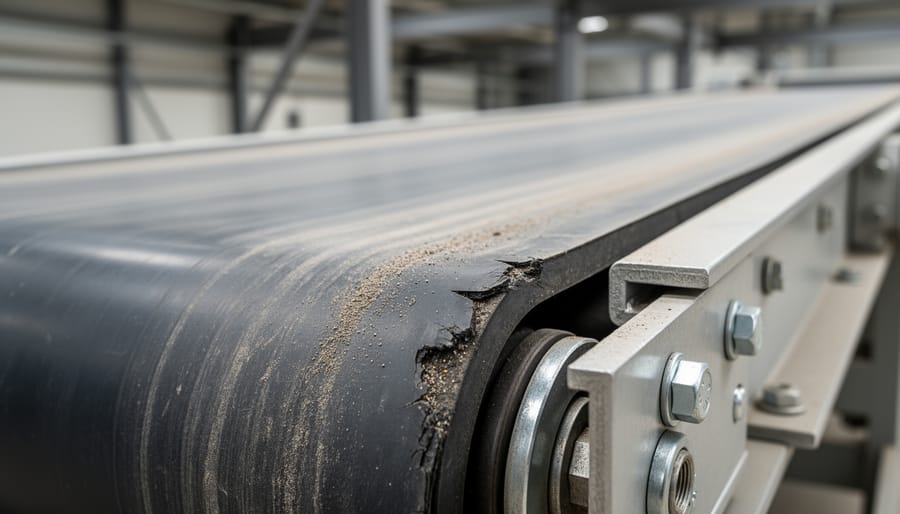
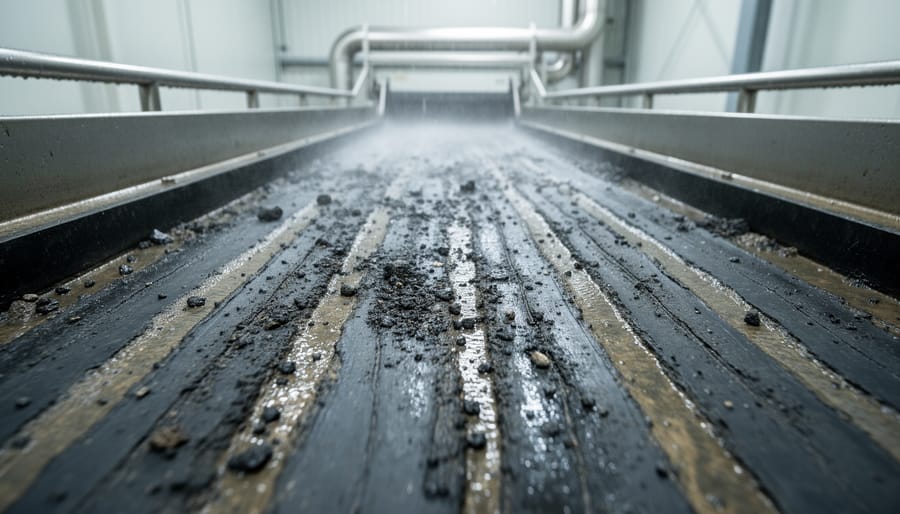
High-wear industrial applications subject components to relentless mechanical stress that accelerates material degradation at rates far exceeding typical service conditions. In automotive assembly lines, conveyor guides transport vehicle bodies through paint systems thousands of times daily. Chemical processing pumps circulate corrosive slurries at high pressures. Mining equipment chutes funnel abrasive ore continuously for months between maintenance windows.
These environments create a perfect storm of destructive forces. Components face simultaneous attack from multiple mechanisms that standard materials cannot withstand. Understanding the specific wear modes helps engineers select materials capable of surviving these demanding conditions.
- Abrasive Wear
- Material removal caused by hard particles scraping across surfaces, common in aggregate handling chutes and mining screens where silica and mineral particles erode softer materials within weeks.
- Adhesive Wear
- Surface degradation occurring when materials bond momentarily under pressure then tear apart, frequently observed in automotive press tooling and metal forming equipment where friction generates localized heating.
- Erosive Wear
- Damage from high-velocity particle impacts against component surfaces, prevalent in pneumatic conveying systems and slurry pumps where suspended solids strike pipe elbows and pump impellers at velocities exceeding 30 meters per second.
- Corrosive Wear
- Combined chemical attack and mechanical abrasion that accelerates material loss, critical in chemical processing where acidic or alkaline solutions weaken material surfaces while particles scour away the degraded layer.
Temperature fluctuations compound these challenges. Automotive paint ovens cycle from ambient to 180°C. Chemical reactors experience thermal shocks during emergency shutdowns. Each thermal cycle fatigues materials, creating microcracks that propagate under mechanical stress.
The combination proves lethal for conventional materials. Metal components corrode. Plastics become brittle. Standard elastomers harden and crack. Replacement cycles measured in months drain maintenance budgets while unplanned failures halt production lines.
Where High-Tech Materials Fall Short
The Cost-Performance Trade-off
High-performance ceramics and carbon fiber composites may boast impressive technical specifications, but their upfront costs often obscure a critical calculation: total cost of ownership. A ceramic component priced at three times the cost of an engineered rubber alternative might seem justifiable based on hardness ratings alone, yet frequent replacements due to brittle fracture or thermal shock can quickly erode that initial investment. In contrast, specialized rubber compounds designed for specific wear environments typically outlast generic high-tech materials by 200-400% in abrasive service conditions. The standard vs spec distinction becomes particularly evident when factoring in downtime costs, installation labor, and inventory management. A $500 custom rubber liner that operates for 18 months without failure delivers better value than a $1,200 ceramic insert requiring replacement every six months, especially when each changeout involves production stops costing thousands per hour. Material selection should balance purchase price against replacement frequency, installation complexity, and operational disruption rather than focusing solely on theoretical performance metrics.
Temperature and Chemical Incompatibility
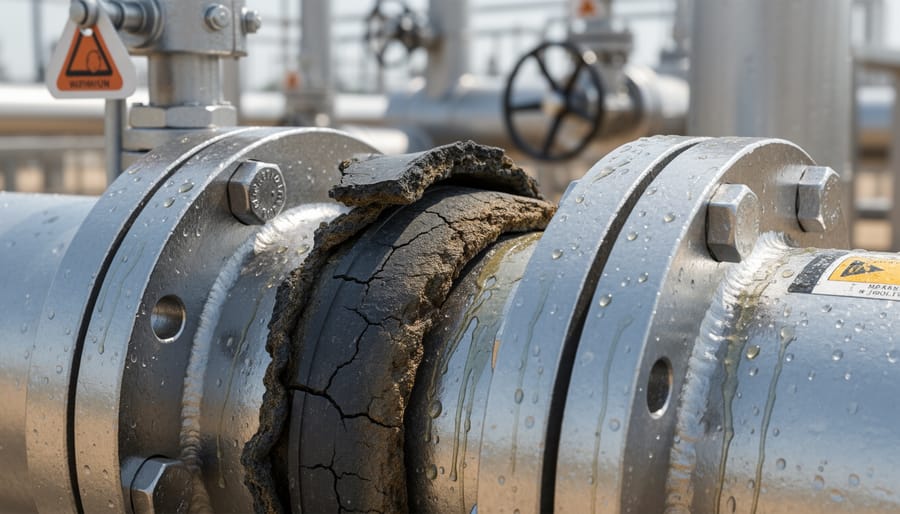
Carbon fiber composites and advanced ceramics excel in isolated stress conditions but falter when chemical exposure coincides with elevated temperatures and mechanical wear. In automotive paint booths, where components face solvent vapors at 60-80°C alongside constant friction, carbon fiber matrices degrade rapidly as solvents penetrate the resin systems. The thermal expansion coefficients of ceramics create interface failures when temperature cycling occurs in chemically aggressive environments, a crack initiated by thermal stress becomes a pathway for chemical attack.
High-performance engineering polymers like PEEK demonstrate impressive single-parameter specifications yet compromise in multi-stressor scenarios. A material rated for 250°C continuous service may degrade at 150°C when simultaneously exposed to aromatic hydrocarbons or strong oxidizers. Chemical processing equipment presents this exact challenge: pump housings experience both hydraulic oil contact and thermal cycling during start-up sequences, creating synergistic degradation that individual material specifications fail to predict.
The brittleness inherent in many high-tech materials becomes critical when chemical swelling precedes mechanical impact. Pre-stressed by solvent absorption, materials that show excellent wear resistance in dry laboratory testing fracture under loads they would otherwise withstand.
Engineered Rubber Solutions for Extreme Wear
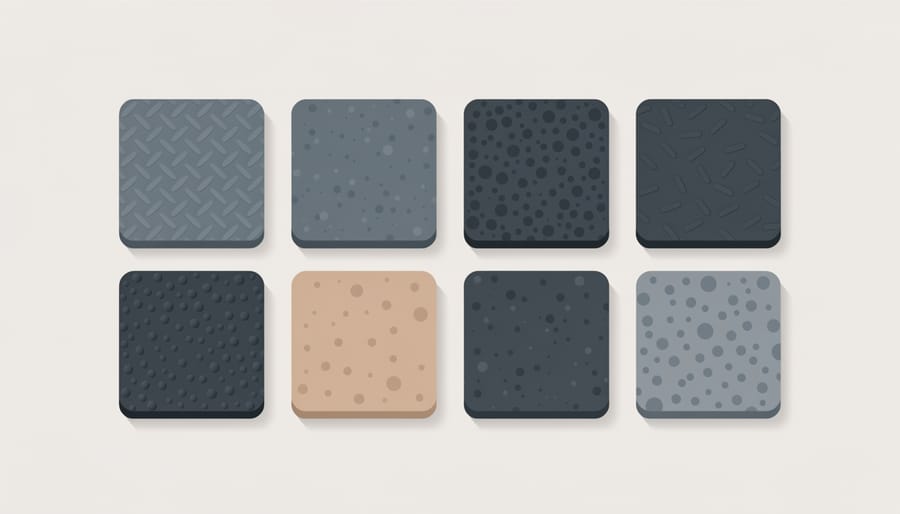
Modern rubber engineering has evolved far beyond basic elastomers into sophisticated material systems designed specifically for extreme wear environments. Unlike generic high-tech materials that promise universal solutions, advanced rubber compounds deliver targeted performance by matching molecular structure to application demands.
Contemporary wear-resistant rubber formulations incorporate reinforcing fillers at the nano-scale, creating dense cross-linked networks that distribute stress across the material matrix. These engineered compounds achieve Shore A hardness ratings between 70 and 95 while maintaining the resilience that rigid materials cannot match. The result is a material that absorbs impact energy rather than fracturing under repeated stress cycles.
Hybrid elastomer systems represent a significant advancement in wear technology. By combining the chemical resistance of fluoroelastomers with the mechanical toughness of polyurethanes, these compounds address the multi-faceted stress environments typical in chemical processing and automotive manufacturing. The molecular architecture allows each component to contribute its strengths without compromising the system’s integrity.
| Material Type | Wear Resistance | Chemical Compatibility | Temperature Range | Optimal Applications |
|---|---|---|---|---|
| Nitrile Rubber (NBR) | High | Oils, fuels, hydraulic fluids | -40°C to 108°C | Seals, gaskets, conveyor components |
| Polyurethane Elastomer | Excellent | Water, mild chemicals | -30°C to 90°C | Chute liners, impact pads, wear strips |
| EPDM | Good | Acids, alkalis, steam | -50°C to 150°C | Chemical processing equipment, weathering applications |
| Thermoplastic Elastomer | Very High | Variable by formulation | -40°C to 135°C | Complex geometries, high-cycle applications |
Thermoplastic elastomers bridge the gap between conventional rubber and engineering plastics. These materials offer exceptional wear resistance while allowing complex component geometries through injection molding. Their ability to be reprocessed and reformed makes them economically attractive for prototyping and iterative design optimization.
Custom compounding tailors base polymer systems to specific operating environments. A wear strip for automotive paint booth conveyors requires different additives than a pump impeller in sulfuric acid service. The formulation process considers not just primary stressors but secondary factors like static buildup, FDA compliance, or flame resistance requirements. This specificity delivers performance that off-the-shelf high-tech materials cannot match because they were designed for different engineering constraints entirely.
Critical Selection Criteria for High-Wear Components
Selecting the right material for high-wear components demands a systematic evaluation framework that goes beyond material datasheets. Engineers must assess multiple performance dimensions simultaneously, because a compound that excels in abrasion resistance may fail due to inadequate chemical compatibility or thermal instability. Effective selection integrates standardized testing protocols with application-specific validation.
Abrasion resistance serves as the primary screening criterion for wear applications. ASTM D2228 (Pico Abrader method) and DIN 53516 provide quantitative comparisons of volume loss under controlled abrasive conditions. These tests simulate different wear mechanisms: the Pico method replicates scraping and cutting action common in automotive assembly environments, while DIN 53516 better models rolling abrasion seen in conveyor systems. Material suppliers should provide test data from the method most relevant to your wear pattern, not simply the test where their compound scores best.
Hardness represents the second critical parameter, though the relationship between Shore hardness and wear performance is nonlinear. How hardness affects performance depends heavily on the specific stress conditions. Higher durometer compounds (70-90 Shore A) typically resist abrasion better but sacrifice impact absorption and conformability. Lower hardness materials (50-65 Shore A) provide superior vibration damping and seal more effectively against irregular surfaces, making them preferable for critical applications where both wear resistance and dynamic sealing matter.
Resilience testing (ASTM D2632) measures a material’s ability to recover from repeated deformation without generating excessive heat. High resilience compounds maintain their mechanical properties during continuous cycling, which prevents premature failure in dynamic applications like vibration isolators and flexible couplings.
The validation process must include accelerated life testing under actual operating conditions. Laboratory abrasion scores provide relative rankings, but only field trials with representative temperature fluctuations, chemical exposure profiles, and mechanical loads confirm true performance. Assess material compatibility with all fluids, temperatures, and stresses the component will encounter simultaneously, not in isolation.
Industry-Specific Applications and Solutions
Automotive Manufacturing and Assembly
Automotive assembly lines present one of the most demanding environments for wear-resistant components, where production uptime directly impacts profitability. Conveyor systems moving vehicle bodies through paint booths require sealing strips and wear guides that resist not only mechanical abrasion but also solvent exposure and temperature cycling from curing ovens. Standard materials quickly degrade under this combination of stressors, leading to paint contamination and costly line shutdowns.
Vibration damping elements in robotic welding stations face repetitive high-impact loading thousands of times per shift. Specialized polyurethane compounds with shore hardness between 70A and 90A provide the resilience needed to absorb impact energy while maintaining dimensional stability over millions of cycles.
Paint booth environments demand non-outgassing materials that won’t contaminate finishes. Fluoroelastomer-based seals and gaskets maintain chemical resistance to two-component paints and clearcoats while meeting automotive cleanliness standards. Custom-formulated compounds can be color-coded for different production zones, simplifying maintenance protocols and reducing installation errors during high-pressure changeovers between vehicle models.
Chemical Processing Equipment
Chemical processing environments present the most demanding dual challenge: components must resist aggressive acids, solvents, and caustic solutions while simultaneously enduring mechanical wear from high-pressure flows and particulate-laden fluids. Standard elastomers rapidly degrade when exposed to concentrated chemicals, while high-tech ceramics and metals excel at chemical resistance but fail catastrophically under the thermal cycling and mechanical stress inherent to valve operation and pump sealing.
Modern fluoroelastomers and perfluoroelastomers demonstrate exceptional chemical resistance of elastomers while maintaining the mechanical compliance essential for dynamic sealing applications. Pump diaphragms fabricated from chemically-modified EPDM compounds achieve 18-month service intervals in dilute acid transfer systems where PTFE-lined metal diaphragms required replacement every six months due to fatigue cracking. Valve seats compounded with specialized fillers maintain sealing integrity through 50,000 cycles in chlorinated hydrocarbon service.
Regulatory compliance drives material selection as stringently as performance requirements. FDA CFR Title 21 conformance, USP Class VI certification, and ATEX explosion-proof ratings constrain elastomer formulations for pharmaceutical and petrochemical applications. Custom compounds must document extractables profiles and maintain chemical resistance across the full operating temperature range, not just at laboratory conditions, while meeting industry-specific flammability standards that generic high-tech materials cannot satisfy.
Heavy Industrial Machinery
Heavy industrial machinery in mining, aggregate processing, and bulk material handling subjects components to relentless abrasive forces that quickly destroy conventional materials. Chute liners directing ore, rock, or aggregate streams face constant impact and sliding abrasion, conditions that fracture ceramics and erode standard polymers within weeks. Specialized rubber compounds formulated with high abrasion resistance ratings (often 50-100 mm³ loss per DIN 53516 testing) deliver service lives measured in years rather than months.
Impact pads beneath conveyor drop points absorb repeated shock loads while resisting cut-through from sharp material edges. Engineered elastomers with 60-70 Shore A hardness provide the necessary resilience to dissipate energy without permanent deformation, while maintaining enough flex to prevent material buildup. Screening media represents another critical application where rubber’s combination of wear resistance and flexibility outperforms metallic alternatives, polyurethane and natural rubber compounds withstand the continuous vibration and particle impacts that cause metal screens to crack or blind.
The key advantage in these applications is rubber’s ability to absorb energy rather than transmit it, reducing equipment stress and noise while extending component life. Custom formulations balance hardness for wear resistance against resilience for impact absorption, optimized for the specific material being processed and operating temperatures encountered.
The Custom Solution Advantage
Custom-formulated rubber compounds represent a strategic alternative to generic high-tech materials precisely because they address the specific wear mechanisms, chemical exposures, and operational temperatures of your application. Rather than selecting a material with impressive general properties that may not translate to your environment, custom compounding starts with your actual operating conditions and reverse-engineers the optimal elastomer formulation.
The consultation process begins with a thorough assessment of the failure modes in your current components. Engineers examine wear patterns, measure operating temperatures, identify chemical exposures, and document mechanical stresses to create a complete performance profile. This diagnostic phase often reveals that multiple stress factors interact in ways that eliminate standard materials from consideration, a combination of abrasive wear, intermittent chemical contact, and thermal cycling that no off-the-shelf product can handle.
Performance testing protocols then validate candidate formulations against your specific conditions. Accelerated wear testing, chemical immersion studies, and thermal cycling simulate years of service in controlled laboratory conditions. This iterative development approach refines the compound, adjusting hardness, modifying cross-link density, or incorporating specialized fillers, until test results confirm the formulation will meet or exceed your performance targets.
The result is a material engineered for your exact application rather than a compromise solution. Custom compounds often use less exotic base polymers than high-tech materials but achieve superior performance through precise formulation. This approach also creates opportunities for rubber technologists and polymer chemists who specialize in translating industrial challenges into material solutions, representing a growing segment of advanced manufacturing careers focused on solving real-world engineering problems rather than pursuing theoretical material properties.
Selecting materials for high-wear industrial environments isn’t about choosing the most advanced technology on paper. It’s about matching engineered solutions to the actual stress conditions your components will face. High-tech materials often fail because they’re optimized for different performance parameters than what industrial wear applications demand.
Specialized rubber compounds and custom elastomer formulations consistently outperform generic high-tech alternatives in automotive manufacturing, chemical processing, and heavy industrial settings. The reason is straightforward: these materials are designed specifically to handle abrasion, chemical exposure, temperature fluctuation, and mechanical stress simultaneously. When properly formulated for your application, engineered rubber delivers longer service life and lower total cost of ownership than materials with impressive specifications but mismatched capabilities.
Working with rubber technology specialists who understand your operational environment makes the difference between components that fail prematurely and solutions that perform reliably for years. The consultation process identifies critical stress factors, tests candidate compounds under real-world conditions, and refines formulations until performance targets are met.
For engineers and technical professionals looking to advance expertise in this field, advanced elastomer development offers significant career opportunities. The industry needs professionals who can bridge material science, application engineering, and manufacturing reality. Contact specialized rubber technology consultants to evaluate solutions for your high-wear applications or explore career paths in custom compound development.
