

Certified Engineers 4th Class to 2nd Class: How the Path Works and What Each Level Allows
Certified engineers 4th class to 2nd class describes a tiered power engineering credential system: you start at 4th class, qualify for 3rd class, and ultimately reach 2nd class, with each step unlocking authority over larger, higher-pressure, higher-capacity plants. Fourth class is the entry point. It covers boiler fundamentals, steam and water chemistry, safe operation of smaller plants, and basic instrumentation. Third class adds supervisory responsibility and deeper knowledge of turbines, refrigeration, and plant systems. Second class qualifies you to operate and oversee substantial facilities, including those with multiple boilers and complex utility networks.
Each class is earned through a combination of approved education, documented seat time in an operating plant, and a written examination. The exact thresholds vary by jurisdiction, so confirm current requirements with your provincial, state, or national regulator before you plan a timeline.
Why does this matter beyond the individual? Plant utilities (steam, compressed air, process cooling, and hot water) are the backbone of chemical processing, automotive component manufacturing, and any high-wear production environment. A certified engineer keeps those systems stable, which protects process consistency, uptime, and safety. For managers, the class held by your shift staff directly determines which plants you can legally run and how resilient your operation is when conditions change; this is especially crucial when considering becoming a 2nd class power engineer or staffing advanced roles.
What Certified Engineers Do Inside an Industrial Plant
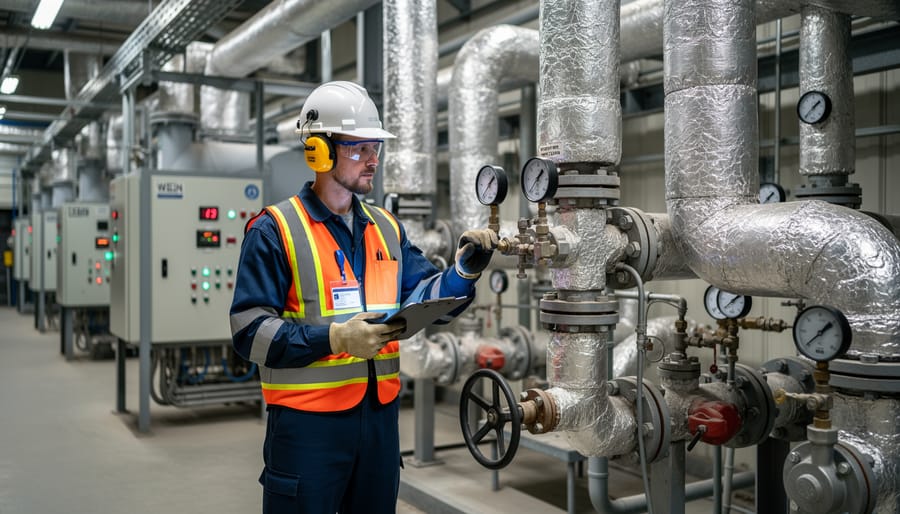
Utilities That Keep Production Lines Running
A certified engineer’s responsibility extends well beyond the boiler room. Engineers operate and maintain boilers and the systems around them: steam generation, process heating, compressed air, cooling water, and electrical distribution. Each one feeds the production floor directly.
In chemical and automotive-component manufacturing, those utilities set the conditions of the process itself. A pressure drop in the steam header can shorten a cure cycle and leave a part under-cured. Unstable process heating produces temperature swings across a mold, which shows up as inconsistent hardness and dimensional drift between batches. Weak cooling water capacity limits how fast material can be quenched or extruded, capping throughput. Compressed air loss disrupts pneumatic presses and handling equipment, and a power disturbance can halt an entire line mid-cycle.
The cost of any of these failures is scrap, rework, and lost hours. That is why plants depend on engineers who understand how each utility behaves under load and who can catch a developing fault before it reaches the product.
Why Certification Is Regulated
Boilers and pressure vessels store a great deal of energy. When a vessel fails, the release of pressurized steam and hot water can cause fatal injuries and destroy equipment. That risk is the reason governments regulate who may run this equipment.
Most jurisdictions adopt pressure equipment codes that set design, inspection, and operating standards. Those codes are enforced through legislation requiring that a plant be staffed by engineers holding a certificate matched to its rated capacity. A small heating plant may need only a fourth class engineer, while a larger installation demands a higher class on shift or in charge.
The arrangement also settles accountability. When a certified engineer signs off on operating conditions, responsibility is clear to regulators, insurers, and the employer. Insurers often make compliance a condition of coverage, so certification protects the business as well as the workforce. Capacity thresholds and staffing rules differ by region, so confirm them with your local regulatory authority.
How the Classes Compare: Fourth, Third, and Second Class
Fourth Class: The Entry Point
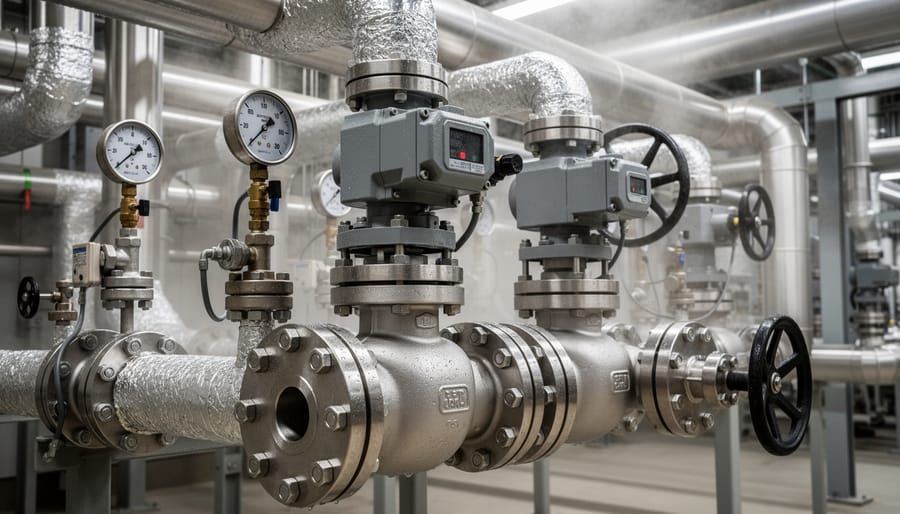
Fourth class is where the credential begins. It certifies that a person understands the fundamentals well enough to run basic plant equipment safely, and it is the first formal checkpoint before anyone takes responsibility for pressure systems.
Study at this level centers on boiler operation, including start-up, water level control, blowdown, and shutdown. It also covers thermodynamics basics such as heat transfer, steam properties, and pressure-temperature relationships. Safety is a core subject: safety valves, pressure limits, lockout procedures, and emergency response. Candidates also learn plant systems fundamentals, covering feedwater treatment, fuel handling, pumps, piping, and basic instrumentation. Terminology matters here, since precise language prevents costly misunderstandings on the plant floor.
Capacity limits are the defining feature. A fourth class certificate typically permits operation of smaller or lower-pressure installations, or work within a larger plant under supervision. The usual role is operator or assistant to a higher-class engineer, often handling routine rounds, logging readings, and monitoring equipment.
Exact thresholds vary by jurisdiction, so confirm them with your regional regulator. Think of this class as a structured apprenticeship in plant discipline, and it sets up the logged experience needed to advance.
Third Class: Expanding Responsibility
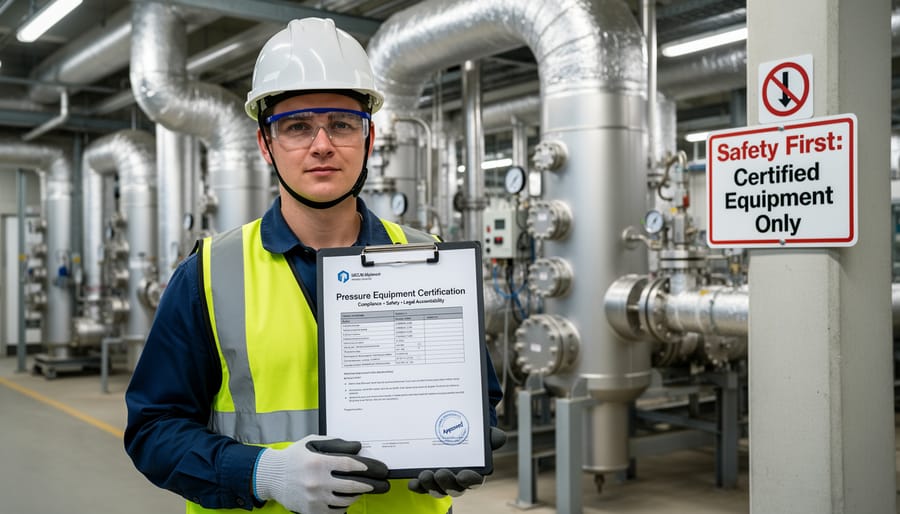
Third class is where an engineer’s scope grows in two directions at once: the size of the plant they may operate and the depth of what they’re expected to understand. Where fourth class centers on running equipment safely within tight limits, third class certifies that you can handle larger rated capacities and take on more of the plant’s day-to-day technical decisions. Exact capacity thresholds differ by jurisdiction, so confirm them with your regional regulator.
The syllabus reflects that shift. Candidates move from basic thermodynamics into applied thermodynamics: analyzing heat transfer, steam cycles, and combustion efficiency rather than simply recalling definitions. Instrumentation and controls become central, covering how sensors, transmitters, and control loops regulate pressure, temperature, and flow. Electrical fundamentals are expanded to include motors, generators, and distribution basics, since modern utilities depend on them.
Candidates also meet more advanced equipment, such as larger boiler configurations, turbines, and auxiliary systems. For a plant supplying steam to curing presses or molding lines, this extra depth means faster diagnosis of process upsets and tighter control over the utilities that protect product consistency.
Second Class: Supervisory Authority
A second class certificate marks the point where an engineer moves from running equipment to being accountable for a plant. It qualifies the holder to operate or supervise larger, more complex facilities, with higher rated capacities, multiple boilers, turbines, and interconnected utility systems. Where the regulations permit, second class engineers can serve as shift engineer, directing the operators and assistants on their watch, or as chief engineer for plants within the certificate’s capacity limits. Those limits and the exact titles vary by jurisdiction, so confirm the thresholds with your regional regulator.
The scope extends well beyond the boiler room. Second class engineers typically plan preventive maintenance schedules, coordinate shutdowns and inspections of pressure equipment, and keep the records that demonstrate compliance with applicable codes. They also oversee crew performance, assign duties, and make the call on whether a unit stays online when conditions drift.
This is where technical depth meets supervisory judgment. A second class engineer weighs reliability, safety, and production demands together, which is why the credential carries real weight in plants where steam and thermal stability directly affect product quality.
The Career Path From 4th to 2nd Class, Step by Step
Education, Exams, and Logged Plant Experience
Advancing from fourth class to second class rests on three pillars that work together: structured coursework, standardized examinations, and documented time in a qualifying plant. Skipping or rushing any one of them stalls the whole process.
Coursework comes first. Most candidates complete classroom or distance-learning modules covering boiler operation, thermodynamics, plant safety, and instrumentation, with each class adding depth. Distance formats suit engineers working rotating shifts, though they demand steady self-discipline. If you are weighing similar technical routes, a resource on how to become a materials specialist shows how training, assessment, and hands-on experience combine in a comparable way.
Examinations then verify that knowledge against a consistent standard. Written papers are typical, and some jurisdictions add practical or oral components, so confirm the format with your regional regulator or an approved training provider.
Logged plant experience is the pillar candidates most often underestimate. Hours must be earned in a plant of qualifying type and capacity, recorded in a logbook, and usually signed off by a supervising certified engineer or employer. Regulators can review those entries, so vague descriptions or missing signatures cause delays. Record dates, equipment operated, duties performed, and supervisor details as you go. Reconstructing a year of shifts from memory rarely satisfies a reviewer.
Timelines and Common Obstacles
Progression from 4th to 2nd class rarely follows a fixed calendar, because three things move at different speeds: study time, exam availability, and logged plant experience. Experience is usually the slowest. You can’t compress it by studying harder, and it only counts when the plant, your duties, and your logbook all meet the regulator’s definition of qualifying time.
Shift work is the most common obstacle. Rotating schedules, overtime, and night shifts make consistent study hard, so engineers who advance steadily tend to protect short, regular study blocks rather than waiting for long free stretches. Distance courses help, but they demand self-discipline.
Exam preparation brings its own delays. Sittings are scheduled by the examining body, so missing a window can add months. Failing a single subject often means rewriting only that paper, but it still resets your timing.
Access to qualifying plants can also stall progress. A site with limited steam capacity or few operating hours may not generate the right kind of experience. Plan ahead, ask your employer about rotation opportunities, and confirm with your regional authority which hours qualify before you count on them.
Where Certified Engineers Work and How Careers Develop
Certified engineers are needed anywhere a plant generates or depends on steam, heat, compressed air, or process power. The most common settings are chemical processing facilities, where reactors and distillation columns rely on steady thermal utilities, and automotive and component manufacturing, where heat treatment, painting, and molding lines draw on the same systems. Rubber and polymer production is a natural fit as well, since compounding, mixing, and curing presses need precise temperature and pressure. Outside heavy industry, hospitals, universities, large commercial buildings, and district energy or power utilities all employ certificate holders to keep boilers and auxiliary equipment running safely.
Career progression usually follows the certificate classes. Most people start as an operator or plant assistant under supervision, often with a fourth class certificate. As they log experience and earn a higher class, they move into shift engineer roles, where they run a plant on their own authority and direct junior staff. Second class holders are typically positioned for plant engineer or chief engineer duties where local rules permit, which means accountability for staffing, compliance records, and the condition of the whole utility system. Titles and thresholds differ by jurisdiction, so confirm what each class permits in your region.
The credential also opens doors beyond the boiler room. Engineers with a strong technical foundation often move into maintenance management, planning shutdowns and preventive programs. Others specialize in energy efficiency, auditing fuel use and steam losses, or in reliability engineering, where the goal is to predict and prevent equipment failures before they interrupt production.
The role itself is changing. Modernized distributed control systems now automate routine adjustments, while energy recovery equipment such as economizers and heat recovery steam generators captures waste heat that older plants simply vented. Data-driven monitoring, using vibration, temperature, and flow sensors, lets engineers spot degradation early rather than react to a trip. Engineers who combine certified operating knowledge with comfort in these tools are increasingly the ones plants look to for senior roles.
Why Qualified Engineers Matter to Custom Manufacturing and Material Quality
Steam, temperature, and pressure are not background conditions in a rubber plant. They are process variables. A curing press that drifts a few degrees, or a steam header that surges under load, changes crosslink density, and that shows up in the part as inconsistent hardness, poor compression set, or dimensional movement after demolding. Thermoplastic elastomers are just as sensitive: melt temperature and cooling rate govern surface finish, shrinkage, and long-term wear behavior.
This is where a certified engineer’s work meets the product. A fourth class operator holds boiler output steady. A third class engineer tunes controls and keeps auxiliary equipment within tolerance. A second class engineer plans maintenance, supervises shifts, and keeps the whole utility system predictable across production runs. Each step up the ladder widens the span of conditions a plant can hold within spec.
That stability matters most when formulations are tailored. A compound built for abrasion resistance or a specific service environment only performs as designed if it is processed under the conditions it was developed for. Plants that deliver customized rubber products depend on repeatable utilities to reproduce a validated recipe batch after batch. The same logic applies to processing rubber into precise geometries, where a single unstable cure cycle can scrap an entire run. It also applies to oil-resistant rubbers used in fuel and chemical exposure, where under-cure can quietly compromise swell resistance.
Innovation depends on this foundation too. Better compounds, tighter tolerances, and new high-wear applications all assume the plant can hold its process window. Qualified engineers are what make that assumption safe.
Frequently Asked Questions About Engineer Certification Classes
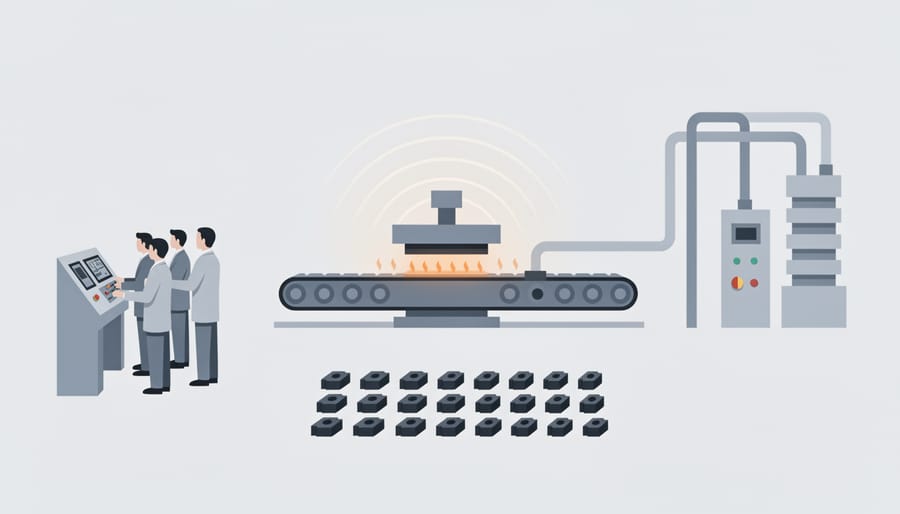
Most readers arrive with the same handful of practical questions. The answers below stay general on purpose, because certification rules are set region by region and change over time.
Do I have to earn the classes in order?
In most systems, yes. Each class builds on the knowledge and logged plant experience of the one below it, so you move from fourth to third to second. Some jurisdictions allow credit or exemptions for prior training, so confirm the rules with your regulator.
How long does progression usually take?
It depends on how quickly you can complete coursework, pass exams, and accumulate qualifying operating time. Because logged experience is usually the slowest requirement, working shifts in an approved plant matters as much as study.
Do certificates transfer between jurisdictions?
Sometimes, but not automatically. Some regions recognize each other’s certificates, while others require additional exams or documentation. Check with the authority in the region where you plan to work before assuming your credential carries over.
What can a second class engineer supervise?
Second class typically authorizes an engineer to operate or oversee larger, more complex plants than the lower classes, and to hold shift or chief engineer duties where permitted. The exact capacity limits are defined locally, so verify the threshold that applies to your plant.
Where should you confirm current requirements? Go straight to the regulatory authority or approved training provider for your region. They publish the current exam content, experience hours, and capacity limits, and they are the only reliable source for rules that apply to you. Employers and industry associations can offer helpful context, but treat the regulator’s published requirements as the final word.
It also helps to see why this matters beyond the individual career. Plants that rely on steady steam and thermal utilities, including those producing precision rubber and polymer components, depend on properly certified staff to keep conditions stable. That reliability reflects the same commitment to quality that defines dependable manufacturing in the first place.
The move from 4th class to 2nd class is a structured route to greater responsibility. Each certificate widens the plant capacity an engineer may operate, deepens the technical knowledge behind the work, and extends supervisory authority from running equipment to directing crews, maintenance planning, and compliance. Progress depends on coursework, examinations, and documented plant experience, and the details of all three differ by jurisdiction. Before you plan a path, confirm current requirements, capacity thresholds, and approved training providers with your regional regulatory authority.
The payoff reaches well beyond the individual engineer. Stable steam, temperature, and pressure control underpin consistent cures, dimensional accuracy, and dependable performance in automotive and high-wear rubber components. If your application calls for specialized materials or tightly controlled processes, consult The Rubber Associates to develop a solution built around your requirements.
