
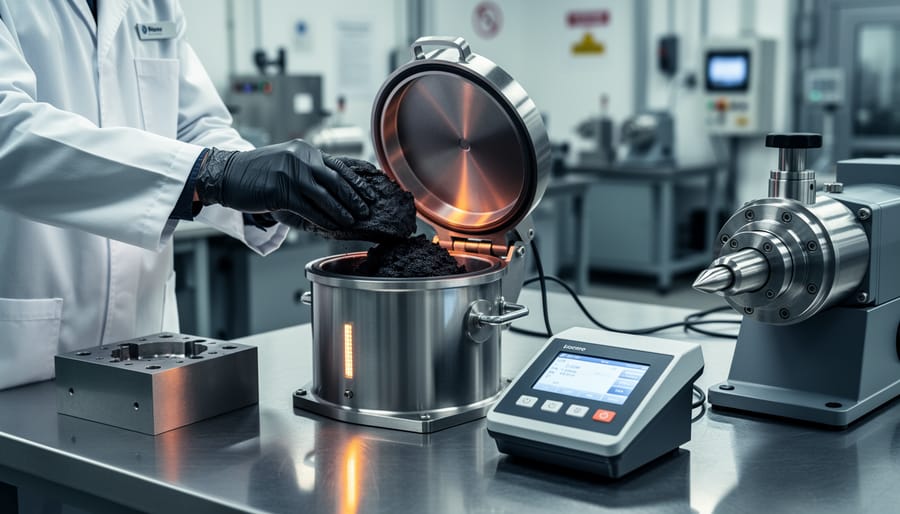
How to Master Processing Rubber: Step-by-Step Fabrication Techniques for 2026
Processing rubber transforms raw elastomer compounds into precision-engineered components through a three-phase workflow: preparation and mixing, shaping via molding or extrusion, and vulcanization to lock in final properties. This multi-stage fabrication sequence typically requires 4 to 12 hours depending on part complexity and batch size, with cure times alone ranging from minutes to several hours based on geometry and compound formulation. Success hinges on precise temperature control, consistent mixing protocols, and verification of crosslink density at each stage.
For engineers and procurement teams in automotive and high-wear sectors, understanding this workflow isn’t academic. Component performance, from vibration dampers to sealing systems, traces directly to processing decisions made during compound development and cure cycle design. A seal that fails prematurely often reveals inadequate dispersion during mixing or insufficient crosslink density from rushed vulcanization, not simply material selection errors.
The 2026 landscape demands tighter tolerances and faster cycle times without sacrificing durability. Modern processing integrates real-time rheometry, automated mixing controls, and predictive thermal modeling to meet these requirements. Yet the fundamental principles remain unchanged: uniformly dispersed fillers, precisely controlled cure kinetics, and validated mechanical properties before production scale-up. This guide walks through the equipment, safety protocols, sequential steps, and verification methods that translate raw polymer into components that perform under load, temperature extremes, and chemical exposure.
Essential Tools and Materials for Rubber Processing
Raw Material Selection
Selecting the right raw materials forms the foundation of successful rubber processing and directly determines the final product’s performance characteristics. Your material choices must align precisely with the application’s mechanical demands, environmental exposure, and service temperature range.
Natural rubber delivers exceptional tear resistance and dynamic flexibility, making it the preferred base polymer for automotive engine mounts and high-fatigue components. For applications requiring heat resistance above 100°C or oil exposure, synthetic elastomers become necessary. Nitrile rubber (NBR) excels in automotive fuel systems, while EPDM withstands weathering and ozone in exterior seals. Thermoplastic elastomers offer reprocessability and faster cycle times for moderate-performance applications.
Compounding ingredients modify the base polymer’s behavior. Carbon black reinforces strength and abrasion resistance in tire treads and conveyor belts, with particle size controlling the reinforcement level. Silica fillers improve wet traction and reduce rolling resistance. Plasticizers enhance low-temperature flexibility but can migrate over time, requiring careful selection for long-term applications.
Vulcanizing agents create the crosslinked network that gives rubber its elastic recovery. Sulfur systems dominate general-purpose applications, with accelerator combinations controlling cure speed and scorch safety. Peroxide cure systems generate superior heat resistance for automotive underhood components. Match cure chemistry to processing equipment capabilities and required production rates.
Consider raw material consistency and lot-to-lot variation when sourcing for custom rubber solutions. Establish qualified supplier lists and maintain tight incoming material specifications to ensure repeatable processing outcomes across production batches.
Processing Equipment Requirements
Two-roll mills remain the workhorse for small-batch rubber processing, with typical laboratory mills sized 6×12 inches and production units reaching 26×60 inches. Look for mills offering variable speed control from 15 to 45 surface feet per minute and adjustable roll gaps down to 0.1 mm for precise sheeting. Temperature control through hollow rolls maintaining 40-80°C prevents scorching during mixing.
Internal mixers provide superior compound homogeneity for medium to large production volumes. Tangential rotor designs with 1.5 to 3.0 liter chambers suit laboratory development, while 270-liter Banbury-style mixers handle industrial-scale rubber processing. Critical specifications include fill factors of 70-75%, rotor speeds to 60 rpm, and ram pressures reaching 8-10 bar. Temperature monitoring with ±2°C accuracy at multiple points ensures consistent mixing cycles.
Extruders transform mixed compounds into continuous profiles and sheets. Cold-feed extruders with 90 mm diameter screws and L/D ratios of 12:1 to 16:1 deliver precise dimensional control for automotive gaskets and seals. Pin-barrel designs improve heat transfer and reduce die swell. Throughput capacities typically range from 50 to 500 kg/hour depending on compound viscosity.
Compression and transfer molding presses require 100-3000 tons clamping force based on part complexity. Hydraulic systems with programmable pressure profiles (10-15 MPa) and platen temperature uniformity within ±3°C across the mold surface ensure consistent vulcanization. Daylight openings from 400 to 1200 mm accommodate varying mold heights for custom rubber solutions.
Autoclave and continuous vulcanization systems complete the processing equipment suite, with steam or hot air chambers maintaining cure temperatures from 140-200°C under controlled pressure for optimal crosslinking in high-wear applications.
Critical Safety Protocols in Rubber Processing
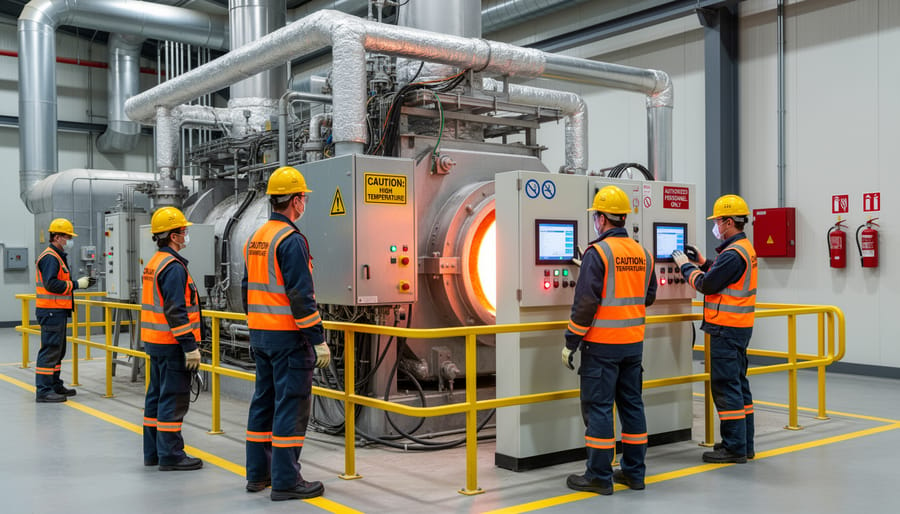
Rubber processing operations present significant occupational hazards that demand strict adherence to safety protocols throughout fabrication. Understanding and implementing proper protective measures prevents serious injuries and creates compliant processing environments.
Thermal Hazards and Heat Protection
Vulcanization systems operate at temperatures exceeding 150°C (302°F), while internal mixers generate frictional heat above 120°C (248°F) during compounding. Contact with heated platens, dies, or freshly cured rubber causes severe burns. Operators must wear heat-resistant gloves rated to at least 200°C when handling hot materials or accessing cure equipment. Install physical barriers around heated machinery and implement lockout procedures during maintenance. Steam vulcanization systems require additional precautions for pressure release, never open vulcanizers until pressure gauges confirm safe levels.
Chemical Exposure Management
Rubber compounds contain potentially hazardous chemicals including accelerators, antioxidants, and vulcanizing agents. Some curatives release toxic fumes during mixing and vulcanization. Ensure comprehensive ventilation systems maintain air exchange rates appropriate for the chemicals in use, local exhaust hoods at mixing stations capture particulates and vapors at the source. Operators handling powdered compounding ingredients require respiratory protection rated for chemical dusts. Store all chemicals according to SDS requirements, maintaining proper segregation of incompatible materials.
Machinery Safety Protocols
Two-roll mills and calendering equipment create severe pinch hazards between rotating rollers. Emergency stop mechanisms must be within immediate reach at all operator positions, and nip guards should prevent accidental contact during operation. Never attempt to clear jams or adjust equipment while machinery is running. Molding presses exert tremendous clamping forces, install dual-button activation systems requiring both hands to prevent operator entrapment. Regular inspection of hydraulic systems prevents catastrophic pressure failures during processing cycles.
Step-by-Step Rubber Processing Procedure
Compounding and Mixing
Compounding and mixing is the foundational stage where raw polymers transform into engineered rubber compounds ready for fabrication. This phase demands precision, incorrect proportions or inadequate dispersion will compromise the final product’s performance in demanding applications.
Start by weighing all ingredients on calibrated scales to within ±0.5% accuracy. Natural rubber or synthetic elastomers form the base polymer matrix, typically comprising 40-60% of the total batch weight. Carbon black, silica, or specialty fillers (20-40%) reinforce the compound and enhance properties like abrasion resistance. Process oils (5-15%) improve flow characteristics during subsequent forming operations. Weigh curatives, sulfur or peroxide systems, last to prevent premature crosslinking; these account for 1-3% but control the entire vulcanization reaction.
Mastication comes next. Load the base elastomer into a two-roll mill or internal mixer operating at 50-80°C. Apply mechanical shear for 3-5 minutes to break down polymer chains and reduce viscosity. This step is critical for virgin natural rubber but less necessary for pre-masticated or synthetic grades.
Incorporate fillers gradually in 2-3 additions, allowing 2-4 minutes between charges for uniform wetting. Monitor stock temperature, exceeding 110°C during filler incorporation risks scorching. Add process oils and plasticizers next, followed by antidegradants and activators. Reserve curatives for the final addition to minimize scorch risk.
Total mixing time ranges from 8-15 minutes depending on batch size and mixer efficiency. Verify homogeneity by cutting cross-sections, no visible streaking or agglomerates should appear. Record batch temperature, mixing duration, and compound viscosity (Mooney units) to ensure lot-to-lot consistency across production runs.
Shaping and Forming Techniques
Once your rubber compound has been mixed and allowed to rest, you’re ready to shape it into its final form. The method you choose depends entirely on the product geometry and production volume you need to achieve.
Calendering for Sheet Production
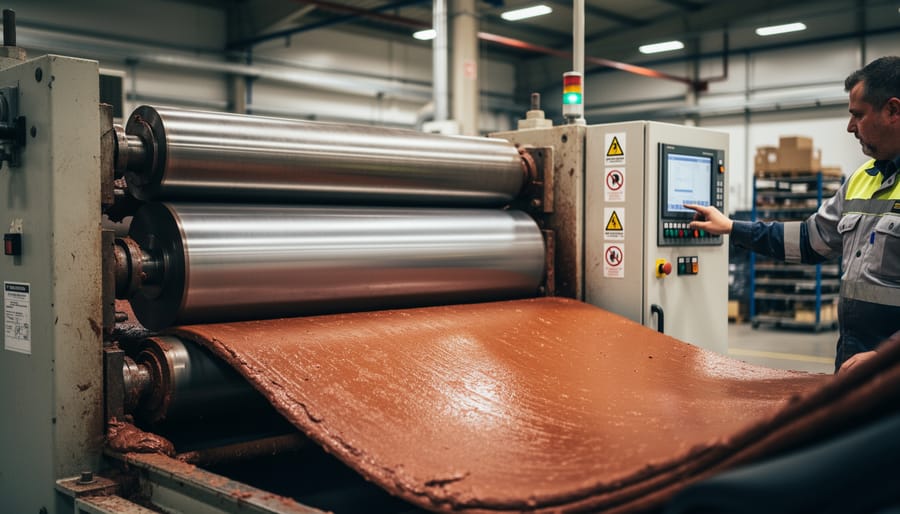
Calendering forces rubber through a series of heated rollers to produce continuous sheets of uniform thickness. Set your calender gap to your target thickness plus 10-15% to account for die swell as the compound exits the rollers. For automotive gasket stock, maintain roller temperatures between 60-80°C to prevent scorching while ensuring good surface finish. Feed the compound at a consistent rate, inconsistent feeding creates thickness variations that compound across the rollers. Most calendering operations run at 15-30 meters per minute; slower speeds improve dimensional control for precision applications.
Extrusion for Profile Shapes
Extrusion pushes rubber through a shaped die to create continuous profiles like seals, tubing, and weatherstripping. Your die design must account for 15-25% swell in both dimensions as the compound exits and relaxes. For a 10mm circular profile, cut your die opening to approximately 8mm diameter. Run trial extrusions and measure the cooled product before committing to production tooling. Screw extruders work best for compounds with good flow; ram extruders handle stiffer formulations. Keep barrel temperatures 5-10°C below your cure onset temperature to prevent premature vulcanization. Use cooling water baths or air jets immediately after the die to stabilize dimensions before the compound memory causes distortion.
Molding for Complex Geometries
Compression molding, transfer molding, and injection molding each suit different part complexities. Compression molding works for simple shapes, load a preformed slug into a heated cavity and apply 1000-2000 psi pressure. Transfer molding moves compound from a pot through runners into multiple cavities, ideal for insert molding. Injection molding offers the tightest tolerances and fastest cycles for high-volume custom rubber parts. Design your mold with 1.5-3% shrinkage allowance; actual shrinkage varies by compound hardness and filler loading. Vent channels (0.025-0.05mm deep) prevent air entrapment that creates voids and surface blemishes.
Vulcanization Process
Vulcanization transforms the mixed rubber compound into a durable, elastic product by creating permanent crosslinks between polymer chains. Begin by preheating the vulcanization equipment, compression molds, autoclaves, or continuous vulcanization (CV) lines, to the target temperature specified by your compound formulation, typically 140°C to 180°C for sulfur-cured systems and 160°C to 200°C for peroxide cures.
Load the shaped rubber component into the mold cavity and apply the prescribed pressure, usually 7 to 14 MPa for compression molding. Higher pressures eliminate voids and ensure complete contact with mold surfaces, critical for dimensional accuracy in automotive seals and vibration dampers. Immediately start the cure timer once temperature and pressure stabilize.
Calculate cure time using rheometer data from your compound testing. The t90 value, time to reach 90 percent of maximum crosslink density, serves as your baseline. For high-wear applications like conveyor belts or tire treads, extend cure slightly beyond t90 to maximize crosslink density and abrasion resistance. Under-curing leaves excess free sulfur and weak polymer networks, while over-curing degrades properties through chain scission and reversion.
Monitor temperature uniformly throughout the part. Thick sections require longer cycles to conduct heat to the core, and uneven heating produces soft spots that fail prematurely under load. Sulfur vulcanization creates polysulfide crosslinks (C-Sx-C) that provide excellent resilience, whereas peroxide systems form direct carbon-carbon bonds (C-C) offering superior heat resistance for engine compartment components.
After the cure cycle completes, release pressure gradually and cool the part in controlled stages. Rapid cooling below 60°C risks crystallization stress in natural rubber compounds. Thermoplastic elastomers skip traditional vulcanization entirely, relying on physical crosslinks from phase separation that form during cooling, enabling reprocessing and recycling advantages for sustainable manufacturing.
Finishing and Post-Processing
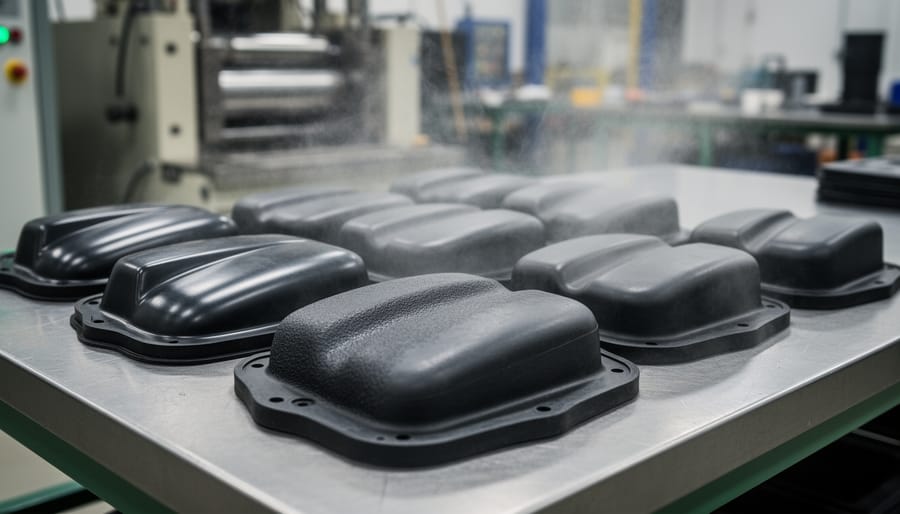
After vulcanization completes, remove parts from the mold and inspect for excess material along parting lines. Use sharp trimming knives or rotary cutters to remove flash, thin rubber projections where compound squeezed between mold halves. For precision automotive components, employ cryogenic deflashing: freeze parts at -80°C to make flash brittle, then tumble in media chambers to break off residue without damaging part geometry.
Clean surfaces with solvents or abrasive blasting to remove mold release agents and contaminants that interfere with bonding or coating. For secondary bonding operations, prepare contact surfaces by buffing to create texture, then apply primers compatible with both the elastomer and adhesive system. Allow primers to dry completely before assembling multi-component rubber products.
Verify final dimensions using calipers, micrometers, and profile gauges against engineering drawings. Check critical tolerances at room temperature after parts stabilize post-cure. For high-wear applications, measure surface hardness with durometers at multiple points to confirm uniform curing throughout the cross-section. Document measurements and retain samples from each production batch for traceability and quality audits.
Quality Verification and Testing Procedures
Testing confirms whether your processed rubber meets specification before it reaches production. Start verification immediately after vulcanization completes, while material properties remain stable and representative of the final product.
Measure Shore A hardness at multiple points across each batch using a calibrated durometer. Press the instrument perpendicular to the surface for three seconds, record the reading, then test at least five locations to identify inconsistencies. Acceptable hardness variance stays within ±5 Shore A points from specification; greater deviation indicates incomplete mixing or uneven cure distribution requiring batch rejection.
Conduct tensile strength and elongation testing on standardized dumbbell specimens cut from vulcanized samples. Mount specimens in a universal testing machine, apply tension at 500 mm/min until rupture occurs, then compare measured values against your compound specification. Automotive applications typically require minimum tensile strength of 10 MPa and elongation exceeding 300 percent for reliable performance under stress. Results falling below these thresholds signal inadequate crosslinking, contamination, or formulation errors that mandate reprocessing.
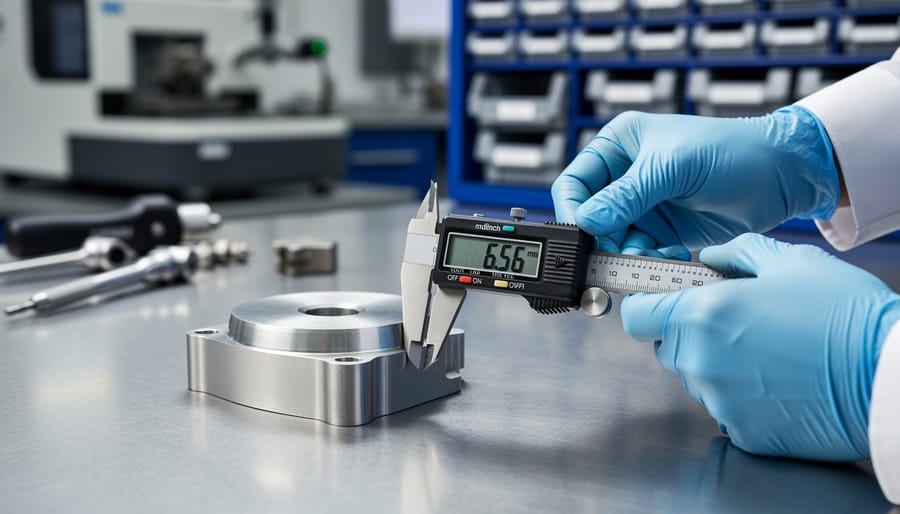
Perform dimensional inspection using calibrated calipers, micrometers, or coordinate measuring machines depending on tolerance requirements. Check critical dimensions, thickness, width, hole diameters, profile contours, against design specifications. Custom rubber solutions for high-wear applications commonly demand tolerances within ±0.5 mm; exceeding these limits necessitates trimming, remolding, or complete rejection based on part geometry and end-use constraints.
Validate compression set resistance by compressing specimens to 25 percent deflection at operating temperature for 22 hours, then measuring permanent deformation after 30-minute recovery. Compression set exceeding 35 percent indicates insufficient cure or poor formulation resilience, disqualifying the batch for applications involving repeated loading cycles.
Document all test results in batch records linking processing parameters to measured properties. This commitment to quality enables traceability and process refinement when deviations occur. Reject batches failing any critical specification; attempting to salvage marginal material compromises reliability and accelerates field failures in demanding automotive and industrial environments.
Advancing to Custom Rubber Solutions
Once you’ve mastered the core processing workflow, transitioning to custom rubber solutions requires systematic refinement across formulation chemistry and process controls. Start by documenting baseline properties from your standard processing runs, hardness, tensile strength, compression set, and dimensional accuracy, then adjust one variable at a time to isolate its effect on performance.
For automotive and high-wear applications, formulation adjustments drive meaningful improvements. Increasing carbon black loading enhances abrasion resistance but may reduce elongation; substituting peroxide cure systems for sulfur can improve heat aging in under-hood components. Work with specification rubber compounds designed for your exact operating conditions rather than modifying general-purpose formulations, which accelerates development and ensures consistent batch-to-batch performance.
Process parameter refinement focuses on tight control of mixing energy input, cure temperature profiles, and molding pressures. Small changes, a 5°C temperature shift during vulcanization, a 10-second extension in mixing time, can significantly alter crosslink density and final properties. Use design-of-experiments methodology to map these relationships efficiently.
Scaling from prototype to production introduces new variables: larger batch sizes affect heat dissipation during mixing, production-scale presses may have different thermal uniformity profiles, and cycle time pressures require faster cure rates without sacrificing properties. Validate that small-batch success translates to full production by running pilot quantities before committing to full-scale manufacturing. This staged approach minimizes costly rework and ensures your custom solutions meet specification under real-world production conditions.
Common Processing Questions
How do I determine the correct cure time for my rubber compound?
Calculate cure time using a rheometer test at your intended vulcanization temperature, identifying t90 (the time to reach 90% of maximum torque). This measurement accounts for your specific formulation’s crosslinking kinetics and ensures complete vulcanization without overcure degradation.
What mixing temperature should I target during compounding?
Maintain batch temperatures between 100°C and 120°C during mixing to ensure adequate filler dispersion without premature scorching. Monitor dump temperature closely, exceeding 130°C risks partial crosslinking that compromises subsequent processing and final properties.
Why does my compound show poor dispersion despite extended mixing?
Inadequate dispersion typically results from incorrect filler addition sequence or insufficient shear energy rather than mixing duration. Add carbon black or silica gradually after mastication, and verify your mill gap or mixer rotor speed provides adequate mechanical work for particle breakdown.
Can I process thermoplastic elastomers using standard rubber equipment?
TPE materials require different processing approaches than thermoset rubbers, thermoplastic compounding uses melt-processing techniques similar to plastics rather than vulcanization. Understanding the TPE vs silicone processing differences prevents equipment damage and product failures.
Surface defects like blisters or porosity indicate trapped air or moisture in your compound. Ensure raw materials are properly dried before mixing, evacuate air during molding with vented molds or breathing cycles, and verify vulcanization pressure is sufficient to prevent volatile outgassing during cure.
Systematic processing rubber techniques form the foundation of reliable, high-performance components across automotive and industrial applications. Each fabrication stage, from compound mixing through vulcanization to final verification, directly impacts material properties and product longevity. Engineers who master these methods gain precise control over hardness, elasticity, and wear resistance, enabling custom rubber solutions tailored to specific performance demands.
The processing variables you’ve learned, mixing temperatures, cure cycles, and formulation adjustments, aren’t rigid prescriptions. They’re control levers that experienced fabricators adjust based on elastomer type, application requirements, and production scale. As materials evolve and industry standards tighten, refining your processing approach keeps your products competitive.
For specialized processing requirements or complex custom formulations, consult with rubber fabrication experts who can translate application challenges into optimized processing parameters. Precision in rubber processing isn’t just technique, it’s how you deliver components that perform reliably under demanding conditions.
