
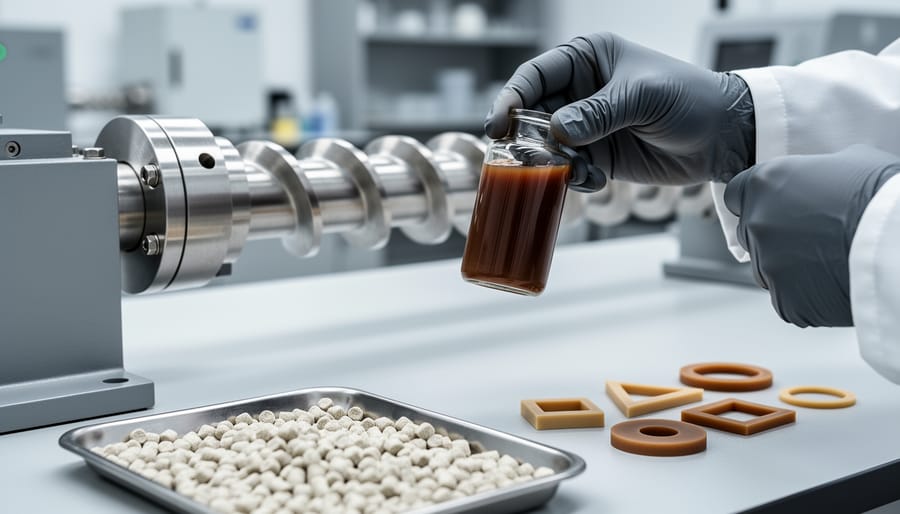
How to Formulate a TPE Sealing Compound for Automotive and High-Wear Applications
Formulating a TPE sealing compound comes down to five decisions made in order: define the sealing requirements, select a base polymer system, tune hardness and compression set with the right plasticizer and filler package, process under controlled conditions, then verify against the application’s actual failure modes. A competent compounder can move from requirements to a first-pass lab batch in a few days. Validation testing, particularly aged compression set and fluid resistance, takes considerably longer and is where most formulations succeed or fail.
The difficulty is moderate to advanced. You need a working grasp of how styrenic block copolymers, thermoplastic vulcanizates (TPVs) or olefinic blends behave under heat, and access to a twin-screw extruder or internal mixer for repeatable results.
Why the sequence matters: a seal doesn’t fail because a compound looks wrong on a datasheet. It fails because compression set creeps upward at 100°C, or because oil swell exceeds the groove tolerance after 1,000 hours. Starting from those service conditions, rather than from a favorite base resin, keeps the formulation honest. It’s also where innovation pays off, since off-the-shelf grades rarely match a specific automotive or high-wear duty cycle, and custom compound development often closes the gap.
The sections below cover requirements, tools and materials, safety and stop conditions, the formulation process step by step, and how to verify the result.
What a TPE Sealing Compound Must Deliver Before You Start Formulating
Every formulation decision traces back to a target property profile, so fix that profile before you open a single bag of polymer. A sealing compound only works if it holds contact pressure against a mating surface for years, and that behavior is measured through a short list of properties.
Start with compression set, the permanent deformation left after a material is compressed and held, usually at elevated temperature. It is the clearest predictor of whether a seal will keep pushing back. Our guide to rubber compression set explains the mechanism in detail. Closely related is sealing force retention, the share of initial contact force the seal still delivers after aging or sustained compression.
Hardness, expressed on the Shore A scale, sets how easily the seal conforms to a surface. Soft grades (roughly 40 to 60 Shore A) seal rough or uneven flanges, while harder grades resist extrusion and handle higher loads. The temperature window defines the range over which the compound must stay flexible in the cold and keep its shape in the heat. Fluid resistance covers swell and property loss on exposure to oils, coolants and fuels; for under-hood duty, the principles behind oil resistant rubbers apply directly. Dynamic seals add abrasion resistance and surface feel, meaning friction, tack and appearance.
Application drives each number. A door or window seal prioritizes low compression set, soft feel and weathering. An under-hood gasket demands heat and fluid resistance. A dynamic wear seal needs abrasion resistance and a low-friction surface.
Translate each requirement into a measurable specification, such as a maximum compression set percentage at a stated temperature and duration, so every later trial can be judged against it.

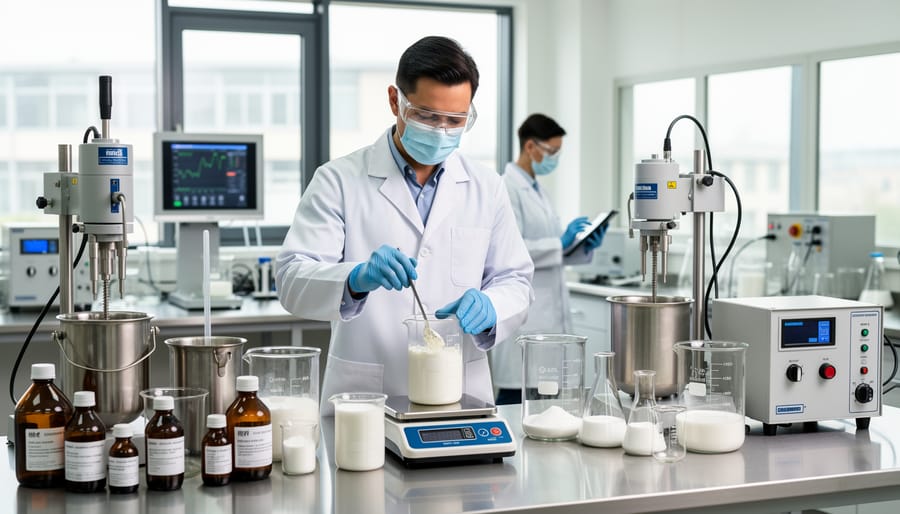
Tools, Materials, and Equipment for TPE Sealing Compound Formulation
Selecting the Base Elastomer System
SEBS-based compounds and TPV (thermoplastic vulcanizate, a dynamically crosslinked EPDM-in-polypropylene blend) are the two practical starting points for most sealing duty. They behave differently, so the choice should follow your compression set and fluid exposure targets.
SEBS accepts high oil loadings, which makes soft grades (below 50 Shore A) and a pleasant surface feel easy to achieve. Its limit is elevated-temperature compression set, since the physical crosslinks soften as the polystyrene domains approach their glass transition. TPV’s crosslinked rubber phase gives noticeably better recovery and heat resistance, and it tolerates oil and automotive fluids well. The price is a narrower low-hardness range and a firmer feel.
TPU offers excellent abrasion resistance and tear strength, but it is more moisture sensitive, needs drying before processing, and is generally weaker in compression set at temperature. TPO is economical and easy to run, yet its recovery rarely meets demanding sealing force retention requirements.
Processability also matters. TPV and SEBS both run on standard extrusion and injection equipment, while TPU demands tighter moisture control. Matching the polymer to your equipment and the intended thermoplastic compounding process avoids reformulating later for reasons unrelated to performance.
Additives, Fillers, and Processing Aids
Beyond the base polymer, a handful of ingredients determine how a sealing compound actually behaves in service. Each one solves a specific problem and quietly creates another, so loadings need to stay deliberate rather than generous.
- Process oil softens the compound and improves flow, but excess oil raises compression set and can bleed to the surface.
- Polypropylene or other polyolefin adds stiffness and melt strength, though too much hardens the seal and reduces sealing force retention.
- Mineral fillers such as calcium carbonate or talc cut cost and improve dimensional stability, but heavy loadings reduce elongation and tear resistance.
- Antioxidants protect against thermal degradation during processing and heat aging, while overdosing can cause blooming.
- UV stabilizers preserve surface integrity on exposed seals, with a cost penalty and possible interaction with other additives.
- Slip and wear additives lower friction and abrasion on dynamic seals, but migration can compromise adhesion and surface appearance over time.
The practical takeaway is to treat these ingredients as a balanced system. Raising oil to hit a softer Shore A reading, for example, usually means compensating with polyolefin or filler to protect compression set. Document every adjustment so that a change in one property can be traced back to its cause, which keeps custom formulation both repeatable and efficient.
Safety Warnings and Stop Conditions During Compounding
Melt processing combines heat, rotating machinery and volatile chemistry, so treat safety as part of the formulation method, not an afterthought. Before any trial, read the safety data sheet for every oil, polymer, filler and additive. Note decomposition temperatures, recommended ventilation and incompatibilities, then compare them against your planned barrel and die temperatures.
Thermal hazards come from molten polymer at the die, hot barrels and heated tooling. Wear heat-resistant gloves, a face shield and long sleeves when purging or clearing material. Mechanical hazards sit at screws, feed throats and mold platens, so apply lockout and tagout before any cleaning, screw pulling or die change, and never reach into a feed throat of a machine that is energized.
Process oils and additives release vapor at melt temperature, so run local exhaust at the die and vent ports. Mineral fillers such as calcium carbonate or talc create fine dust during weighing and charging. Use enclosed dosing where possible, wet wiping instead of dry sweeping, and a properly fitted particulate respirator when dust cannot be controlled at the source.
Define your stop conditions before the run starts. Each one signals that the compound or the equipment is outside its safe window.
Unexpected discoloration, such as browning or streaking, also indicates degradation. Stop, purge the line, and review temperature profile, residence time and stabilizer loading before the next trial.
Step-by-Step Process for Building a Custom TPE Sealing Compound
Setting Starting Ratios and Adjusting Hardness
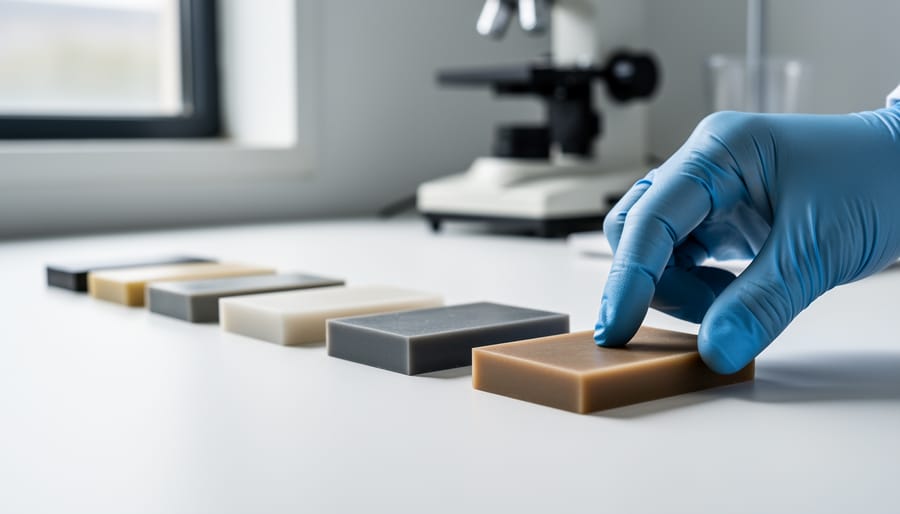
Start with a baseline formulation built on your chosen base polymer, then treat oil and polyolefin as your two primary dials. In a SEBS or TPV system, raising process oil loading lowers Shore A hardness and increases softness, but it also dilutes the elastomer network. Past a certain point, excess oil reduces elastic recovery, so compression set worsens and oil can migrate to the surface, leaving a tacky or greasy feel. Increasing the polypropylene or other polyolefin fraction does the opposite: hardness rises, the compound feels firmer and dries out at the surface, and tensile strength improves, but sealing force retention can drop if the rigid phase becomes too dominant.
A practical starting approach is to choose a mid-range ratio for your target hardness, mold test plaques, and measure hardness and compression set before changing anything. Then adjust one variable at a time. For example, change oil loading in increments of roughly 5 to 10 parts per hundred of rubber, keeping polyolefin, filler and additives constant. Record the batch number, formulation, processing conditions and results in a single log so trends stay traceable.
Allow plaques to condition before measuring, since hardness readings shift as the material settles. If you change oil and polyolefin together, you cannot tell which one moved the result, and the data becomes hard to interpret. Hold temperature profile and screw speed fixed across the series so that any property shift reflects the formulation rather than the process. Once two or three batches bracket your hardness target, interpolate between them, and confirm that compression set still meets the specification before locking in the ratio.
Controlling Processing Conditions for Consistent Results
Processing conditions decide whether a good formulation performs like one. Start with the temperature profile: set barrel zones to rise gradually toward the die, typically within the melt range of the polyolefin phase, and avoid overshooting. Excess heat degrades the SEBS midblock and thins the oil phase, which shows up later as tacky surfaces and poor compression set. Too little heat leaves unmelted polypropylene, producing gels and weak seal lips.
Shear controls dispersion. Higher screw speed or mixing intensity breaks down filler agglomerates and distributes oil evenly, but too much shear raises melt temperature and can cut polymer chains. Adjust screw speed and kneading elements in small steps while watching melt temperature and motor load.
Residence time is the third variable. Long dwell at temperature invites oxidation and discoloration, so keep throughput steady and purge before shutdowns.
Moisture matters most for TPU, but fillers and absorbed humidity in any compound can cause splay marks and voids in the part. Dry materials to the supplier’s recommended moisture level before processing.
Cooling rate finishes the job. Controlled water bath or mold temperatures set crystallinity in the polyolefin phase, which affects surface gloss, dimensional stability and sealing force. Cooling too fast can lock in stress and cause warpage, while cooling too slowly risks sink and sticking.
Record every setting for each trial so results trace back to specific conditions.
How to Verify Performance and Plan Your Next Iteration
Verification starts with a test plan tied to the targets you set at the outset. Mold plaques from each trial batch under consistent conditions, condition them for at least 24 hours at standard laboratory temperature, and test every candidate with the same methods. Comparing batches only works when the specimen preparation is identical.
Begin with the basics. Measure Shore A hardness (ASTM D2240 or ISO 48-4), then run tensile strength and elongation at break (ASTM D412 or ISO 37). These confirm the base balance of oil, polyolefin and filler. Next, test compression set (ASTM D395 Method B or ISO 815-1), which is the most telling property for a sealing compound. Run it at room temperature and at the elevated temperature your application demands, because a compound that recovers well at 23°C can relax badly at 100°C or above.
Then test durability under realistic stress:
– Fluid immersion (ASTM D471 or ISO 1817): record mass and volume change plus hardness shift after exposure to the relevant oils, coolants or fuels.
– Heat aging (ASTM D573 or ISO 188): retest hardness, tensile and elongation after aging to expose antioxidant shortfalls.
– Abrasion (ISO 4649 or ASTM D5963): measure volume loss for high-wear seals.
– Low-temperature flexibility (ASTM D746 brittleness or ISO 812): confirm the seal stays flexible at the bottom of your temperature window. Further guidance on chemical and environmental
resistance testing for TPEs can help you select exposure conditions.
To read results, compare each value against your specification and find the single property with the smallest margin. That property limits the formulation. High compression set at temperature usually points to the elastomer system or insufficient cross-link or phase stability. Poor fluid resistance suggests too much extractable oil. Weak abrasion performance may call for a harder polyolefin phase or wear additive.
Decide the next move from the gap. If one property misses narrowly, adjust a single variable and rerun that test. If all targets pass with margin, repeat the batch to confirm consistency, then scale up. If several properties conflict and trade-offs keep reappearing, that is the point to consult a specialist for custom development rather than iterating blindly.
Common Questions About TPE Sealing Compound Formulation
How does a TPE sealing compound compare with vulcanized rubber?
TPE processes by injection molding or extrusion with no cure step, so cycle times are shorter and scrap can be reground. Vulcanized rubber still tends to hold lower compression set at sustained high temperatures, so the choice depends on your service window.
What lowers compression set most effectively?
Start with a higher-recovery base such as a dynamically vulcanized TPV, then reduce oil loading and check polyolefin content. Change one variable per trial and measure at your actual service temperature, since room-temperature results can be misleading.
Can I get a soft-touch surface that still resists wear?
Yes, but softness and abrasion resistance pull in opposite directions. Slip or wear additives and a well-dispersed polyolefin phase help, and each addition should be verified with abrasion and surface-feel testing.
When should I involve a custom compounding partner?
Bring one in when trials stall on a conflicting property pair, such as low compression set at low hardness, or when you need to move from lab batches to consistent production lots.
Recycled content is feasible, though it needs discipline. Reground TPE from your own process is typically the easiest feedstock because its history is known. Post-consumer material introduces contamination and variable melt behavior, so qualify each lot against the same compression set, hardness and tensile checks you apply to virgin compound, and set a maximum blend ratio you have validated rather than assumed.
Scale-up deserves the same rigor. Dispersion, shear and residence time differ between a lab mixer and a production twin-screw line, so expect to retune the temperature profile and confirm lot-to-lot consistency before release. A genuine commitment to quality shows up here, in documented process windows and repeatable test data rather than a single good batch.
A reliable TPE sealing compound is built in a fixed order. Define the target properties first: hardness, compression set, temperature window, fluid exposure and wear. Then change one variable at a time, whether that is oil loading, polyolefin content or processing temperature, so every result can be traced to a cause. Finally, confirm each iteration with standardized ASTM or ISO testing instead of relying on feel or a single data point.
That discipline is what lets formulation move beyond catalog grades. Automotive door seals, under-hood gaskets and dynamic wear seals each impose a different combination of demands, and the strongest answers come from material design tuned to the specific duty cycle rather than a compromise grade. Custom formulation also gives you room to innovate, balancing sealing force retention against processability and cost in ways off-the-shelf compounds rarely allow.
If your application pushes past what a standard compound can deliver, The Rubber Associates can support you with consultation and customer support for specialized sealing needs.
