
How to Choose the Right Thermoplastic Compounding Process: A TPSiV Buying Guide
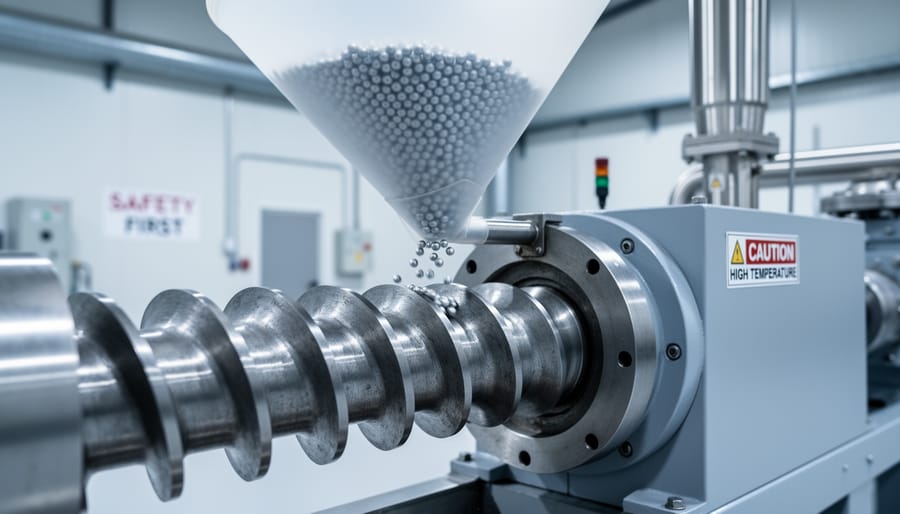
Thermoplastic compounding for thermoplastic silicone vulcanizates (TPSiVs) requires matching the right processing method to your material’s silicone-to-thermoplastic ratio, target performance specifications, and production volume. Twin-screw extrusion remains the dominant approach for dynamic vulcanization, where silicone elastomer is crosslinked within a thermoplastic matrix during melt processing. The choice between continuous mixing systems and batch processes directly impacts material homogeneity, cycle efficiency, and the degree of silicone domain dispersion you can achieve.
Industry professionals working with TPSiV formulations face distinct challenges compared to conventional thermoplastic elastomers. The silicone phase must be finely dispersed and vulcanized simultaneously while maintaining the thermoplastic component’s processability. This dual requirement means compounding equipment selection goes beyond simple throughput considerations. You need to evaluate mixing intensity, residence time control, temperature management capabilities, and the system’s ability to handle reactive chemistry during processing.
Rubber technologists understand that TPSiV compounding presents unique technical demands. Unlike filled thermoplastics or simple polymer blends, these materials undergo chemical crosslinking concurrent with mechanical mixing. The compounding process must deliver sufficient shear to break down the silicone phase into fine domains while providing enough thermal energy and residence time for peroxide or addition-cure systems to complete vulcanization.
This guide addresses the critical selection factors for thermoplastic silicone compounding equipment, compares available processing technologies, provides application-specific implementation recommendations, and identifies the most costly errors to avoid when establishing or optimizing your compounding operations.
Understanding Thermoplastic Silicone Elastomer Compounding
Thermoplastic silicone elastomer (TPSiV) compounding creates hybrid materials that combine the flexibility and chemical resistance of silicone rubber with the processability of thermoplastics. This involves dispersing silicone rubber domains throughout a continuous thermoplastic matrix, generating a two-phase structure that delivers elastomeric performance while remaining meltable and recyclable like standard thermoplastics.
The compounding process fundamentally differs from conventional rubber or plastic processing. Rather than simply melting and mixing homogeneous materials, TPSiV compounding requires carefully controlling how silicone and thermoplastic phases interact. The silicone component provides the characteristic elastomeric recovery, low-temperature flexibility, and chemical resistance that make these materials valuable. The thermoplastic phase enables melt processing through injection molding, extrusion, and blow molding, capabilities that traditional thermoset silicones cannot offer.
Successful compounding requires balancing these phases to achieve target properties. The dispersion quality directly affects performance: uniform silicone distribution ensures consistent elastomeric behavior across finished parts, while poor dispersion creates weak points and unpredictable material response. Process parameters such as temperature, mixing intensity, and residence time determine how completely the phases integrate and whether the silicone maintains its elastomeric character.
Industrial applications span automotive sealing systems, consumer product soft-touch components, medical device housings, and vibration damping elements. Manufacturers choose TPSiV materials when applications require silicone’s performance characteristics but production volumes or part complexity make conventional silicone processing economically impractical. The ability to use existing thermoplastic processing equipment reduces capital requirements while silicone incorporation delivers properties unattainable with standard thermoplastic elastomers.
Critical Factors When Selecting a Compounding Approach
Material Property Requirements
Material property requirements drive every compounding decision for thermoplastic silicone elastomers. The mechanical performance you need, tensile strength, elongation, hardness, and compression set, determines how you balance the silicone and thermoplastic phases during processing. Applications demanding high elasticity require careful control of silicone domain dispersion, while those needing greater structural rigidity benefit from a more dominant thermoplastic continuous phase.
Chemical resistance and temperature performance directly influence compounding method selection. TPSiV materials used in automotive underhood environments or industrial fluid contact must maintain integrity across temperature extremes and chemical exposures. The compounding process affects how well the silicone and thermoplastic phases bond, which determines long-term resistance to oils, coolants, and other aggressive media.
Elastomeric behavior expectations guide process choices differently than specification rubber requirements. Some applications need recoverable deformation and vibration damping, while others prioritize wear resistance in extreme wear conditions. Twin-screw extrusion offers superior phase distribution for consistent elastomeric properties across production runs, while batch mixing provides flexibility for formulation adjustments during development.
The compounding approach you select must deliver the property profile your application demands while remaining compatible with downstream thermoplastic processing like injection molding or extrusion. This balance between elastomeric characteristics and processability defines successful TPSiV compounding.
Production Scale and Equipment Compatibility
Production scale and equipment compatibility represent fundamental constraints that narrow your compounding method options before you evaluate other factors. A facility producing 50 kilograms of custom TPSiV monthly faces entirely different equipment requirements than one targeting 10,000 kilograms of consistent automotive-grade material weekly. Your existing infrastructure determines whether adopting a new compounding approach requires minor modifications or complete capital expenditure.
Twin-screw extruders deliver continuous production suited to high-volume needs but demand significant floor space and power infrastructure. A production-scale twin-screw line requires coordinated feeding systems, temperature control zones, and downstream pelletizing equipment. Batch internal mixers operate in smaller footprints and handle varied formulations efficiently, making them practical for development work and specialty production where recipe changes occur frequently. The capital investment differs substantially: a complete twin-screw compounding line can represent ten times the cost of a batch mixer system.
When evaluating equipment compatibility for TPSiV compounding, consider:
- Available power supply capacity for high-torque mixing equipment
- Temperature control capabilities across the required processing range
- Material handling systems compatible with both silicone and thermoplastic feedstocks
- Downstream processing equipment for pelletizing or forming finished compounds
- Quality control instrumentation for verifying phase dispersion and properties
Your production forecast should account for growth. Installing a small batch mixer now may create bottlenecks if demand scales up, while oversizing equipment for optimistic volumes ties up capital and reduces operational efficiency. Match equipment capacity to realistic throughput projections, and verify that your facility’s utilities support the compounding technology you select.
Quality Consistency and Control
Quality control in TPSiV compounding directly determines whether finished components meet performance specifications consistently across production runs. Uniform dispersion of silicone domains within the thermoplastic matrix is essential because uneven distribution creates weak points that compromise mechanical properties and durability in demanding applications.
Different compounding methods offer varying levels of control over this dispersion. Continuous processes with consistent shear profiles typically deliver better batch-to-batch repeatability than manual or intermittent methods. The ability to monitor and adjust processing parameters in real time allows manufacturers to detect and correct variations before they affect material quality.
Quality consistency becomes particularly critical in automotive and industrial applications where component failure carries safety or liability risks. Compounding processes that include inline quality checks and automated parameter control minimize the risk of producing off-specification material that might not surface until components are already in service. For high-volume production, investing in compounding equipment with robust monitoring systems reduces material waste and ensures that every batch meets the performance standards your application requires.
Cost and Lead Time Considerations
Economic factors play a decisive role when selecting a TPSiV compounding approach. Twin-screw extrusion typically requires higher capital investment but delivers lower per-pound processing costs at volume, making it economical for established production runs. Energy consumption varies significantly: continuous compounding processes generally use energy more efficiently than batch methods, though actual costs depend on throughput and equipment utilization.
Material waste deserves careful attention. Batch mixing often generates edge trim and purge material during changeovers, while continuous processes can minimize scrap once dialed in. However, trial runs and formulation development consume material regardless of method, so plan for initial waste when switching approaches or developing new compounds.
Lead time implications differ markedly. Batch compounding offers flexibility for custom formulations and quick turnaround on small volumes, making it attractive for development work or specialty orders. Continuous processes require longer setup but enable faster fulfillment once production begins, better suited for recurring orders and high-volume commitments.
Consider the total cost picture: equipment depreciation, labor efficiency, quality control overhead, and inventory carrying costs all factor into the true economics. A lower-cost compounding method that produces inconsistent material or requires extensive rework ultimately costs more than a properly controlled higher-investment approach that delivers right-first-time quality.
Compounding Method Comparison
Twin-Screw Extrusion Compounding
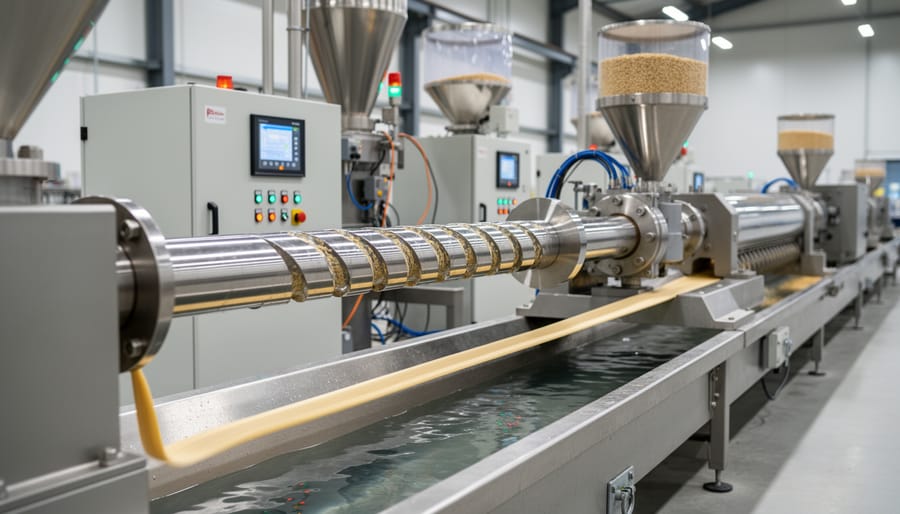
Twin-screw extrusion stands as the predominant method for continuous TPSiV compounding in production environments. This approach feeds raw thermoplastic polymers and silicone components into co-rotating screws that convey, melt, and mix materials under controlled conditions. The intermeshing screw design creates high shear zones that distribute silicone phases throughout the thermoplastic matrix while maintaining consistent residence times.
Manufacturers favor twin-screw extruders as continuous mixers for medium to high-volume TPSiV production because the process delivers repeatable output with minimal batch-to-batch variation. The continuous nature allows precise control over temperature profiles along the barrel, which matters when balancing thermal sensitivity of silicone crosslinking with thermoplastic processing requirements.
Typical use cases include automotive sealing applications requiring consistent material properties across large production runs, and industrial components where throughput justifies capital investment in extrusion equipment. The method proves particularly effective when formulation changes occur infrequently, as screw configuration and processing parameters stabilize for specific recipes. Companies already running thermoplastic extrusion lines can often adapt existing equipment with appropriate screw designs and barrel modifications rather than installing entirely new compounding systems.
Batch Internal Mixer Compounding
Batch internal mixer compounding uses enclosed mixing chambers with rotating rotors to process TPSiV materials in discrete batches rather than continuous operation. This method excels in research and development environments where formulation flexibility matters more than production volume. Engineers can precisely control mixing intensity, temperature profiles, and batch residence time to optimize dispersion of silicone domains within the thermoplastic matrix.
Internal mixers prove especially valuable during initial TPSiV formulation development. The ability to produce small batches allows rapid iteration of compound recipes without committing to large material quantities or extensive equipment changeovers. This approach supports testing different silicone-thermoplastic ratios, evaluating additive packages, and validating property targets before scaling to production volumes.
For specialty production runs requiring unique formulations, custom colors, or regulatory-specific compounds, batch mixing offers advantages over continuous processes. The enclosed mixing environment minimizes contamination risks between formulations, while complete batch cleanout ensures no cross-contamination when switching between different TPSiV grades. This makes internal mixers the preferred choice for manufacturers serving diverse applications with relatively modest volume requirements per formulation.
Dynamic Vulcanization Methods
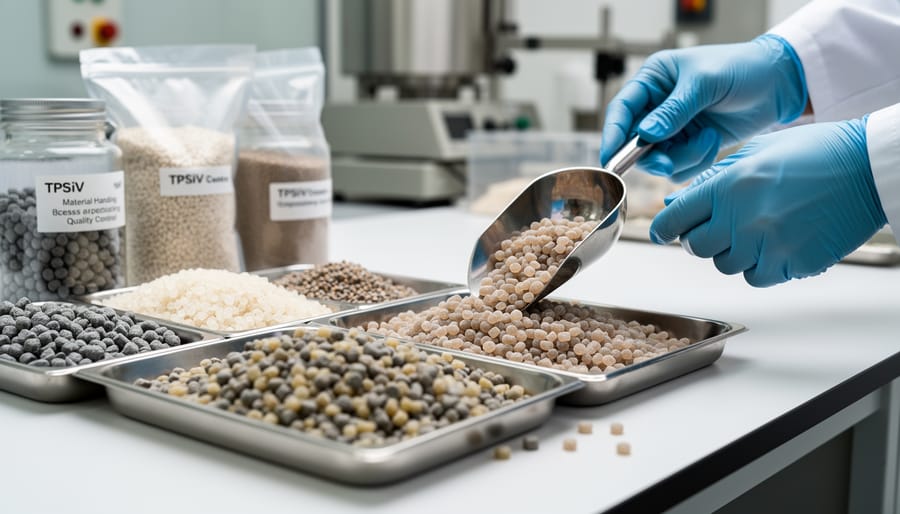
Dynamic vulcanization is a specialized compounding method where silicone crosslinking occurs simultaneously during melt-blending with the thermoplastic phase. Unlike pre-cured or post-cured approaches, this technique forms the crosslinked silicone elastomer domains while continuously mixing with the thermoplastic matrix under controlled shear and heat.
The process fundamentally alters TPSiV structure. As dynamic vulcanization changes morphology by controlling how silicone domains form and distribute, engineers can influence final material properties through timing and intensity of crosslinking relative to mixing. The vulcanizing agent activates during compounding, creating crosslinked silicone particles that remain dispersed as discrete domains within the continuous thermoplastic phase.
This approach offers distinct advantages for certain TPSiV applications. The concurrent vulcanization and mixing can produce finer silicone domain dispersion compared to blending pre-vulcanized rubber, potentially improving mechanical properties and surface finish. It also allows formulation adjustments during compounding, giving engineers more control over the balance between elastomeric behavior and thermoplastic processability.
However, dynamic vulcanization demands precise process control. Temperature profiles, mixing intensity, residence time, and vulcanizing agent selection all critically affect the outcome. The method works best when compounding equipment provides consistent shear conditions and when the vulcanization kinetics align well with the mixing cycle. For TPSiV requiring specific morphology or property profiles, dynamic vulcanization may deliver results difficult to achieve through other compounding routes.
Recommended Approaches for Common Applications
Automotive Sealing and Vibration Applications
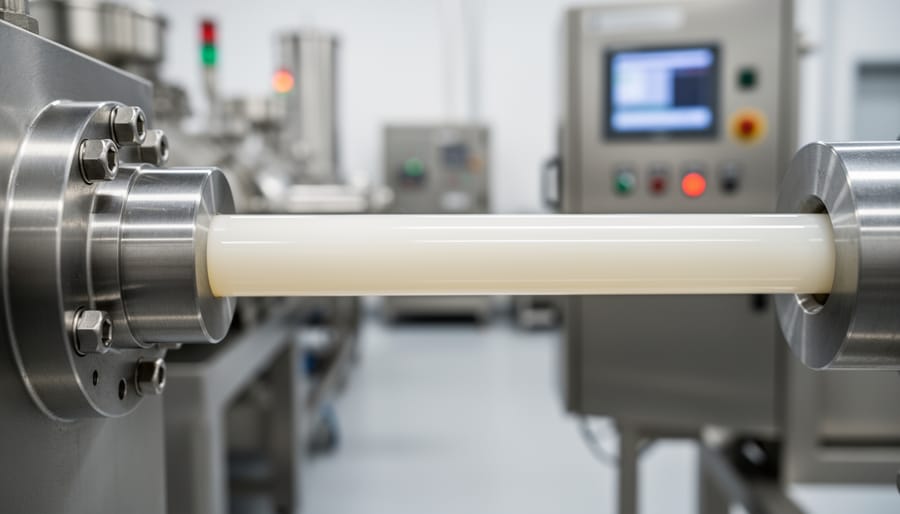
For automotive sealing and vibration applications, twin-screw extrusion compounding typically delivers the consistency and throughput that high-volume production demands. Automotive seals, gaskets, and damping components require tight tolerances and repeatable properties across thousands or millions of parts, making continuous compounding processes ideal for maintaining batch-to-batch uniformity.
Twin-screw systems excel at achieving thorough dispersion of the silicone phase within the thermoplastic matrix, which directly impacts sealing performance and vibration damping effectiveness. The continuous nature of extrusion allows for stable processing conditions and efficient quality control through in-line monitoring. When evaluating materials for these applications, understanding the TPE vs silicone trade-offs helps inform the optimal TPSiV formulation and compounding approach.
For automotive projects requiring custom formulations or specific regulatory compliance, working with experienced compounders ensures that processing parameters align with material specifications and application performance requirements. Volume requirements, production timelines, and property consistency targets should drive the selection of compounding equipment and process controls.
High-Performance Industrial Components
High-performance industrial components demand compounding processes that deliver precise property profiles and reliable batch-to-batch consistency. When TPSiV materials will face continuous mechanical stress, chemical exposure, or extreme operating conditions in pumps, diaphragms, or industrial seals, the compounding method must ensure thorough dispersion of the silicone phase throughout the thermoplastic matrix without degrading either component.
Twin-screw extrusion typically suits these applications best when production volumes justify the equipment investment. The continuous mixing action creates uniform silicone domain distribution, which translates directly to consistent mechanical performance across production runs. For components requiring specific hardness ranges or tailored compression set characteristics, precise control of screw configuration, temperature zones, and feed rates becomes essential.
Custom formulations often require collaborative compound development. Engineers should work closely with compounding specialists to establish processing windows that maintain material integrity while achieving target properties. Critical considerations include the compatibility of any reinforcing fillers or processing aids with both the silicone and thermoplastic phases, and how shear history during compounding affects final part performance.
Batch internal mixers remain valuable for developing specialty formulations or producing smaller volumes of custom grades. This approach allows for controlled addition sequences and easier adjustment of formulation parameters during optimization. However, scaling from batch development to continuous production requires careful parameter translation to preserve the compound’s performance characteristics.
Custom and Specialty Formulations
Custom specialty formulations demand flexible compounding strategies that accommodate non-standard requirements. When developing TPSiV materials for unique applications, begin by precisely defining performance objectives, whether regulatory compliance such as FDA food contact standards, specific color requirements matching brand specifications, or performance criteria beyond conventional material ranges.
Color matching in TPSiV compounding presents particular challenges because silicone and thermoplastic phases accept pigments differently. Successful color development requires careful masterbatch selection, dispersion optimization during compounding, and testing across the intended processing window to ensure stability. Some pigments affect vulcanization kinetics or create compatibility issues, necessitating formulation adjustments.
Regulatory compliance requirements, medical device biocompatibility, automotive VOC limits, or electrical insulation standards, often dictate raw material sourcing and compounding protocols. Maintain complete traceability of all components, implement validated cleaning procedures between batches, and establish documentation systems that support certification requirements.
For specialized performance targets such as extreme temperature resistance, enhanced chemical compatibility, or modified hardness ranges, systematic compounding trials with controlled variable testing yield better results than attempting to scale existing formulations. Small-batch development using internal mixers allows rapid iteration before committing to production-scale twin-screw runs. Partner with compounding specialists who maintain formulation libraries and possess the analytical capabilities to verify that finished materials meet specifications through comprehensive testing rather than assumptions.
Common Mistakes to Avoid

Overlooking Phase Compatibility
Phase incompatibility between silicone and thermoplastic components represents one of the most common yet preventable failures in TPSiV compounding. When engineers skip proper compatibility verification before selecting a compounding method, they often encounter poor dispersion of the silicone phase within the thermoplastic matrix. This creates weak interfacial bonding that compromises both mechanical integrity and elastomeric performance.
The consequences show up quickly: premature seal failures, inconsistent material properties across batches, and components that lack the expected flexibility or durability. Different thermoplastic bases require different interfacial agents and processing conditions to achieve stable phase morphology. A compounding method that works well for one polymer combination may produce phase separation or agglomeration with another.
Verifying compatibility upfront, through small-scale trials that match your intended production method, prevents costly rework and failed components. This step matters regardless of whether you’re using continuous extrusion or batch mixing, because each process applies different shear and thermal histories that affect how phases interact and stabilize.
Underestimating Processing Parameter Control
Processing parameter control separates successful TPSiV compounding from material that fails performance requirements. Inadequate temperature management during compounding can cause premature crosslinking of silicone phases or thermal degradation of the thermoplastic matrix, fundamentally altering the intended material structure. Shear forces that are too high break down the carefully balanced phase morphology, while insufficient shear prevents proper dispersion of silicone domains within the thermoplastic continuous phase. Residence time errors compound these issues: too short results in incomplete blending and inconsistent properties throughout the batch, too long risks thermal degradation or unintended crosslinking reactions. These parameter deviations manifest as batch-to-batch inconsistency, compromised mechanical properties, and processing difficulties in downstream operations like injection molding or extrusion. The consequences extend beyond immediate material quality to include production waste, customer rejection of finished parts, and costly requalification efforts when attempting to correct parameter drift.
Neglecting Scale-Up Challenges
Moving from lab-scale TPSiV development to full production presents challenges that can undermine material consistency if not properly addressed. Small-batch compounding often succeeds with manual parameter adjustments and forgiving process windows that don’t translate to continuous manufacturing.
The most critical error is assuming that laboratory mixing conditions will scale proportionally. Shear rates, thermal profiles, and residence time distributions change significantly when moving to larger equipment volumes. What worked in a 2-liter batch mixer may produce inadequate dispersion or thermal degradation in a production-scale twin-screw extruder operating continuously.
Many operations overlook the impact of feedstock variability at scale. Laboratory compounding typically uses carefully measured, pre-dried materials, while production relies on bulk handling systems where moisture content, particle size distribution, and lot-to-night variations become more pronounced. Without adequate material conditioning and process controls, these inconsistencies compromise final product quality.
Another common pitfall involves insufficient pilot testing. Jumping directly from bench-scale success to full production without intermediate validation means discovering processing issues after substantial capital investment. Experienced TPSiV compounders conduct systematic scale-up trials, adjusting formulations and processing parameters at each stage to ensure manufacturability before committing to high-volume production.
What to Look For
When evaluating TPSiV compounding partners or internal capabilities, prioritize suppliers who demonstrate verifiable expertise in thermoplastic silicone elastomer processing. Look for documented experience with projects similar to your application requirements, supported by case studies or reference customers in your industry sector.
Process control capabilities matter significantly. The compounding operation should maintain consistent monitoring of critical parameters throughout production. Ask about their quality assurance protocols, batch tracking systems, and how they verify dispersion uniformity across production runs. Established procedures for addressing batch variations indicate mature manufacturing processes.
Equipment configuration provides insight into production capabilities. Verify that the compounding facility operates equipment appropriate for TPSiV materials, whether twin-screw extruders or batch mixers, and confirm their capacity matches your volume requirements. Understanding their equipment maintenance schedules and upgrade cycles helps assess long-term reliability.
Technical support distinguishes capable suppliers from commodity processors. The best compounding partners offer material development assistance, helping refine formulations to meet specific performance targets. They should provide clear communication about lead times, minimum order quantities, and their approach to handling custom requirements.
Finally, evaluate their commitment to continuous improvement. Suppliers investing in process optimization and staying current with TPSiV technology developments position themselves to support evolving application needs and industry standards.
Main Options Compared
The primary TPSiV compounding methods differ fundamentally in how they achieve silicone-thermoplastic integration. Twin-screw extrusion operates continuously, feeding raw materials through intermeshing screws that provide controlled shear and temperature profiles. This approach suits higher-volume production where consistent throughput and automated feeding matter. The continuous nature allows stable processing conditions once parameters are established, though adjusting formulations requires stopping and purging the system.
Batch internal mixers process fixed material charges in enclosed mixing chambers, typically using rotor designs that fold and shear the compound. This method excels for development work, small production runs, and situations requiring frequent formula changes between batches. Each batch starts fresh, making it straightforward to switch materials or test variations without extensive line cleanup.
Dynamic vulcanization during compounding, where silicone crosslinking occurs simultaneously with mixing, can be implemented in either twin-screw or batch systems. The choice depends less on the vulcanization approach itself and more on production scale, flexibility needs, and existing equipment capabilities.
For high-volume automotive applications with stable formulations, twin-screw extrusion typically provides the most efficient path. Custom or specialty TPSiV compounds often benefit from batch mixing’s flexibility, particularly during development phases or when producing multiple distinct formulations. Many manufacturers maintain both capabilities, selecting the method that matches each project’s specific volume and variability requirements.
Frequently Asked Questions
What distinguishes TPSiV compounding from standard thermoplastic processing?
TPSiV compounding requires managing both silicone rubber domains and thermoplastic continuous phases simultaneously, demanding careful control of temperature, shear forces, and residence time to achieve proper phase dispersion. Unlike standard thermoplastic compounding, the process must preserve the elastomeric characteristics of the silicone phase while maintaining thermoplastic processability.
Can existing thermoplastic compounding equipment be used for TPSiV materials?
Many facilities can adapt existing twin-screw extruders or internal mixers for TPSiV compounding, though modifications to screw configuration, barrel design, and temperature control systems are typically necessary. The key is ensuring the equipment can provide adequate dispersion energy while preventing degradation of either phase.
How do I know if my TPSiV compound has achieved proper phase dispersion?
Proper dispersion is confirmed through a combination of physical property testing, microscopic examination of cross-sections, and consistency in batch-to-batch performance. Visual inspection of extrudate or molded parts for surface uniformity provides initial indication, but mechanical testing and quality control protocols are necessary for verification.
What are the most common causes of inconsistent TPSiV compound quality?
Inconsistency typically stems from inadequate temperature control during compounding, insufficient mixing time or shear intensity, and variations in raw material quality or feed rates. Moisture contamination and improper material handling before compounding also contribute to batch variability.
These questions reflect the challenges engineers face when transitioning to TPSiV compounding or troubleshooting existing processes. The technical nature of TPSiV materials means that seemingly minor processing variations can significantly impact final product performance, making understanding of fundamentals critical.
Beyond the technical aspects, professionals frequently ask about qualifying new suppliers or compounding partners. The evaluation process should examine not just equipment capabilities, but also the supplier’s experience with silicone-thermoplastic systems specifically, their quality control protocols, and their ability to provide consistent material performance across production runs. Custom formulation capabilities matter particularly for applications with unique property requirements or regulatory constraints.
When working with a compounding partner on TPSiV materials, clear communication about application requirements and performance criteria helps ensure the selected process and formulation deliver the needed results. Providing details about operating environment, mechanical stresses, chemical exposure, and production volume requirements allows the compounder to recommend the most appropriate approach and avoid costly trial-and-error cycles during development.
Selecting the right compounding approach for thermoplastic silicone elastomer applications is critical to achieving consistent material performance and meeting your production objectives. As you’ve seen throughout this guide, success hinges on carefully matching compounding methods to your specific material property requirements, production scale, quality standards, and cost parameters.
Twin-screw extrusion, batch mixing, and dynamic vulcanization each offer distinct advantages. The optimal choice depends on your application’s unique demands, whether you’re producing automotive sealing components at volume, developing high-performance industrial parts, or creating custom formulations for specialized uses. Understanding the trade-offs between throughput, dispersion quality, flexibility, and capital investment allows you to make informed decisions that benefit both product performance and your bottom line.
Common pitfalls like overlooking phase compatibility, inadequate process control, and underestimating scale-up challenges can derail even well-planned projects. Taking a systematic approach to compounding method selection, backed by thorough material characterization and process validation, minimizes risk and accelerates time to market.
At The Rubber Associates, we specialize in custom TPSiV compounding solutions tailored to demanding automotive and industrial applications. Our team brings decades of experience in material development, process optimization, and production scale-up. Whether you’re evaluating compounding options for a new project or troubleshooting existing processes, we’re here to provide expert guidance.
Contact us today to discuss your specific thermoplastic silicone elastomer compounding requirements and discover how our custom solutions can support your goals.
